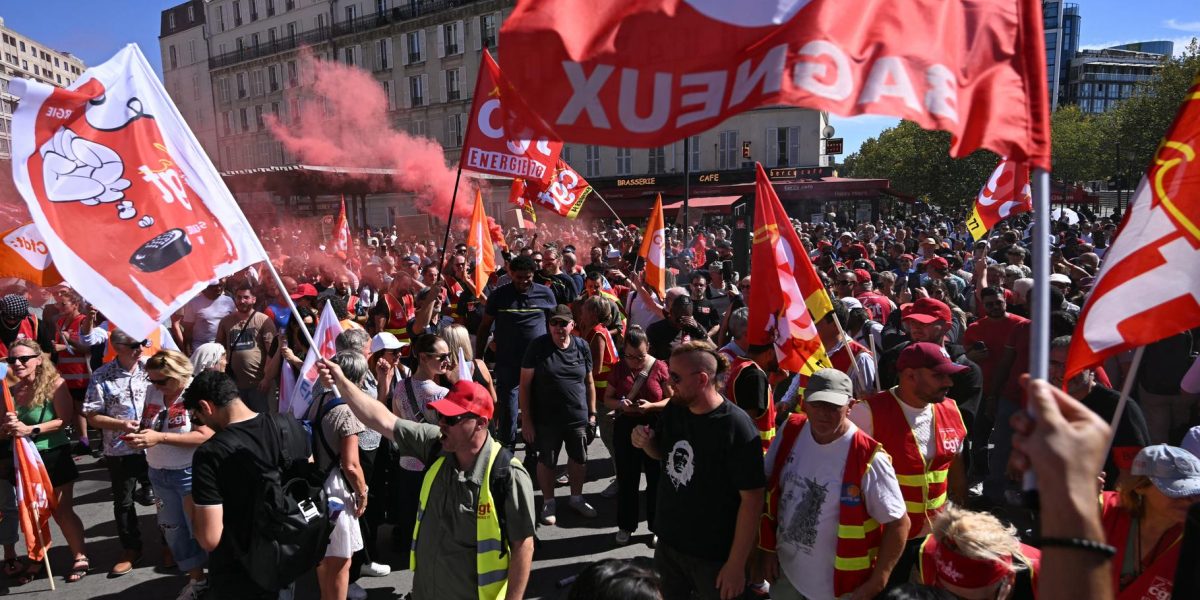
Unions across France are preparing for a major day of industrial action on Tuesday, September 29, 2026, with more than 170 demonstrations planned nationwide. The strike, involving public sector workers from transport, education, healthcare, and emergency services, aims to pressure the government ahead of the 2027 budget presentation.
The mobilization comes as the government of Prime Minister Sébastien Lecornu plans to freeze the index point for civil servants next year, a move unions say will further erode purchasing power. A joint press conference held by major unions on Thursday, September 24, highlighted the core demands: better pay, improved working conditions, and recognition for public sector employees.
“When you ask workers, all of them, without exception, talk about their purchasing power, their salary, and a need for recognition,” said Luc Farré of the Unsa union.
The strike is backed by a broad coalition of unions, including the CGT, FO, CFDT, UNSA, FSU, Solidaires, CFE-CGC, and FA-FP. They are calling for improved compensation after a September marked by inflation, particularly driven by fuel prices.
Transport Disruptions Expected to Be Limited
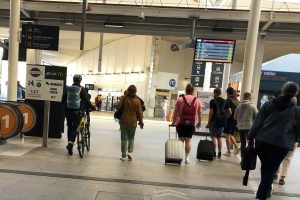
Despite the strike, disruptions to public transport are expected to be minimal. Both SNCF and RATP have indicated that services will largely operate normally.
At RATP, metro and RER services in the Paris region will run as usual, according to a spokesperson. The CGT-RATP has filed a strike notice starting Monday, September 28 at 7 p.m., but no major impact is anticipated.
SNCF Voyageurs expects normal traffic on TGV and Intercités lines on Tuesday, with near-normal service on regional TER trains. Transilien services will be mostly normal, except for a few lines including RER C, D, E, and lines R and V, where some disruptions are possible.
In the aviation sector, the DGAC has asked airlines to reduce flights by 5% at Roissy and 25% at Marseille between 4 p.m. and midnight. Disruptions are also expected at airports in Nantes-Atlantique, Strasbourg-Entzheim, Limoges, Tarbes-Lourdes-Pyrénées, and Pau-Pyrénées during certain periods. Other airports will operate normally.
Schools and Universities to See Significant Mobilization
Schools are likely to face more significant disruptions. The Snuipp-FSU, the largest primary school teachers’ union, expects 40% of primary school teachers to strike.
Education Minister Édouard Geffray reiterated that a minimum reception service will be provided by local authorities in primary schools. However, predicting mobilization rates in secondary schools is more difficult, as teachers are not legally required to declare their intention to strike in advance.
“It should be a day with rather good momentum,” said Sophie Vénétitay, general secretary of Snes-FSU, the leading secondary school union. “We feel that, overall, the issue of salaries is being well received everywhere.”
The USL, a major high school student union, has also called for blockades on the same day, seeking a “convergence of struggles” between students and education staff. Student organizations have also planned mobilizations at universities.
France Travail and Healthcare Workers Join the Movement
For the first time since 2018, ten unions at France Travail, representing nearly all staff, have called for strike action and protests on September 29. Alongside demands for higher wages, they aim to highlight the impact of austerity on public employment services as unemployment rises to 8.3% of the active population in the second quarter of 2026.
Unions warn that since the creation of France Travail, staff have faced repeated reorganizations that reduce their missions and worsen working conditions, while users face increasing pressure, particularly through job search controls. They also fear the generalization of a two-tier support system for jobseekers by April, which could overwhelm counselors with “essential” cases. The deployment of artificial intelligence is another concern, with unions demanding a moratorium until a collective agreement is signed.
In hospitals, all public hospital unions have called for strike action and mobilization on September 29, demanding salaries and resources that match their missions and expectations.
Firefighters and Police Also Mobilize
Firefighters have already begun expressing their discontent, with several marching in Paris and camping near the Eiffel Tower on Monday, September 28. This early mobilization will not prevent them from joining the broader movement on Tuesday.
After the worst wildfires in decades this summer, compounded by successive heatwaves and emergency responses, the nine representative unions of professional firefighters are demanding the creation of 21,000 positions. They also seek better health protections and a refocusing of their missions.
According to Le Parisien, police unions Alliance, Un1té, and Unsa are also expected to join the movement. Following a disappointing meeting with the Interior Minister on Thursday, September 24, police are demanding salary increases, higher risk bonuses, and additional staffing.
The widespread mobilization underscores growing tensions between the government and public sector workers as the 2027 budget looms, with unions vowing to defend purchasing power and public services.