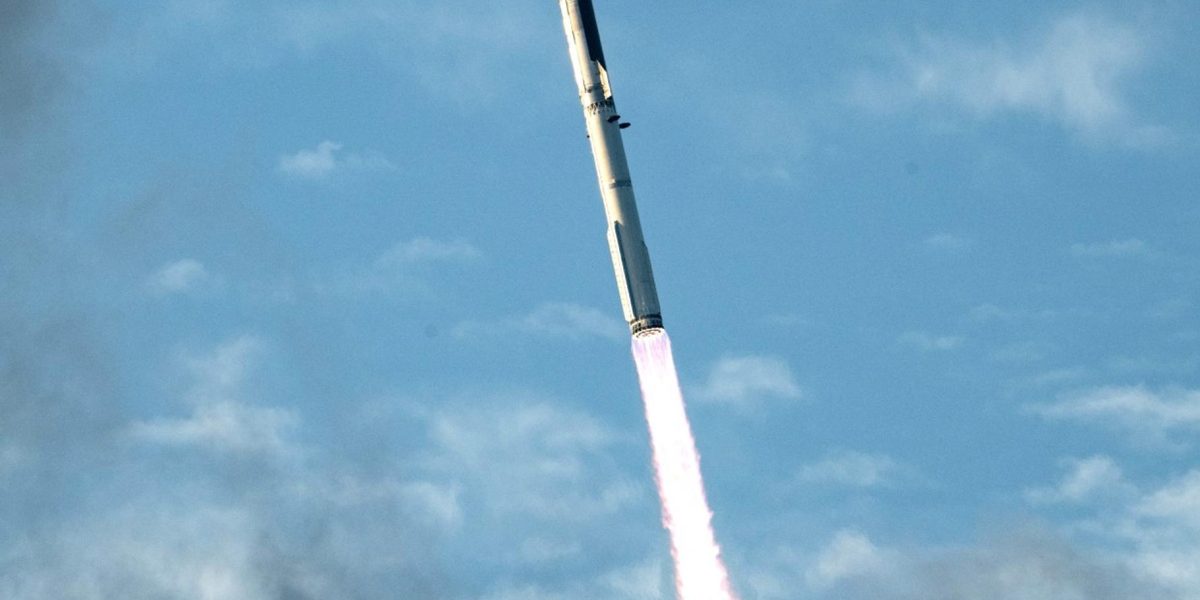
In a landmark achievement for SpaceX, the company’s massive Starship rocket reached Earth orbit for the first time during a test flight on Monday, September 28, 2026, marking a critical step forward in the development of the giant launcher designed to deploy data centers in space and eventually carry missions to the Moon and Mars.
Approximately 25 minutes after its morning liftoff from Texas, the largest and most powerful rocket ever built began orbiting the Earth and deploying operational satellites for the first time, prompting applause from the engineers monitoring the mission.
A Milestone for SpaceX
The successful orbital insertion represents a genuine breakthrough for the American company, which completed a high-profile initial public offering in June. The test, expected to last about ten hours, also saw the rocket’s upper stage deploy 26 next-generation Starlink satellites to expand the company’s already vast satellite internet constellation. If all proceeds as planned, Starship will complete its journey in the Pacific Ocean after circling the Earth six times.
Three Years of Testing Culminate in Success
After roughly a decade of development and three years of test flights in its full configuration, this 14th test flight represented the first attempt to reach orbit. Until now, SpaceX had deliberately followed suborbital trajectories—safer and less demanding—to evaluate the rocket and make modifications based on successive successes and failures.
“We will only go into orbit if everything seems in order on all fronts,” SpaceX engineer Jake Berkowitz had cautioned just before liftoff.
The decision to push the test to an orbital flight proved more complex than anticipated, as one of the engines on the rocket’s upper stage, the spacecraft itself, shut down prematurely during ascent.
Previous Tests Ended in Explosions
Earlier Starship tests, all conducted on suborbital trajectories, had ended in spectacular explosions, particularly over the Caribbean. Reaching orbit is exceptionally difficult because it requires particular thrust and structural resilience.
Entering a New Testing Phase
This test flight marks Starship’s entry into a new phase of testing, which is expected to include attempts at refueling in orbit. These technical challenges remain to be overcome before the megarocket—which Elon Musk wants to make fully reusable—can conduct commercial flights, deploy data centers in orbit, or reach the Moon or the Red Planet.
From an engineering standpoint, even a smooth liftoff on Monday would have constituted “a success,” according to Kathleen Curlee, a space analyst at Georgetown University, speaking ahead of the launch. But for the public and SpaceX’s new investors, expectations are entirely different.
Regardless of its outcome, this 14th test flight will be followed the same week by three other SpaceX rocket launches, including one that will transport a crew of astronauts to the International Space Station (ISS).