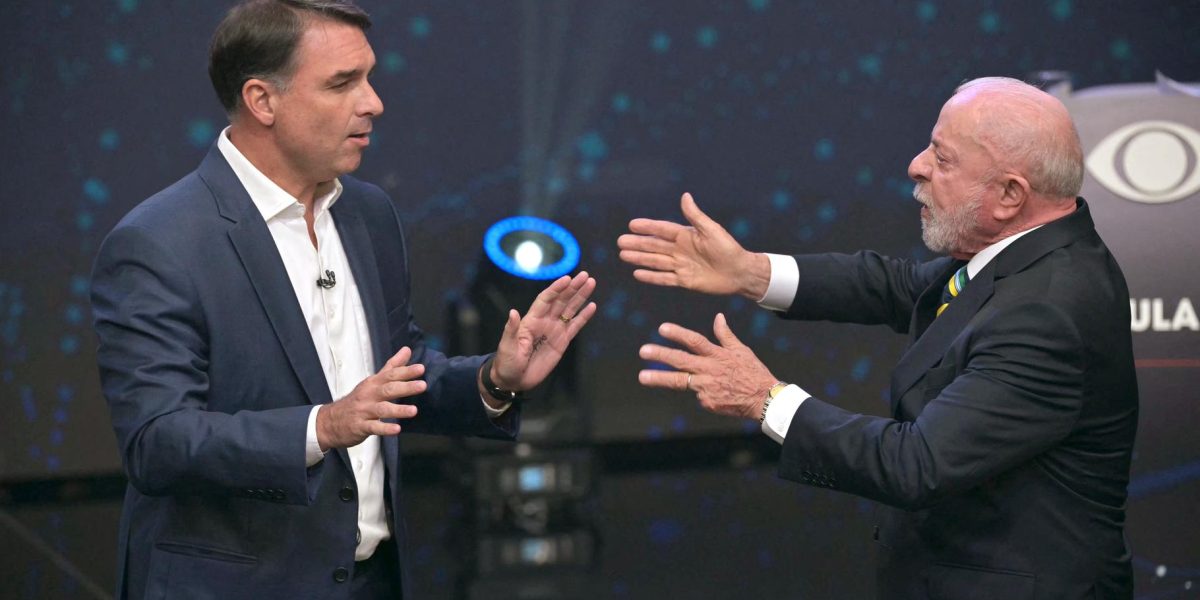
The fiercely contested presidential election in Brazil has descended into a bitter legal war, with just days to go before the decisive second round. The campaign of left-wing candidate Luiz Inacio Lula da Silva has accused the tech giant Meta of “algorithmic manipulation” to favour his conservative rival, Flavio Bolsonaro, while the Bolsonaro campaign has levelled its own charges of abuse of power.
The dispute has turned the world’s largest social media platforms—Facebook, Instagram, and WhatsApp—into a central battleground in the run-up to Sunday’s vote. The escalating tension highlights the immense power of tech companies in modern elections and the fierce fight for digital supremacy in the deeply polarised nation.
Dueling Legal Challenges at the Electoral Court
On Tuesday, Flavio Bolsonaro, a senator and the son of former far-right president Jair Bolsonaro, filed a request with the Superior Electoral Court (TSE) to disqualify his opponent. His lawyers argued that Lula committed an “abuse of power” by using WhatsApp to mass-distribute content promoting his government’s actions during the official election period.
The Bolsonaro campaign further alleged a “negative propaganda offensive” waged by Lula “with the approval” of Meta.
The Lula campaign quickly fired back. Sources within his team announced they would file their own request with the TSE to annul Flavio Bolsonaro’s candidacy, citing “algorithmic manipulation” by Meta designed to harm Lula’s campaign. The campaign’s coordinator, Senator Camilo Santana, confirmed the filing would be submitted on Wednesday.
For days, Lula’s team has publicly accused the US tech giant of “interference,” claiming Meta “prevented President Lula’s profile from promoting feed posts on Instagram” and that a post on his official account “suffered an interruption in view counting, which affected its reach.”
Meta Given Ultimatum by Electoral Court
The legal manoeuvres intensified after the TSE on Monday gave Meta a 24-hour deadline to demonstrate it had taken measures to ensure equal treatment for both candidates, under threat of a daily fine of around $200,000.
Meta stated on its website Tuesday that it had “completed the implementation of measures to satisfy” the court’s requirements. The company has denied all accusations of bias, though it acknowledged last week that it had mistakenly disabled some of Lula’s campaign ads, describing them as technical “incidents” that were not limited to Brazil.
On Tuesday, Meta’s independent oversight board also expressed concern, lamenting “recurring failures” in the company’s moderation of content related to both the US midterm elections and the Brazilian presidential race.
International Interference Claims
The controversy extends beyond the tech giant. Lula has also accused the US government of interfering in favour of Flavio Bolsonaro, whose father, Jair, is a close ally of former US President Donald Trump. Without offering a formal endorsement, Trump had praised the younger Bolsonaro’s “beautiful victory” in the first round of voting.
The election is seen as a crucial ideological battle for Latin America, with Brazil remaining one of the last left-wing strongholds in a region experiencing a right-wing surge.
In a related development, Brazil’s government on Tuesday accused Argentine President Javier Milei, a Trump ally, of “attempted interference” after he suggested Lula might “steal the election.”
With the latest Datafolha poll showing the race in a technical tie—Flavio Bolsonaro at 51% and Lula at 49%—the final days of the campaign are set to be defined by this unprecedented collision of national politics and global tech power.