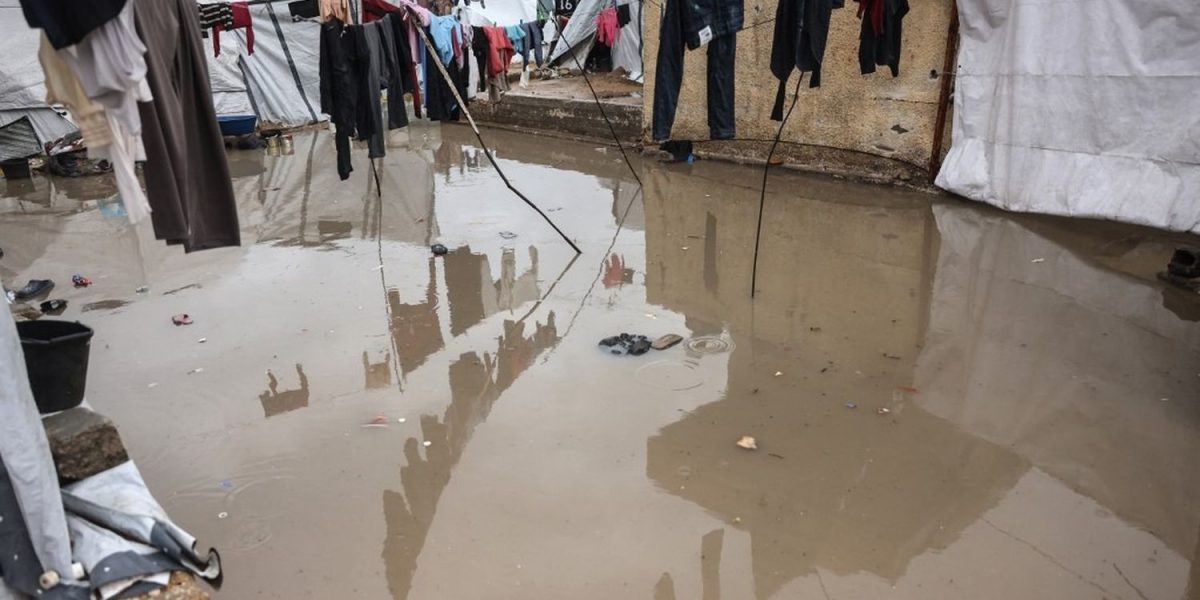
Torrential rains lashed the Gaza Strip on Saturday, November 7, compounding the misery of a population already living in tents amid widespread destruction. But as genuine footage of Palestinians wading through waterlogged camps spread online, so too did a wave of AI-generated videos — some deployed to amplify sympathy, others to cast doubt on the disaster itself.
A Real Crisis, Documented and Distorted
According to the Hamas-run government press office, roughly 70,000 tents sheltering tens of thousands of displaced people were flooded during the first day of a storm system. On Sunday, the Hamas-controlled Civil Defence said five people had died when an embankment collapsed, including two women and five children.
Amid this backdrop, fabricated content began circulating widely on social media. One particularly viral AI-generated video shows dozens of children packed into a tent with water rising to their waists. The clip, viewed hundreds of thousands of times, was initially posted to appeal for international solidarity. “This is not normal. These Palestinian children deserve as much as your children. Imagine your child abandoned in the rain,” one user pleaded.
Yet the video was synthetic — and had already been used to illustrate Gaza flooding in December 2025, according to LeadStories. Even then, the fake sequence was deployed to shock audiences and heighten empathy.
Turning Fakes Against the Truth
The problem cuts both ways. Several users spotted the video’s artificial origins, and the account “Gazawood” — a portmanteau of Gaza and Hollywood, created after Israel’s military response to the October 7, 2023, Hamas attack to dispute evidence of Palestinian suffering — reposted the clip while pointing out its visual inconsistencies. The account quipped ironically: “Israel is blocking access to good AI technology in Gaza.”
Gazawood regularly denounces fabricated imagery purporting to depict conditions in Gaza. AI-generated scenes featuring children have been identified repeatedly since October 2023, notably by Agence France-Presse and German international broadcaster Deutsche Welle.
But other users are seizing on the fakes to discredit authentic reporting. They argue that the floods and torrential rains in Gaza are an invention and that media outlets covering them have been duped.
Political Spin Amid Humanitarian Alarm
The disinformation battle unfolds against a charged diplomatic backdrop. As the “Board of Peace” established by US President Donald Trump called on Israel to “act immediately” to address the “humanitarian emergency” in the Gaza Strip, Israel — under pressure — sought to shift blame onto Hamas.
In a post on X on Monday, November 9, Israel’s foreign ministry accused Hamas of digging up pipelines, allegedly preventing wastewater treatment in Gaza and worsening the situation. But the video cited as evidence, drawn from Hamas propaganda, in fact shows its fighters unearthing pipes from a former Israeli agricultural settlement in Gaza — infrastructure used to draw water, not to treat sewage.
An Information War With Real Consequences
The episode illustrates a widening information conflict in which synthetic media serves competing agendas: galvanizing outrage and compassion on one side, and sowing doubt about documented suffering on the other. For observers, the danger is clear — when fabricated images flood the same channels as authentic ones, the credibility of genuine evidence of hardship becomes collateral damage.