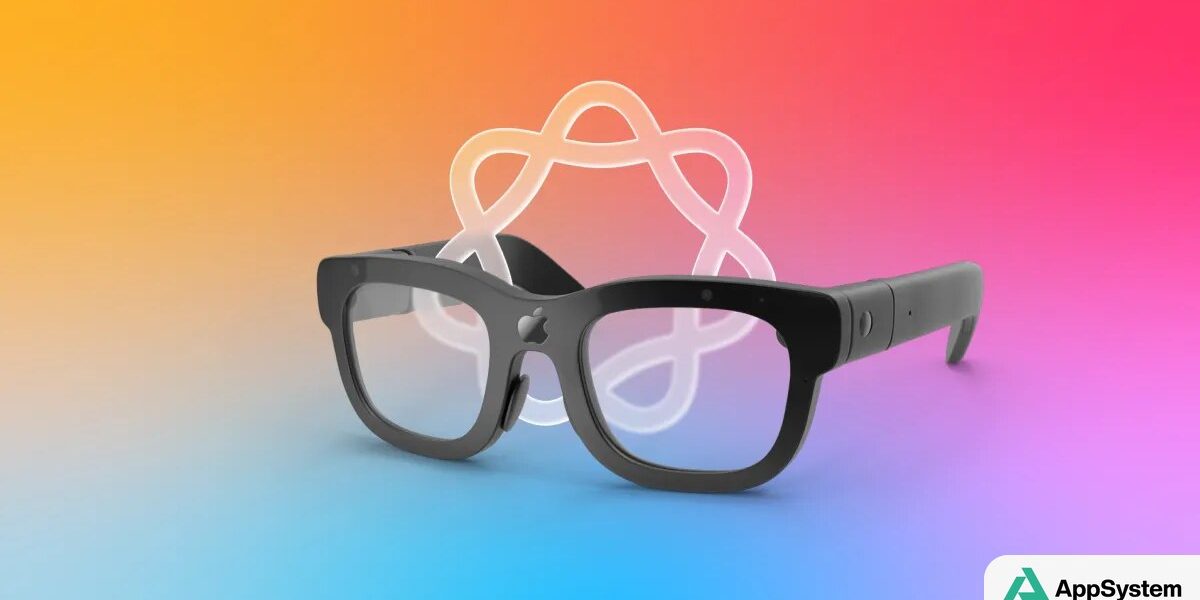
Apple is quietly preparing its first connected glasses for a potential 2027 debut, according to a new report from Bloomberg’s Mark Gurman. Unlike the mixed-reality Vision Pro headset, these glasses would skip the built-in display entirely, leaning instead on artificial intelligence, voice commands, and environmental cameras to deliver a wearable designed for all-day use.
The device would not be augmented reality in the traditional sense. Rather than overlaying digital images onto the real world, it would act as a discreet accessory that puts Siri and Apple Intelligence directly in the user’s field of view—without any visual interface.
Screenless Glasses Driven by Siri and Onboard Cameras
Embedded cameras would allow Siri to interpret the user’s surroundings in real time. The assistant could answer questions about objects, provide contextual information, or translate signs on the go. The glasses are also expected to include speakers for music and audio content, using an open-ear design similar to non-isolating audio accessories that let ambient sound through.
Apple is reportedly exploring features that let users capture an image of an item and later ask Siri to recall it. However, the first generation may not be designed for conventional photo or video capture. Instead, the camera would primarily serve contextual interactions with the assistant, keeping the focus on voice and AI rather than media creation.
Premium Materials and Multiple Styles Under Consideration
The company is developing the design in-house, with no announced partnership with an eyewear manufacturer. Bloomberg reports that Apple is testing several styles and a construction using acetate, a higher-end and more durable material than standard plastic. Color options said to be under study include black, ocean blue, and light brown.
WWDC 2027 Reveal Could Give Developers a Head Start
Apple may unveil the glasses at its Worldwide Developers Conference in 2027, giving developers time to build tailored experiences before a commercial launch later that year. Looking further ahead, the company is also exploring a stronger health-focused positioning, including the potential integration of a heart rate sensor and dedicated software features.
What This Means for Apple’s Wearable Strategy
This project marks a clear attempt to embed Apple Intelligence and Siri into a more discreet form factor than a headset. Without a screen, the glasses’ usefulness will hinge on the speed and accuracy of voice responses, the cameras’ ability to understand scenes, and the quality of the audio. The key question will be whether Apple can make these interactions feel fast and natural enough to justify wearing a new accessory every day.