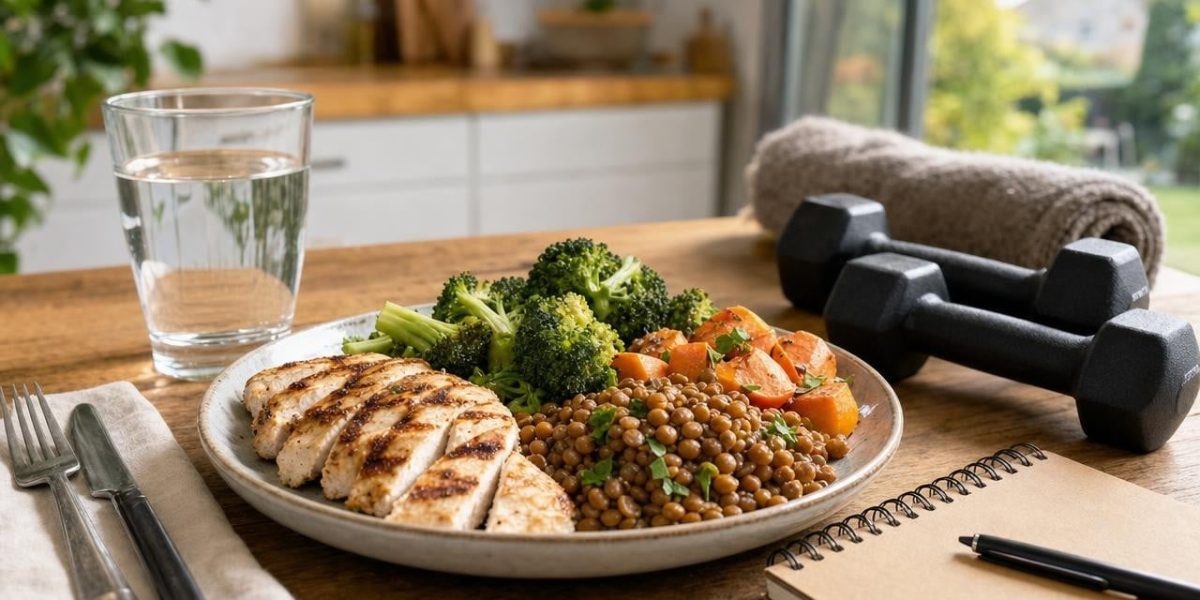
With more than 1.5 million followers on her @blancanutri account, Madrid-based nutritionist Blanca García-Orea Haro has built her reputation on a simple message: neither salad nor crash diets shape a figure on their own. Specializing in digestive and hormonal nutrition, she champions a key pairing to avoid the yo-yo effect after a diet—a protein source at every meal and strength-training exercise.
Far from blaming a lack of willpower, the young expert born in 1990 reminds us that the rebound effect is the norm after many restrictive diets. The French National Agency for Food, Environmental and Occupational Health Safety (ANSES) has already warned: most people regain the weight lost within a year, and up to 95% return to their initial weight—or beyond—within five years. For Blanca García-Orea, the problem lies mainly in overly low-calorie plans that melt muscle and leave people hungry, followed by a “no-safety-net” return to old habits.
What Happens in the Body During the Yo-Yo Effect
The yo-yo effect refers to the rapid regain of lost kilos after a diet, sometimes with a few extra pounds. When eating becomes very restrictive, the body reacts: resting energy expenditure drops, hunger increases, and the organism tries to save every calorie. If the diet is low in protein, weight loss includes a significant share of muscle mass, which further reduces baseline expenditure.
Blanca García-Orea sums up this vicious circle in one sentence: “Eating well without exercising prevents you from developing muscle, and without muscle you don’t burn as many calories at rest. Strength exercise speeds up metabolism, which means you burn more even when you’re resting.” When a person “quits” their diet, appetite remains high, metabolism is slowed, and muscle has decreased: regaining fat then becomes far easier than losing it.
How to Avoid the Yo-Yo Effect: Protein at Every Meal
For this nutritionist, the first anti-rebound lever is clear: “To avoid the rebound effect of diets, there are two keys: more protein at every meal and strength training.” She insists that two diets with the same calories are not experienced the same way at all: the one containing more protein satisfies better, limits cravings, and helps maintain a deficit without food obsession.
In practice, this means including a portion of quality protein at every meal: eggs, Greek yogurt, or fromage blanc at breakfast; fish, poultry, tofu, or legumes at lunch; lentils, chickpeas, eggs, tempeh, or cheese in the evening. A few simple examples:
- Breakfast: plain yogurt, a handful of nuts, fresh fruit.
- Lunch: a plate of lentils with vegetables and olive oil.
- Dinner: vegetable omelette and salad.
These recommendations remain general: in cases of kidney disease, pregnancy, or eating disorders, personalized medical or dietary advice is essential before significantly changing protein intake.
Strength Training and Stabilization: The Duo to Stop Regaining Weight
The second pillar of Blanca García-Orea’s approach is strength training, even for beginners. Preserving, or even gaining a little muscle mass during weight loss helps maintain good resting energy expenditure and limits the muscle loss linked to a calorie deficit. Two to three short sessions per week, with simple movements (squats, adapted push-ups, elastic band pulls), at home or in a gym, are enough to kickstart this work—provided you progress gradually.
The specialist recalls a often-forgotten point: “Weight gain is proportional to the muscle you lose. If you keep your muscle and eat in a satisfying way, you can maintain this way of eating your whole life.” In other words, the end of a diet should always include a real stabilization phase: gradually increasing calories, keeping protein at every meal, maintaining strength training, and avoiding a brutal return to ultra-rich foods. This gentle exit gives the body time to adapt and significantly reduces the risk of the rebound effect.