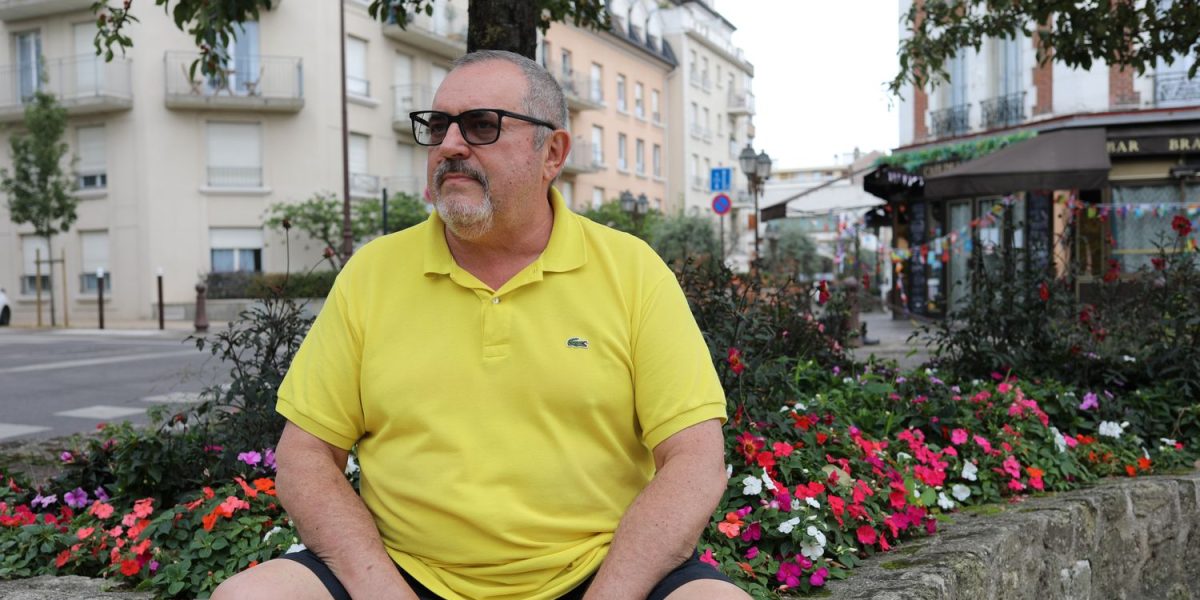
Not long ago, Boris Nadezhdin still dreamed of the Kremlin. Today, the Russian opposition politician walks the streets of a quiet Parisian suburb, his world reduced to a hotel room, a few pairs of shorts, a yellow polo shirt, and a pair of Crocs. Since August 3, the 60-year-old has been living in exile in France, forced to flee Russia after a sudden cascade of judicial proceedings against him.
“I never imagined myself behind bars,” Nadezhdin said during an interview with franceinfo in the Paris region, where he has settled with little more than a hastily packed suitcase. “I have a new court case practically every week now.”
A sudden unraveling
Nadezhdin, who ran as an anti-war candidate in Russia’s 2024 presidential election, had been campaigning for a seat in the State Duma in the September legislative elections. His campaign in the Moscow suburb of Dolgoprudny was gathering signatures under the slogan “Vote for Peace.” But in early summer, the political ground shifted beneath him.
First, he was added to Russia’s “foreign agent” registry, which automatically invalidated his candidacy. Then he was arrested and questioned for “spreading extremist content,” a charge that carries a prison sentence. He was also barred from leaving the country.
In mid-July, during a court hearing in Dolgoprudny, Nadezhdin collapsed. Emergency responders had to wait outside the courtroom until the judge finished deliberations before they were allowed to check his pulse. He recovered with a drop in blood pressure and a symbolic fine of 1,000 rubles — roughly 11 euros. But the warning was unmistakable.
Four days later, Russia’s powerful federal Investigative Committee knocked on his door with a summons.
The escape route
That night, Nadezhdin logged onto Gosuslugi, the Russian government services portal, and discovered something unexpected: his travel ban had been lifted. “Was it thanks to an appeal filed by my lawyers? Or did someone in the Kremlin decide it? I have no idea,” he said.
What mattered was the window. He had perhaps a day or two to leave. “It was a shattering decision,” Nadezhdin recalled.
He checked Aeroflot’s website for the fastest route out of Russia using only Russian documents and no visa. The answer was Astana, the capital of Kazakhstan. The next morning, he stopped at a bank to exchange rubles for euros. By evening, he and his wife were at Sheremetyevo Airport, passing through customs. From Kazakhstan, they flew to Istanbul, then on to Paris.
“France will not hand me over to the Russian government,” he said, citing years of diplomatic contacts. “And I love France. I have traveled here many times.” He recalled a youthful road trip from the Normandy coast to Nice, breakfast by the English Channel and dinner on the Mediterranean.
A long fall from grace
Nadezhdin’s flight marks the final act of a slow political disgrace. He was first pushed out of government circles after leading protests against the 2020 constitutional referendum that allowed Vladimir Putin to extend his rule. He lost access to Sergei Kiriyenko, the powerful head of the presidential administration. After Russia launched its full-scale invasion of Ukraine in 2022, Nadezhdin publicly called for peace and gradually disappeared from television talk shows where he had been a regular guest for 25 years.
In 2024, his presidential bid was rejected at the last minute by the electoral commission, despite drawing broad support from anti-war voters. After the election, the Civil Initiative party that had backed him was shut down. Four members of his team were branded “foreign agents.” His campaign manager was stripped of Russian citizenship.
“I became toxic to most of my contacts,” Nadezhdin said. Still, a few old friends — mayors and deputies from his generation — occasionally came to his kitchen for tea.
Why now?
Nadezhdin believes the Kremlin’s crackdown has intensified because the war is now impossible to ignore inside Russia. “This year, a larger share of the population opposes the war, and support for the president is declining,” he said. Inflation has become the top concern for many Russians, especially older voters and families with children. Younger people cite the war, the fear of mobilization, and internet restrictions.
“My electoral district has about a million people, and Ukrainian strikes hit warehouses, oil facilities, even civilian buildings almost every day,” he said. “There are deaths in the Moscow region.”
For the authorities, he argued, tolerating opposition voices during elections has become impossible. “The more problems an autocratic regime faces, the more it increases repression. That is why I am here.”
A pattern of pressure
Nadezhdin is far from alone. Dozens of legal cases have been opened against members of the liberal Yabloko party, the only political organization in Russia openly calling for a ceasefire in Ukraine. Yabloko has been barred from participating in the September legislative elections, a decision recently upheld by Russia’s Supreme Court. Lev Shlosberg, one of the party’s most prominent figures, was sentenced Monday to 11 years in prison for advocating a ceasefire in a video posted in January 2025.
“I have known him for years, and we are friends,” Nadezhdin said of Shlosberg. He recalled an October 2024 visit to Shlosberg’s stronghold of Pskov, where the two men discussed the possibility of arrest. “Lev was absolutely convinced he would be arrested one day. He told me he would always stay in Russia, with his people. I had chosen exile. I could not imagine living behind bars, because of my heart problems.”
Nadezhdin described the machinery of repression as almost bureaucratic. “The security services, led by the FSB, collect information for years,” he said. “These files can sit on a shelf without moving. Then it is like pressing a button. One page goes to prosecutors, another to internal affairs.” At the police station, he watched an officer receive documents by fax. “In short, I was accused of a case that had never been investigated by the police. When I asked where the information came from, he told me it was secret.”
Nadezhdin accuses the governor of the Moscow region, Andrei Vorobyov, of orchestrating his legal troubles. But the final decision, he believes, came from the presidential administration. “A well-informed journalist told me that this official went to the Kremlin to get the green light,” he said. “I had a chance of being elected to the Duma in my district. Having such a deputy in his region would have been a stain on the governor.”
A future without politics
Now in France, Nadezhdin says he does not plan to play an active political role. He has no intention of joining the exiled opposition party Peaceful Russia, founded in Berlin by Ilya Yashin, who was imprisoned for denouncing the war. “The real influence of the Russian opposition abroad is very limited,” Nadezhdin said.
His immediate concerns are more mundane: managing daily affairs, arranging for his two youngest children, aged 12 and 15, who remain in Russia. He wonders about fish in the Seine and looks forward to mushroom picking season — two of his lifelong passions.
“It is entirely possible for the authorities to push Nadezhdin out of Russia,” he said, blowing softly on his tea in the empty hotel lobby. “And it is entirely possible to ban the Yabloko party. But it is absolutely impossible to drive out tens of millions of people who are against the war and do not support Putin.”