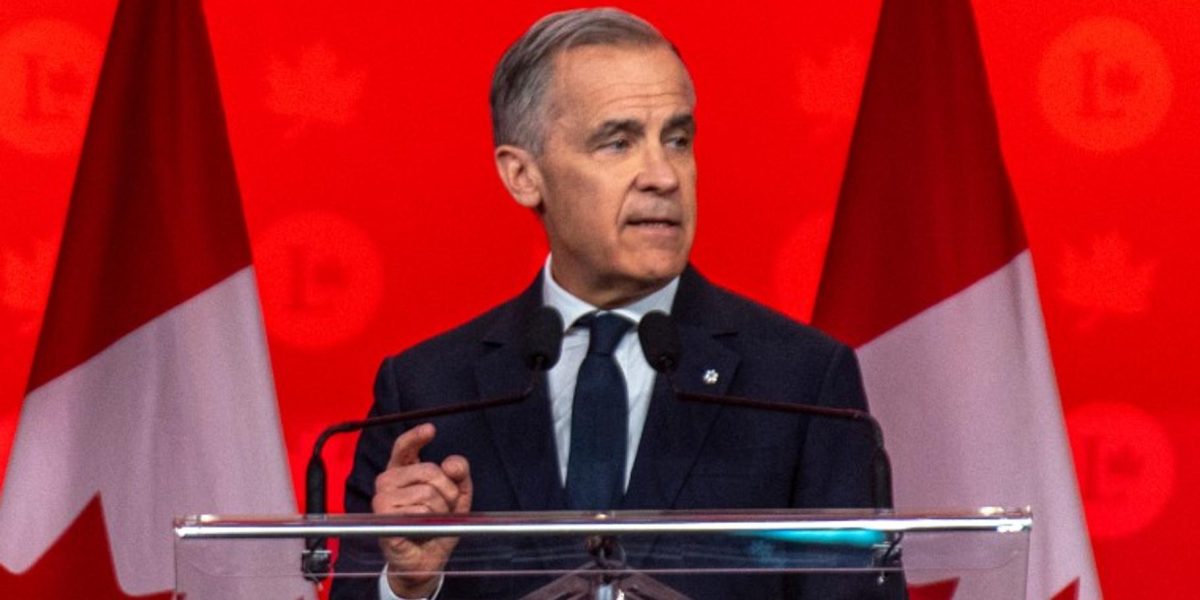
OTTAWA — Prime Minister Mark Carney declared Saturday that Canada would never compromise on protecting the French language and Quebec culture, revealing that American negotiators had pressed these issues until the final moments of now-suspended trade talks.
Speaking one day after Ottawa suspended negotiations with Washington and announced retaliatory measures against its powerful neighbor, Carney addressed a subject of particular sensitivity in Quebec. He said certain questions related to Quebec language and culture had been raised by American officials during the trade discussions.
“We will always defend the French language and culture in Canada,” Carney said in French during his address. “To our American colleagues, let us be clear: for my government and for Canada, these issues were never on the agenda, even though the United States tried to bring them up until the very last minute.”
Cultural Protections Under Pressure
The prime minister described the American demands as “threats against the French language and Quebec culture,” adding bluntly: “This is not acceptable.”
According to Carney, the US proposals targeted several longstanding Canadian policies designed to preserve the country’s bilingual character. These included subsidies for francophone cultural production, the prominence of French-language media online, and mandatory bilingual labeling requirements for products sold in Canada.
The labeling rules reflect Canada’s commitment to its two official languages, a principle enshrined in federal law and deeply woven into the country’s identity. For Quebec, where French is the sole official language, these protections carry even greater weight.
Negotiations Collapse Amid Tariff Dispute
While the linguistic question proved a significant obstacle, it was far from the only sticking point. For weeks, Canada and the United States had sought to reach a new trade agreement as President Donald Trump threatened fresh tariffs on Canadian goods. Those discussions collapsed Friday evening without a deal.
Carney characterized the latest American terms as “a bad deal” for Canada. “They asked for too much and offered too little,” he said.
Following the breakdown, Washington announced new 50 percent tariffs on several categories of Canadian products. Ottawa responded immediately with its own countermeasures, set to take effect September 8. The United States then threatened further escalation, signaling the dispute is far from resolved.
A Defining Stand
Carney’s remarks underscored the political stakes in Quebec, where language and cultural protections enjoy broad public support. By publicly rejecting US pressure on these fronts, the prime minister positioned his government as a defender of francophone identity amid an increasingly confrontational trade relationship with Washington.
The suspension of talks marks a sharp deterioration in Canada-US relations, with both sides now locked in a cycle of tariff threats and retaliatory measures. Whether negotiations resume remains uncertain, but Carney’s message was unequivocal: some things are not for sale.