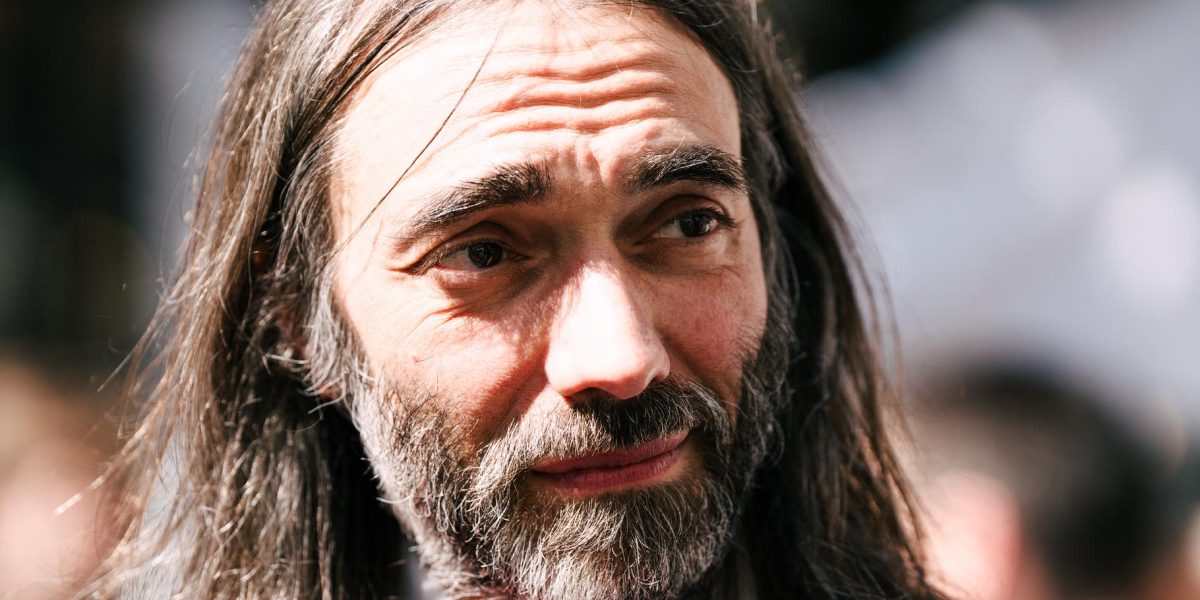
The French mathematician and Fields Medal laureate Cédric Villani has instructed his doctoral students to “above all not use” generative artificial intelligence tools, arguing that in research the “path” matters “more” than the “result.”
“I have a PhD student. I told him clearly, during the thesis, above all not to use these generative tools. During training, you have to work hard to reshape your mind, your brain, and that is what makes the beauty of any specialty,” the former Essonne lawmaker said Tuesday, September 15, on Radio Classique.
According to Villani, “the time of research, the time of verifying the solution, the time of understanding — the path is even more important in science, and in mathematics in particular, than the result itself.”
A Deliberate Course Against the Current
“I am deliberately rowing against the current by saying: ‘To be happy, to feel good, you have to spend time and effort working on something that matters to you,’ and the more time and effort you put into overcoming the problem, the prouder and happier you are,” added the winner of the 2010 Fields Medal, widely regarded as the equivalent of a Nobel Prize for mathematics.
The Problem of Having No Problems Left
Villani also expressed concern about a risk of “drying up” mathematical problems, days after OpenAI announced the resolution of a major problem — the so-called Navier-Stokes equation.
“In mathematics, to make progress, we need three fundamental raw materials: ideas, students and problems… And now we find ourselves with tools that are so effective that there is a risk of the problems drying up,” he observed.
Along with roughly 20 other Fields medalists, he co-signed an op-ed in Le Monde on Friday, September 11, warning of a possible “destructive effect” of AI on mathematical research.
“The primary message from us mathematicians is: ‘Be careful, let us take the time to think about what is important in our profession, to avoid the specter of a lost generation of young mathematicians that would be harmful to all of humanity,'” he explained.
Growing Warnings From the Scientific Community
Villani’s intervention adds to a widening debate over generative AI’s role in scientific training and discovery. His warning centers on a distinction that has become central to the discussion: the difference between obtaining an answer and developing the intellectual capacity to reach it.
- Villani has barred generative AI tools for his doctoral students during their thesis work.
- He argues that the research process builds mathematical intuition in ways results alone cannot.
- He warns that highly capable AI tools could exhaust the supply of open problems.
- Some 20 Fields medalists co-signed a Le Monde op-ed on AI’s potential “destructive effect” on mathematics.
The debate has intensified as AI systems demonstrate growing capacity in domains long considered the preserve of human reasoning, prompting leading researchers to weigh the benefits of acceleration against the risk of eroding the training that produces original mathematical thought.