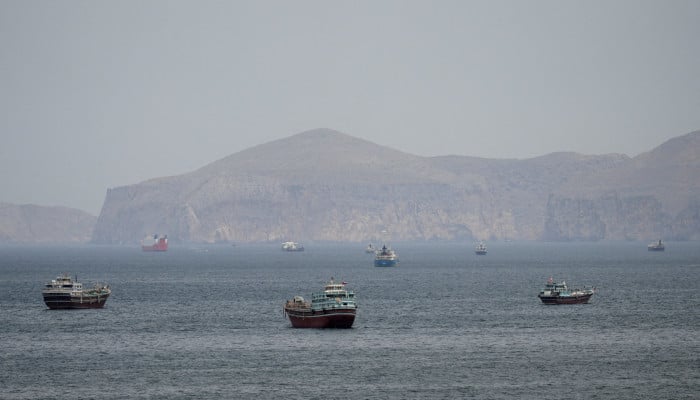
SINGAPORE/WASHINGTON: A significant breakthrough in the three-month-old US-Israeli conflict with Iran appeared to be taking shape on Wednesday, as two Chinese supertankers carrying approximately 4 million barrels of crude oil successfully exited the Strait of Hormuz. The development follows optimistic statements from President Donald Trump and Vice President JD Vance regarding the status of negotiations with Tehran.
Shipping data from LSEG and Kpler confirmed the vessels’ passage through the narrow strait, a critical artery for global energy supplies that has been effectively blockaded since the conflict began. The movement of these ships, among a handful carrying Iraqi crude to leave the Gulf this month, provided a tangible signal that a diplomatic resolution may be imminent.
White House Signals Imminent Resolution
President Trump told reporters on Tuesday that the war would be over “very quickly,” while revealing he had paused a planned resumption of hostilities just an hour before it was scheduled to begin. “I was an hour away from making the decision to go today,” Trump stated, adding that Iran’s leaders are “begging for a deal.” He cautioned, however, that a new US attack would occur within days if no agreement was reached.
Vice President Vance, speaking at a White House press briefing, reinforced the positive outlook. “We’re in a pretty good spot here,” Vance said, acknowledging the complexities of negotiating with a fractured Iranian leadership. “It’s not sometimes totally clear what the negotiating position of the team is, so we are trying to make our own red lines clear.”
The Vice President also emphasized that a core objective of the administration’s policy is to prevent a nuclear arms race from spreading in the region.
Market and Political Pressures Mount
Oil markets reacted swiftly to the positive signals, with Brent crude falling to as low as $110.16 a barrel before recovering some losses. The conflict has caused the worst-ever disruption to global energy supplies, blocking hundreds of tankers and damaging energy infrastructure across the Middle East.
“Investors are keen to gauge whether Washington and Tehran can actually find common ground and reach a peace agreement, with the US stance shifting daily,” said Toshitaka Tazawa, an analyst at Fujitomi Securities.
Trump faces intense domestic political pressure to secure a deal that would reopen the strait. Gasoline prices remain stubbornly high, and the president’s approval rating has plummeted with congressional elections looming in November.
Details of Tehran’s Proposal
Iranian state media outlined Tehran’s latest peace proposal, which includes ending hostilities on all fronts, including Lebanon, the withdrawal of US forces from areas close to Iran, and reparations for destruction caused by US-Israeli attacks. Deputy Foreign Minister Kazem Gharibabadi, cited by IRNA news agency, said the terms also require the lifting of sanctions, release of frozen funds, and an end to the US marine blockade.
The terms, as described, appeared little changed from Iran’s previous offer, which Trump rejected last week as “garbage.”
Ebrahim Azizi, head of the Iranian parliament’s national security committee, asserted on social media platform X that Trump’s pausing of the attack stemmed from the realization that any move against Iran would mean “facing a decisive military response.”
Ceasefire Holds Amid Lingering Tensions
The US-Israeli bombing campaign killed thousands in Iran before a ceasefire was suspended in early April. Israel has also killed thousands more and displaced hundreds of thousands in Lebanon during its invasion targeting the Iran-backed Hezbollah militia. Iranian retaliatory strikes on Israel and neighboring Gulf states have resulted in dozens of fatalities.
While the ceasefire has largely held, recent drone launches from Iraq towards Gulf countries, including Saudi Arabia and Kuwait, underscore the fragility of the situation. The conflict has yet to achieve its stated objectives of curbing Iran’s nuclear program, dismantling its missile capabilities, or triggering regime change, as the Islamic Republic’s leadership has withstood the superpower onslaught with no sign of organized opposition.