Oil prices fell sharply on Tuesday, defying escalating Middle East tensions, as financial markets priced in the potential for a diplomatic breakthrough between the United States and Iran. The drop occurred even as Washington enforced a naval blockade of Iranian ports, a pressure tactic following the collapse of weekend negotiations.
Market Reaction to Diplomatic Signals
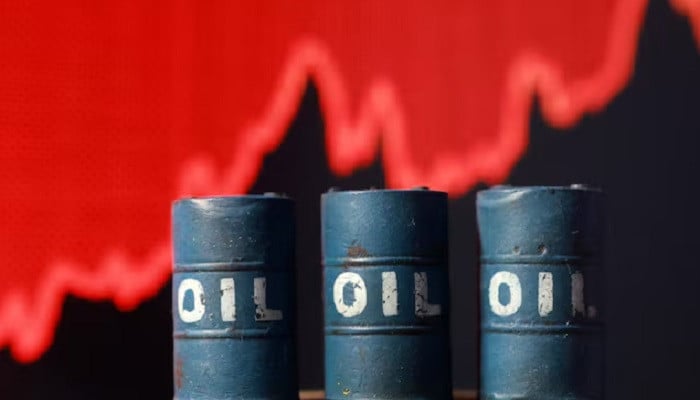
Brent crude futures dropped 2.7% to $96.66 a barrel, while U.S. West Texas Intermediate (WTI) crude slid 3% to $96.13. Analysts attributed the sell-off to signals that dialogue channels remain open. Sources indicated both sides have kept communication lines active, with a U.S. official noting forward movement toward a potential agreement.
U.S. President Donald Trump added to the sentiment, stating on Monday that Iran had “called this morning” and expressed a desire to “work a deal,” though the claim was not independently verified. The market’s focus shifted from the failed talks to the prospect of their resumption.
“The failed weekend talks did not produce a deal, but they also did not close the door on diplomacy, and that is enough for equities to keep pushing higher for now,” said Charu Chanana, chief investment strategist at Saxo.
Risk-On Sentiment Fuels Global Rally
The optimism spilled over into equity markets, triggering a broad risk-on rally. Asian stocks advanced, with MSCI’s broadest index of Asia-Pacific shares outside Japan rising 1%. Japan’s Nikkei and South Korea’s Kospi each gained more than 2%. Futures pointed to a steady open for European and U.S. markets following a strong session on Wall Street.
The U.S. dollar, a traditional safe-haven asset, fell to a 1-1/2-month low against a basket of currencies as capital flowed into riskier assets. The euro and British pound both edged higher.
“Markets are trading hope, not resolution,” Chanana observed, summarizing the day’s sentiment.
Blockade as a Negotiating Tactic
Analysts suggested the U.S. blockade strategy is designed to increase pressure on Tehran without triggering immediate military escalation, effectively forcing Iran back to the negotiating table.
“The US has actually played that trump card… it’s now forced the Iranians back to the drawing board,” said Tony Sycamore, a market analyst at IG.
However, some caution persisted regarding the broader economic outlook. “The markets are still facing a global economic outlook that is deteriorating, and I think the risks are high that you get equity markets and credit markets and the like fall again, and that would push up the US dollar,” said Joseph Capurso, a strategist at Commonwealth Bank of Australia.
Broader Financial Market Moves
U.S. Treasury yields were little changed. The inflationary impact of the recent energy price surge has led investors to recalibrate expectations for major central banks, now anticipating a potential shift toward rate hikes rather than cuts.
Elsewhere, spot gold, another safe-haven asset, was up 0.7% at $4,771.81 an ounce.