Political Firestorm Erupts Over Court-Martial Verdict
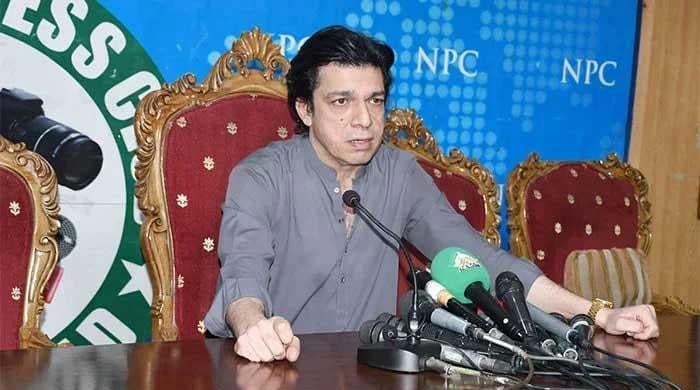
Senator Faisal Vawda has claimed that the recently court-martialled former Inter-Services Intelligence (ISI) chief, Lt Gen (retd) Faiz Hamid, is set to testify against Pakistan Tehreek-e-Insaf (PTI) founder Imran Khan. Vawda asserted this testimony would present evidence and significantly intensify the legal troubles facing the incarcerated former prime minister.
The claims were made hours after a Field General Court Martial (FGCM) sentenced Hamid to 14 years of rigorous imprisonment on charges related to engaging in political activities and violating the Official Secrets Act.
May 9 Events Called a “Joint Plan”
Speaking on a television program, Vawda, a former PTI member, insisted the PTI founder was firmly “caught in the legal squeeze” from cases related to the May 9, 2023, riots. He warned the judicial process would intensify, stating, “The grip of the law will not stop here,” and that Hamid’s sentence “will not be reduced.”
Vawda alleged that providing security details for military installations ahead of the May 9 violence “was Faiz Hamid’s responsibility,” and that once matters are clarified, “the first number is that of PTI and its founder.”
Defence Minister Khawaja Asif, appearing on the same program, escalated the allegations by calling the May 9 events a “joint plan” between the former spy chief and the PTI founder. He claimed the violence aimed to overturn the appointment of the current army chief, General Asim Munir.
“The PTI founder could not have carried out May 9 alone,” Asif stated, alleging Hamid retained influence post-retirement. The minister added that further cases could still be filed against the former ISI director-general.
Allegations Against Former Army Leadership
The political discourse also implicated former military leadership. Vawda discussed the role of ex-army chief General (retd) Qamar Javed Bajwa, alleging he showed “negligence and incompetence” but later attempted to remove Hamid after realizing the implications. Vawda noted Bajwa had been deemed “exonerated,” meaning no action would be taken against him.
Minister Asif argued that the civilian authority to appoint an army chief had never been challenged in the past but accused Bajwa of using pressure and threats to block Munir’s appointment. He further claimed Bajwa initially pushed for Hamid to become army chief and later proposed other names to alter the seniority-based process.
The government has hailed Hamid’s sentencing as a historic step for accountability, while these latest claims point to escalating political and legal battles centered on the events of May 9.