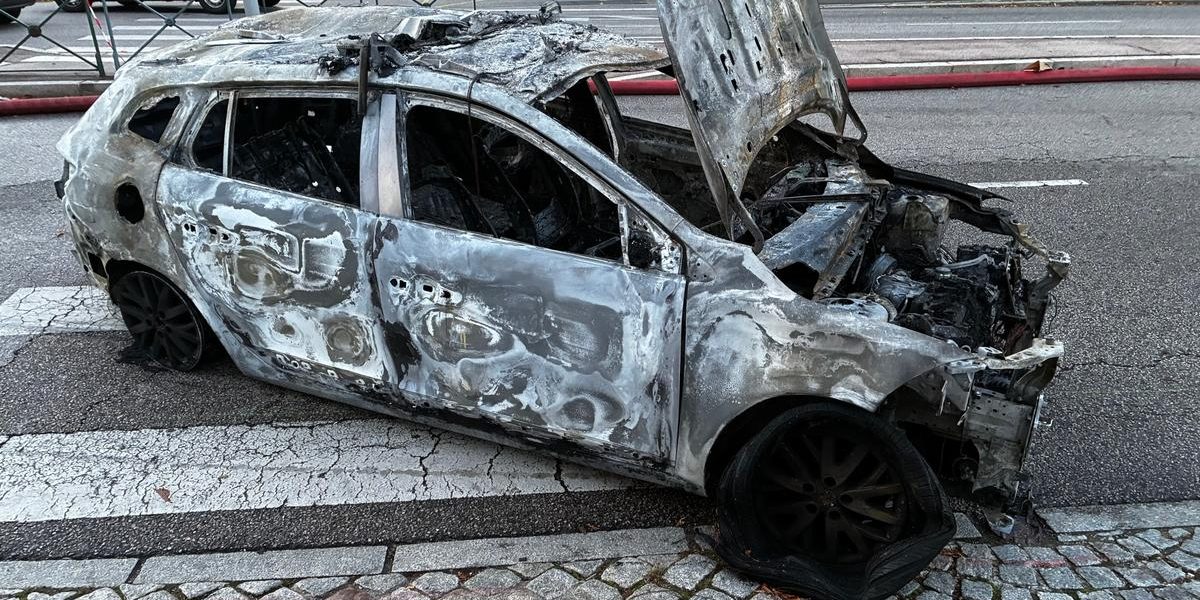
France woke on Sunday to the smoldering aftermath of a day of nationwide mobilization against the rising cost of living that descended into urban guerrilla scenes and looting across numerous cities. According to the latest provisional figures from Prime Minister Sébastien Lecornu, the day saw 1,200 arrests and at least 150 police officers and gendarmes injured, with two officers transported unconscious to hospital.
The most striking image of the day was the Limoges city hall, a 19th-century building inaugurated in 1883, which was largely destroyed by a fire believed to be criminal in origin. The blaze reportedly started inside the building after a group intruded in the margins of the protest, before spreading to the roof. “It is largely lost,” said the prefect of Haute-Vienne, Maurice Barate, who confirmed on LCI that the fire was “contained” and that firefighters were “extinguishing the last embers.” He denounced “a savage horde” and stated that “the fire was set knowingly.”
Pillage and Destruction Across Major Cities
Shops were looted in Paris, Marseille, Lyon, Bordeaux, Nantes, and Nice. Town halls in Marseille and Lille were targeted. In Paris, the police prefecture reported that while the main procession of 110,000 demonstrators unfolded without major incident, several violent groups—”notably from the ultra-left”—multiplied attempts at blockades, wild marches through central Paris, and looting, particularly in the République/Sébastopol and Madeleine/Faubourg Saint-Honoré areas. The groups, numbering “from 500 to more than 1,000 people,” arrived “late in the afternoon” and were “unusually” numerous, with the sole objective of committing theft and looting, according to the communiqué.
The Paris police prefecture reported a total of 855 arrests in the Paris metropolitan area by 8 a.m. Sunday. “Thanks to the determined intervention of the forces of law and order, the situation was stabilized from 11 p.m.,” the statement read, adding that checks continued, particularly in transport networks, leading to the seizure of numerous stolen goods. “The precise toll of damaged or looted businesses remains to be consolidated, but the scale of the damage observed is significant.”
Political Fallout and Demands for Accountability
The political class was united in condemnation but divided over responsibility. Marine Le Pen accused the extreme left of having “taken hostage” social demands, while Jordan Bardella denounced “the professionals of chaos,” and Bruno Retailleau (LR) spoke of “anti-police violence.” Édouard Philippe called for “the greatest firmness.” Jean-Luc Mélenchon called for calm, stating that “those who share our fight have no business in looting or sacking,” but blamed the prefecture’s “aberrant command” for the chaos. Olivier Faure and Marine Tondelier also questioned the policing doctrine, while Raphaël Glucksmann regretted that the demands of peaceful protesters were “drowned out by the din of the wreckers.”
The mayors of Paris, Marseille, and Lyon—Emmanuel Grégoire (PS), Benoît Payan (various left), and Grégory Doucet (The Ecologists)—have requested a meeting with the Prime Minister early this week. In a joint statement, they demanded “a precise diagnosis explaining the chain of events that led to this situation. This cannot and must not happen again.” Benoît Payan had earlier criticized the insufficient police numbers initially deployed in Marseille, a claim firmly rejected by Interior Minister Laurent Nuñez, who insisted the law enforcement system “was not undersized.”
Judicial Response and Controversy
Justice Minister Gérald Darmanin has asked prosecutors for an “extremely firm” judicial response, requesting pre-trial detention for perpetrators of violence against law enforcement, firefighters, public buildings, and businesses. In Saint-Étienne, a 17-year-old minor was “seriously injured in the hand,” according to the Loire prefecture; the prosecutor’s office has opened an investigation entrusted to the IGPN, the police oversight body.
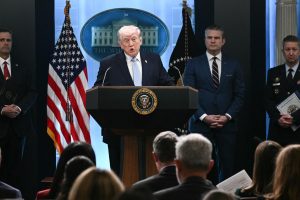
The management of the day’s policing is set to be a major political debate. A resurfaced interview of Interior Minister Laurent Nuñez from October 6, in which he stated, “We have not lost control. Losing control is when you have hordes looting shops and committing exactions,” was widely shared by nationalist figures, including Éric Ciotti and the National Rally, who accused the government of having lost control. The images of the Limoges fire even reached the United States, where Vice-President JD Vance attributed the violence to immigration.
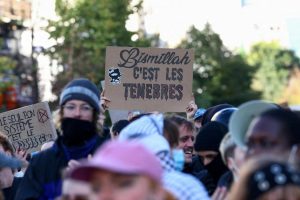
According to the Interior Ministry, 550,000 people marched across France on Saturday, including 110,000 in Paris. Organizers claimed 800,000 demonstrators nationwide. The day leaves a heavy toll and a nation questioning how a protest against the cost of living spiraled into one of the most violent episodes in recent French history.