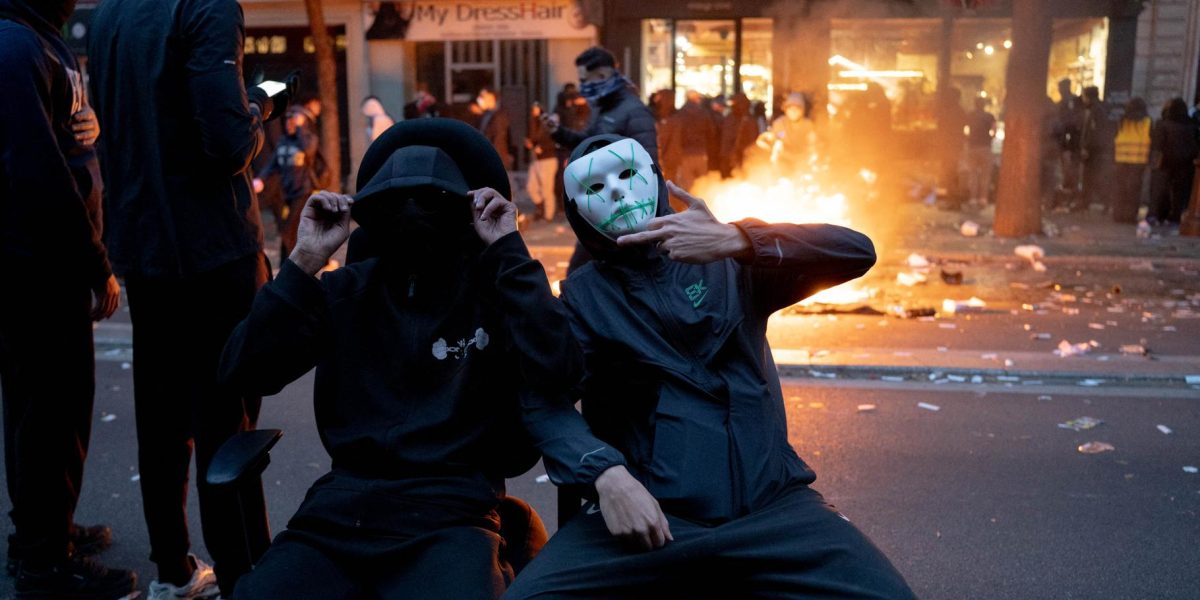
In the days following the October 17 demonstrations against the high cost of living, courthouses in Paris, Marseille, and Lyon have been operating at full capacity. The fast-track trials, known as comparutions immédiates, have revealed a complex mosaic of defendants and a justice system navigating between government demands for severity and judicial independence.
From Amazon Employees to Project Managers: A Heterogeneous Group
Of the 2,500 people taken into custody, 917 were brought before judges for immediate trial. In the capital, four courtrooms—double the usual number—were dedicated to these proceedings.
The profiles of the first suspects brought to justice are remarkably diverse. According to reporting by Le Monde, the defendants share only two common traits: they are predominantly male and all are adults. Paris prosecutors noted that 78% of custody cases involved adults.
Among those tried were employees of Emmaüs and Amazon, a video project manager, delivery drivers, an influencer, a doctoral teaching assistant, students, and unemployed individuals. Some were fathers, including Lamine, 38, a father of five tried in Paris, and Oussama, a father of three tried in Marseille.
While some had clean criminal records, others had prior convictions. However, Paris prosecutor Laure Beccuau emphasized on RTL that “the majority of people we are bringing before the courts have never been convicted.”
Notably, court reports reveal few political motivations among defendants. “Based on the evidence being prosecuted, no one has claimed a motive of any political nature whatsoever,” the Paris prosecutor stated.
Most defendants face charges of “criminal association to commit damage or violence” (108 cases in Paris), “property offenses” (244 in Paris), and “violence against public officials” (45 in Paris).
Suspended Sentences Dominate, Often Below Prosecution Demands
A significant portion of sentences handed down Monday and Tuesday included suspended terms. Despite Justice Minister Gérald Darmanin’s call Monday on TF1 for prosecutors to show “extreme firmness” and be “ruthless toward rioters,” judges frequently issued more lenient rulings than requested.
Ilyes, 24, prosecuted for aggravated theft as a repeat offender and resisting arrest, received a ten-month suspended sentence—far below the 18 months, including six months firm, sought by prosecutors, according to franceinfo. In another case, Victor, 21, tried for throwing projectiles at police, was sentenced to six months suspended, while the prosecutor had requested five months firm, AFP reported.
In Paris on Tuesday, of the 28 people tried in fast-track proceedings, 22 received suspended sentences and four were sentenced to actual imprisonment. Le Monde cited the case of a 23-year-old man arrested for stealing several phones who, despite being filmed, denied the charges. He was sentenced to three years in prison.
Several defendants sentenced to prison had their terms adjusted to electronic monitoring. Justice Minister Darmanin announced Wednesday that 174 people had been incarcerated across France, including a 22-year-old man sentenced to one year firm for throwing a paving stone at police in Marseille. These figures include both immediate-trial convictions and pre-trial detention.
Signs of Judicial Severity
Despite the prevalence of suspended sentences, courts demonstrated severity in certain rulings. In cases resulting in detention, judges often issued mandats de dépôt—orders for immediate incarceration following the hearing—as noted by several media outlets including the legal news site Actu-juridique.
In cases postponed for later trial, several courts ordered defendants held in pre-trial detention. Mediapart reported on three thirty-something defendants accused of kicking police motorcycles, immediately incarcerated after their hearing until their trial scheduled for December 22. The court justified the decision “to prevent any repetition or coordination.”
The Monday and Tuesday proceedings also saw convictions of individuals arrested before committing violence. Mathilde, 19, and François, 20, were sentenced to several months in prison—suspended for her, firm for him—by the Paris court for planning violence against police. Hate messages targeting riot police were found in their private messages.
Judicial columnist Thomas Diquattro of Le Parisien called this “an extremely rare occurrence,” though French law permits custody of anyone “if there are valid reasons to believe they attempted to commit an offense.”
Lawyers Denounce “Historic Repression”
In response to the severity, 127 lawyers signed an open letter to the Paris bar association president, denouncing “the ultra-repressive turn taken by the Paris prosecutor’s office.”
“The national mobilization of October 17 showed us, as lawyers, a historic repression—political, commanded, and intentional,” they wrote.
Fast-track trials are continuing this week in several courthouses across France.