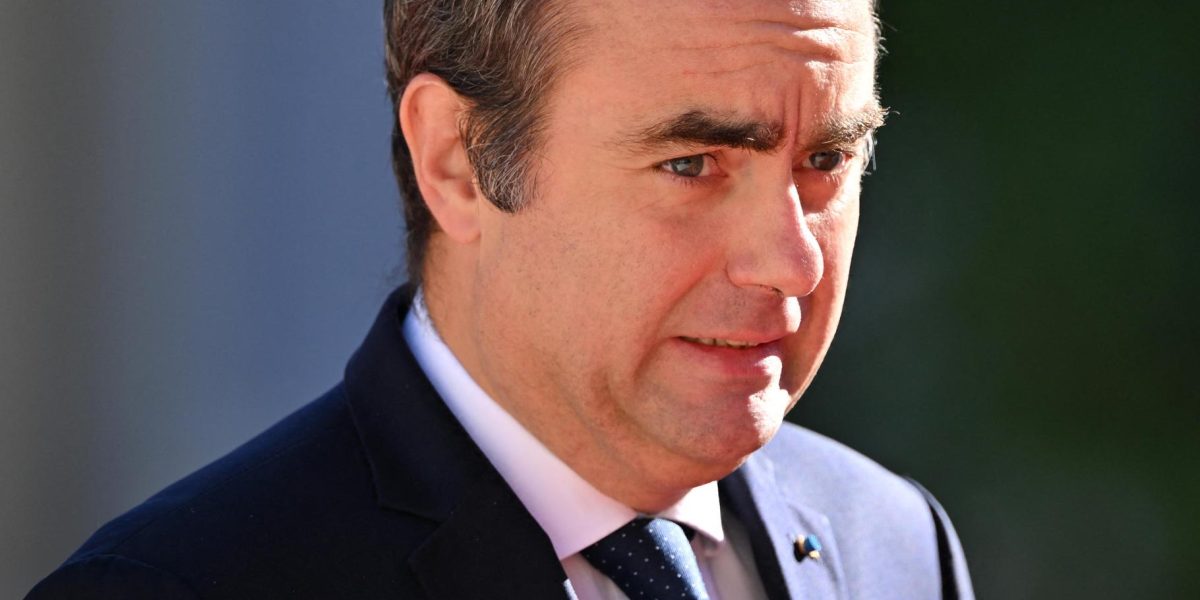
Some initiatives begin under brighter stars. On Monday, November 9, Prime Minister Sébastien Lecornu gathers unions and employers at Matignon with the stated aim of answering persistent public anger over the cost of living. But the announcement of a social conference meant to “provide answers on purchasing power and French salaries” has plainly failed to convince several organizations that have been mobilizing for weeks to ease the pressure.
A Movement That Won’t Settle for Crumbs
Over the weekend, an inter-union grouping of high-school, student and teachers’ organizations called a fresh day of strikes and demonstrations for Tuesday, November 10. Those groups are not party to Monday’s meeting, which focuses on private-sector pay, but their stance illustrates the range of fronts on which the government is being pressed to deliver — and quickly.
The inter-union coalition behind the November 5 demonstrations says it will wait for the outcome of the talks before deciding its next move. It has already warned that “the only thing that will stop the mobilization is an answer to the demands carried for weeks by employees, civil servants, young people and retirees.” In other words, the unions will not settle for scraps.
The Thorny Question of the Minimum Wage
Ahead of the meeting, the government signaled it was ready to move on pay, specifically on raising the minimum wage. In an interview with La Tribune on Sunday, Labor Minister Jean-Pierre Farandou said the government has proposals to make. “We will propose solutions both on the minimum wage, received by more than 2 million employees, and to encourage mandatory annual negotiations in companies and sectors,” he said — while making clear the effort would be modest at best.
Several left-wing candidates, including Jean-Luc Mélenchon and Raphaël Glucksmann, have proposed lifting the minimum wage to 1,700 euros net, against 1,477.93 euros net today. Farandou argued that such a move “would destroy more than 230,000 jobs.” Between the current level and the left’s target sit the CFDT’s demand for a 100-euro monthly increase and the CGT’s call for a 10 percent rise — roughly 150 euros, putting the minimum wage near 1,630 euros.
Toward a Disappointing Outcome?
The government is careful not to commit precisely to any of these targets, preferring to speak of a less ambitious trajectory in which the minimum wage clears 1,500 euros a month. The executive would also like the increase ratified quickly, to take effect as early as December. But it rules out any raise that could affect employment — all the more so as unemployment has begun climbing again and degraded public finances limit the government’s room to maneuver, already constrained by the absence of a majority in the National Assembly.
The result promises to disappoint on the union side. “Plus 0.5 percent or plus 0.6 percent — we are not here for a small-change operation. When you see the explosion in the cost of living, it won’t be 0.6 percent on the minimum wage that answers it,” CGT general secretary Sophie Binet warned on Thursday, November 5.
Employers Offer Little Comfort
Beyond these difficulties, the Prime Minister gets little help from employers, whom he is also trying to placate at a time when the government’s budget plans a freeze on payroll tax relief. Medef chief Patrick Martin will not attend Monday’s meeting, citing a trip to Cambodia. Even though he is being replaced, the signal sent to unions is hardly conducive to negotiation.
Employers, rattled by lethargic growth, view with deep disfavor any wage increase going beyond the minimum wage alone — the inter-union coalition’s red line in this social autumn.
The equation looks dizzying for Lecornu. Without a checkbook or a majority in the Palais Bourbon, the Prime Minister is nonetheless condemned to extract a compromise capable of calming exasperation in the streets. For if he fails, he cannot simply plead impotence: should deadlock set in, it is toward Matignon that all the anger will turn. And the alibi of the coming presidential election will likely not be enough to soothe it.