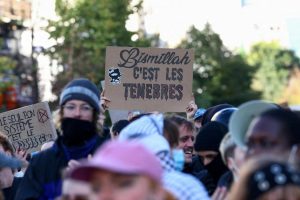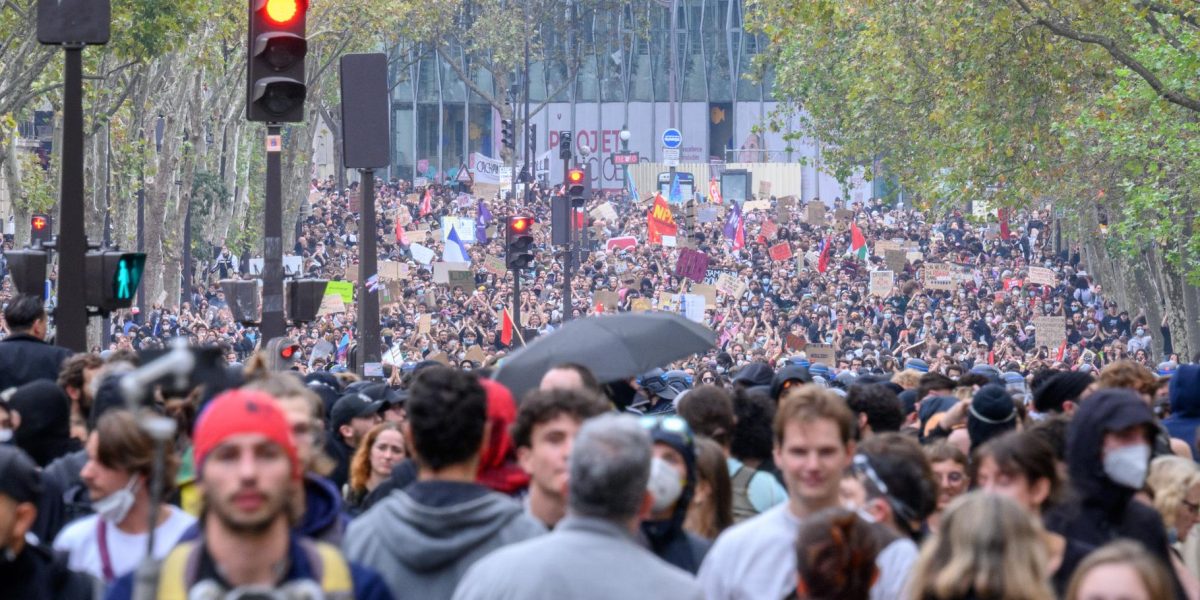
France is bracing for a day of nationwide disruption this Saturday, October 17, as a diverse coalition of Yellow Vests, high school students, retirees, and workers prepares to take to the streets in what authorities fear could become a major test of public order. The mobilisation, which began as a grassroots call on social media in mid-September, has evolved into a broader convergence of grievances centred on the rising cost of living.
A Movement Born Online, Now Ready to March
The initial spark came from an anonymous TikTok account calling for a revival of the Yellow Vests movement to protest fuel prices. Within weeks, the appeal snowballed, drawing in student unions and other disaffected groups. By Friday evening, Interior Ministry officials estimated that around 150,000 demonstrators could take part nationwide, with at least 40,000 expected in Paris and up to 10,000 in other major cities. Approximately 500 actions were being “considered,” and more than 90 demonstrations were “in the process of being structured,” according to sources close to Interior Minister Laurent Nuñez.
Who Will Be on the Streets?
The coalition is broad and loosely organised. Yellow Vests are expected to be out in force, with prominent figures such as Jérôme Rodrigues urging unity. “Yellow Vests, students, workers, retirees—our struggles can come together, and today we have a deadline: October 17,” he said in a video posted on Facebook.
High school students, mobilised for nearly a month, will also be highly visible. Three student unions, including the Union Syndicale Lycéenne, have called for an “Act VI” of protests. The National Union of Students of France (Unef) has urged supporters to gather at Place de la République. Retirees, often cited in calls for convergence, have been invited to join, though their turnout remains uncertain.
Other groups include VTC drivers and delivery workers, summoned to Place de la Bastille by their national union, and climate activists, who have pledged to participate under the banner “End of the World, End of the Month.” The Confédération Paysanne, a farmers’ union, has called on its members to join the “convergence of struggles,” while the larger FNSEA has declined, citing the October harvest season.
Among trade unions, only the CGT has officially joined. Politically, La France Insoumise (LFI) and the Communist Party (PCF) are encouraging their supporters to march. Several LFI MPs, as well as Green leader Marine Tondelier and Communist leader Fabien Roussel, are expected in the processions.
What Are They Demanding?
The grievances are as varied as the participants. High school students continue to demand more resources for building renovations, replacing absent teachers, better timetabling, and improved Parcoursup procedures. But the overarching theme is the struggle against the high cost of living. “Fed up with paying for fuel, groceries, and rent that keep getting more expensive,” the Yellow Vests declare on their website.
CGT General Secretary Sophie Binet, speaking on France Inter, summed up the “gravity of the situation”: “Today, buying tomatoes, courgettes, or filling up the tank has become a luxury. Millions of workers are completely suffocated and can no longer make ends meet.”
Early Actions and Security Preparations
Small-scale actions were already reported on Saturday morning. In Rennes, about twenty people set up a filtering blockade with bins and pallets near a shopping centre. In Lyon, police dispersed a group of 40 near a bridge over the Rhône after an attempt to block traffic, and another group of ten near the Feyzin refinery. In Marseille, the Prado boulevard was briefly blocked with bins and scooters before CRS officers cleared it.
Several announced operations did not materialise, including at the Île de Ré bridge toll and in Bordeaux. The Yellow Vests have published a map listing 1,757 mobilisation points, including roundabouts, service stations, tolls, stations, bridges, and ports. The Interior Minister has asked prefects to keep key infrastructure open.
In Paris, after hours of negotiation, the police prefecture authorised a route from Place de la République to Place de la Nation for one procession. A second major march, including Yellow Vests and the inter-union group, will go from Place de la République to Place de Clichy, starting at 2 p.m. All other gatherings are theoretically banned, with violators facing a €135 fine. Authorities have not disclosed the full security deployment, but franceinfo reports that twice as many CRS officers will be mobilised compared to Tuesday. The controversial “sound grenades” have been authorised for use if urban violence erupts, though their use was suspended during the student movement. Prime Minister Sébastien Lecornu has convened an interministerial crisis cell.
As the day unfolds, all eyes will be on whether this diverse coalition can maintain unity—and whether the protests remain peaceful.