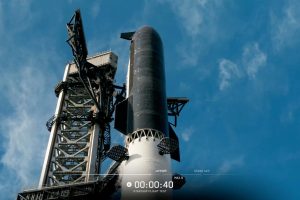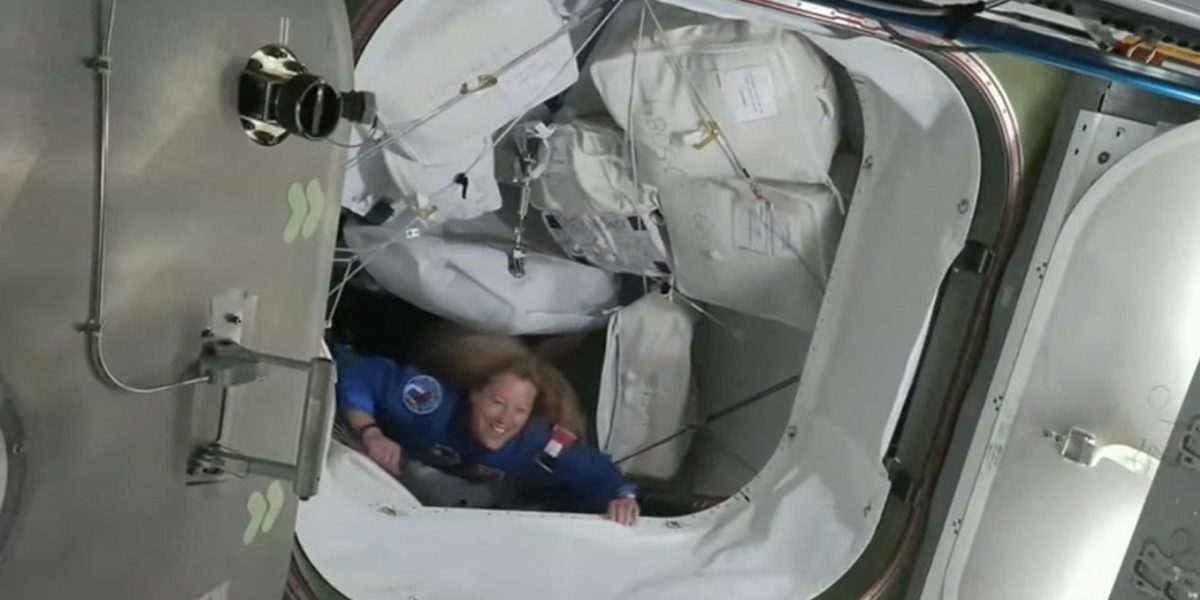
After a 34-hour journey, French astronaut Sophie Adenot successfully docked at the International Space Station (ISS) on Saturday, February 14, fulfilling her first spaceflight and ending a quarter-century absence of French women in orbit.
A Milestone Arrival
The 43-year-old astronaut traveled aboard a SpaceX Crew Dragon capsule, which autonomously maneuvered to link with the orbiting laboratory approximately 400 kilometers above Earth. “A huge thank you to all the teams,” Adenot communicated upon docking. “We have just docked, everything is going well… Earth is truly beautiful from up here.”
She added, “I am proud to bring France and Europe on this incredible adventure that transcends borders. Count on me to share every step with you and make the stars shine in the eyes of the French people.”
International Crew and Precise Docking
Adenot was accompanied by NASA astronauts Jessica Meir and Jack Hathaway, and Roscosmos cosmonaut Andrei Fediaev. Prior to docking, the crew donned their pressure suits as a safety precaution.
Live footage from SpaceX showed the Crew Dragon’s final approach, with automated systems guiding it to a gentle connection. Twelve docking hooks secured the capsule to the ISS, after which SpaceX confirmed, “Docking confirmed!” on social media.
Following standard procedures, the crew waited approximately two hours for pressurization checks before the hatches opened. Adenot, with a broad smile, entered the ISS first around 11:30 PM, greeted by the awaiting Expedition crew members.
An Eight-Month Science Mission
Sophie Adenot’s mission aboard the ISS is scheduled to last about eight months, with a planned return to Earth in October. The ISS, continuously occupied for 25 years, remains a vital laboratory for international cooperation and scientific discovery.
During her stay, Adenot will participate in over 200 scientific experiments. Research will focus on the effects of microgravity on the human body and the space environment. A key technology demonstration will involve EchoFinder, a system developed by the French space agency CNES. This tool uses artificial intelligence and augmented reality to enable astronauts to perform ultrasound scans autonomously.
The mission underscores ongoing international collaboration in space, even as the ISS is scheduled for retirement around 2030, paving the way for new models of commercial space station operations.