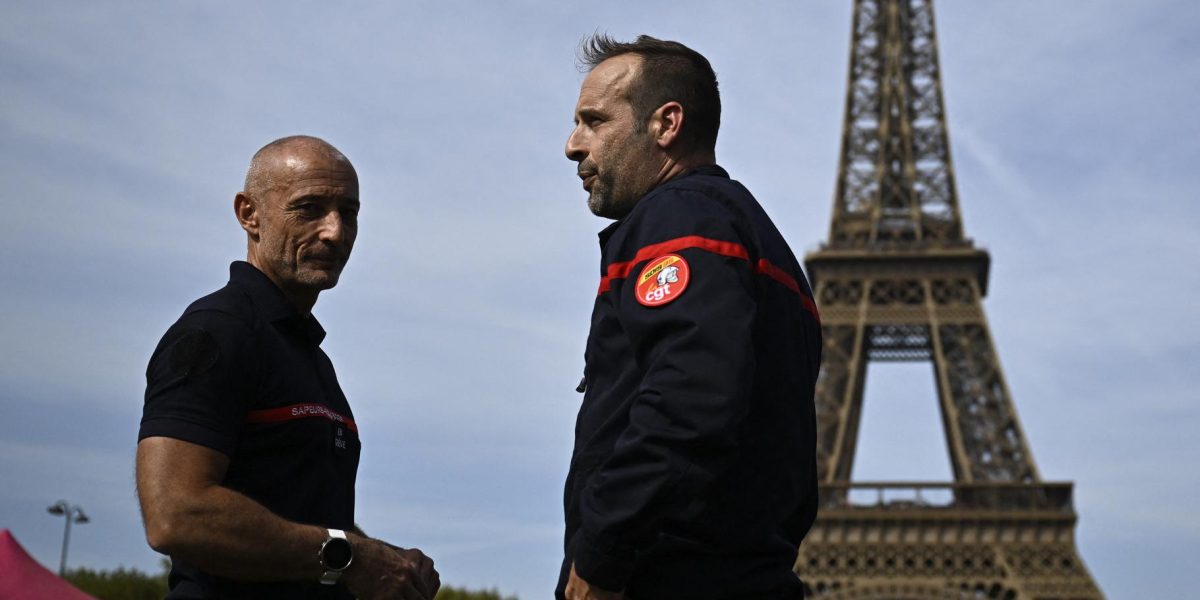
Professional firefighters erected a camp at the foot of the Eiffel Tower on Sunday, September 27, 2026, transforming the Champ-de-Mars from a tourist destination into a stage for their growing anger after an exhausting wildfire season. The encampment sets the tone for a larger mobilization planned in Paris on Tuesday.
A “Reinforcement Column of Anger”
Eight unions from the intersyndicale launched what they called a “reinforcement column of anger” on Sunday morning at the Champ-de-Mars, according to David Saquet of Unsa Sapeurs-Pompiers. The goal is to meet with the public and elected officials “and tell them what weighs on our hearts, to display our peaceful anger” and “our determination to be heard by the government.”
A march through the capital is planned for Monday, followed by participation on Tuesday in a public sector demonstration called by a broad intersyndicale demanding higher pay and increased budget resources.
The Tuesday march will mark the culmination of three weeks of mobilization. The nine representative unions of France’s roughly 44,000 professional firefighters, excluding military personnel, filed a strike notice that took effect on September 8. Since then, they have multiplied banners, magnets, and inscriptions on their trucks to make their “anger” heard.
Exhausted After an Intense Fire Season
The strike notice runs until October 20, but “there is no question of lifting it until we obtain satisfaction,” said Rémy Chabbouh of SUD Sdis, wearing a “On Strike” badge pinned to his firefighter uniform alongside colleagues gathered in Paris.
Both professional and volunteer firefighters are demanding new hires, better health protections, and a refocusing of their missions. They describe themselves as worn out after an intense fire season during which they confronted France’s first observed pyrocumulonimbus, a “fire storm.”
Since January, approximately 98,000 hectares have burned in France, a record in fifty years. According to the National Federation of Firefighters, eight firefighters have died across all types of interventions. Fire crews are increasingly called upon to confront megafires and floods amid global warming. At the same time, they respond to nearly 20 million calls per year and carry out close to 5 million interventions, more than three-quarters of which involve emergency assistance to individuals.
Several Issues on the Table
Before the media spotlight fades and ahead of the financing bill’s examination scheduled for October 20, firefighters are trying to make themselves heard on several fronts.
The first concerns the proposed civil security modernization law, an initial summary of which was presented on September 8. The text not only “satisfies no one” but has generated “unanimous opposition” and is “designed to self-destruct,” said Frédéric Monchy of the SNSPP-PATS union. The Association of Departmental Fire and Rescue Service Directors criticized a text that “does not provide the structural responses that the evolution of risks and threats, the intensification of crises, and the growing demands on fire and rescue services nevertheless require.”
Another issue, intertwined with the first, concerns financial measures expected to appear in the budget bill. But for now, “we know nothing” about new financing options for the departmental fire and rescue services, Monchy said, apart from the overall budgetary effort of 54 billion euros in savings to be achieved in 2027.
“Expectations are very high,” emphasized Adrien Legue of the Avenir Secours union, who said the strike movement is being well followed, with some fire stations reporting “100%” participation, though without impact on emergency response due to staff requisitions. The Civil Security Directorate, when contacted, said that since September 8, an average of 2,682 professional firefighters have been on strike daily, representing 9.3% of total personnel.