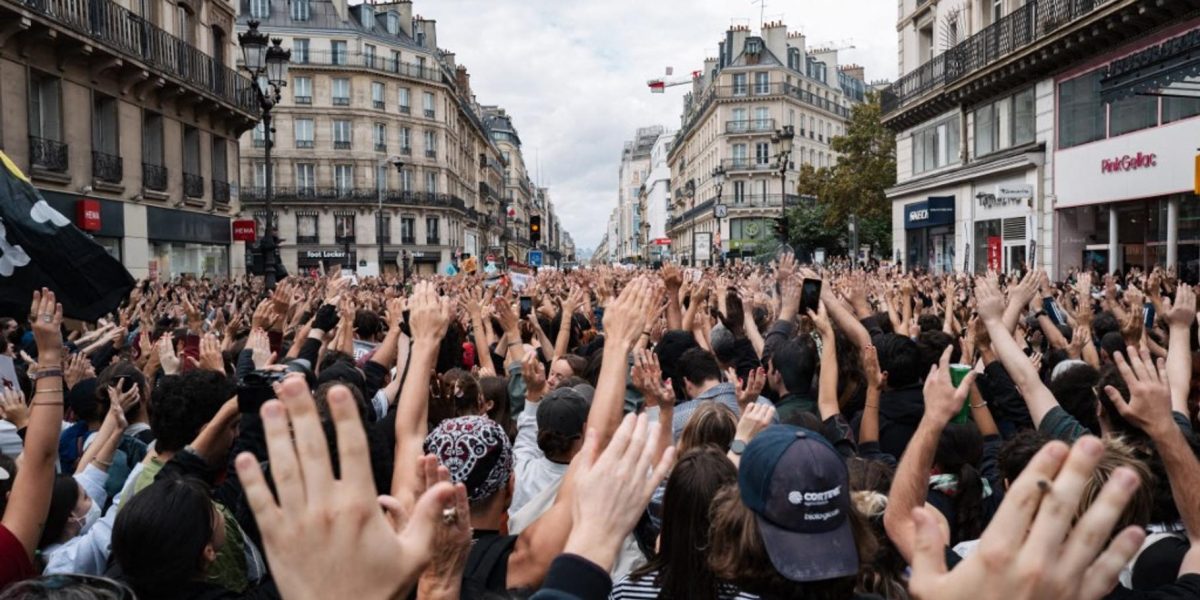
A government consultation platform launched urgently to address growing unrest among French high school students has collected 72,172 contributions just three days after its launch, according to figures released Friday, October 9.
The consultation, open until October 23, requires no registration or account creation, according to Agora, the site hosting it. Students do not need to verify their status as high schoolers to respond anonymously to two questions posed by the government: “What are the main difficulties you currently face in your high school?” and “What should change or be improved to help you learn better and experience school life more positively?”
Workload and Schedules Top Student Concerns
According to an initial government summary obtained by Le Parisien, based on the first 60,277 responses, the primary concern among students is the organization of school time. Seventy percent criticized their workload, schedules, excessively long days, and hours poorly adapted to their working rhythm.
The second major worry involves the state of school buildings. Nearly half of respondents—48.3 percent—mentioned aging infrastructure and inadequate insulation, requesting fans to cope with increasingly hot summers and more heating during winter months. Non-functional or poorly maintained toilets were also frequently cited.
Teacher Replacements and Class Sizes
In third place, 27.2 percent of participants raised the lack of substitute teachers when a regular instructor is absent. Le Parisien noted this concern is particularly prevalent in eastern Paris—where the movement began at Saint-Exupéry high school in Créteil—as well as in Loir-et-Cher, Drôme, Lot, and Mayotte.
The excessive number of students per class was flagged by 22.5 percent of contributors. The final notable figure concerns Parcoursup, the post-secondary admissions platform that has been a source of stress and confusion for students for years.
Local and National Reporting Planned
Results are expected to be reported at the local level before being consolidated nationally by the end of October.
The grievances mirror those students have been voicing for nearly three weeks. While students remain mobilized, turnout for the “fourth act” on Thursday, October 8, was lower than for the “third act” on Tuesday, October 6. Another mobilization is planned for Tuesday, October 13.