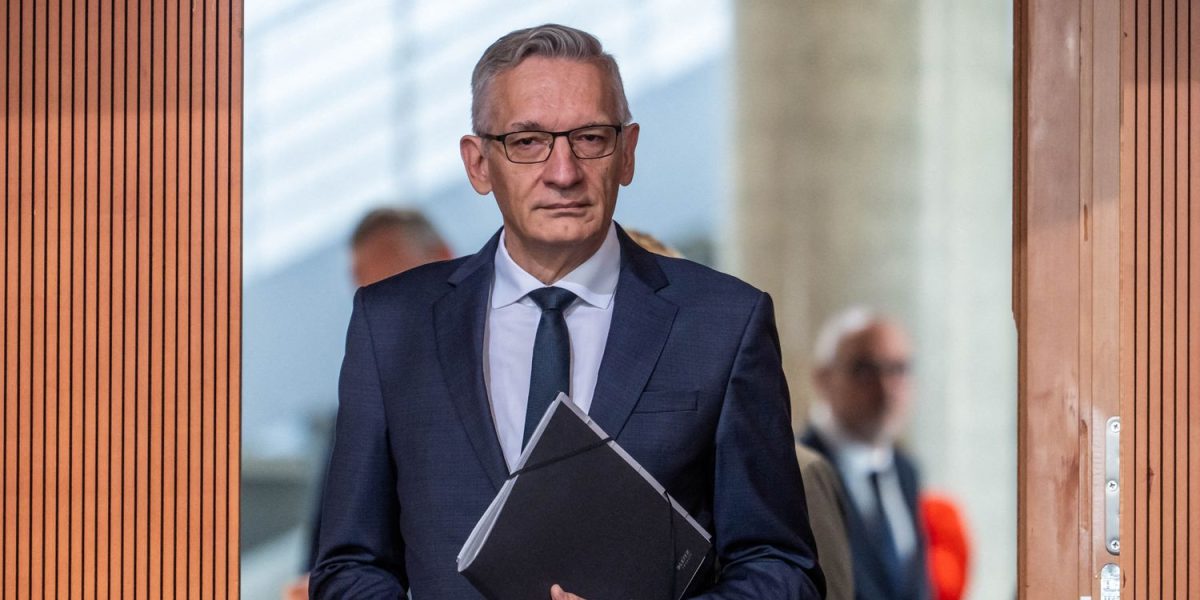
Germany’s foreign intelligence chief accused Russia on Monday of intensifying its “shadow war” against Berlin, raising the risk of armed conflict between the two nations. Martin Jäger, president of the Federal Intelligence Service (BND), told lawmakers that Germany faces an increasingly perilous security environment.
“Germany is in danger of being drawn into a violent conflict with Russia,” Jäger said during a public hearing before the Bundestag’s parliamentary oversight committee in Berlin.
Germany as Primary Target
As a NATO member and Ukraine’s largest supporter, Germany has become a prime target for Russian hostile actions, according to the government. These operations range from disinformation campaigns and espionage to assassination attempts on German soil.
Jäger cited an August drone attack attempt against a Ukrainian transport aircraft at Leipzig airport, for which Russian agents are the primary suspects. He described the incident as merely one “example” of a broader pattern of hostile activity.
The BND chief identified Russia as the country posing “the most direct, the broadest and the most concrete threat” to Germany, attributing this to Berlin’s opposition to “the projection of Russian hegemonic power in Europe.”
Low-Intensity Military Activities
While the BND has not detected concrete evidence that Russia is preparing a large-scale attack against NATO, it considers “low-intensity military activities by Russia” plausible, particularly in the Baltic states.
Sinan Selen, head of Germany’s domestic intelligence service (BfV), emphasized that Russian operations extend beyond classic espionage to include “sabotage and assassination operations” specifically targeting “the military industry and military infrastructure.”
Growing Threat Across Europe
The warnings from German intelligence officials reflect mounting concerns across Europe about Russia’s hybrid warfare tactics. European nations have been forced to reassess their security posture as Moscow continues to test the boundaries of acceptable conduct in what analysts describe as a gray zone between peace and open conflict.
Germany’s position as Ukraine’s foremost military supporter has made it particularly vulnerable to Russian retaliation, intelligence officials say. The escalation of hostile activities underscores the widening scope of the confrontation between Moscow and Western nations supporting Kyiv.