Greece’s Prime Minister Kyriakos Mitsotakis has issued a stark warning: there can be no meaningful rapprochement between the European Union and the United Kingdom unless the long-standing dispute over the Parthenon Marbles is resolved. Speaking at a conference in Athens on Tuesday, October 6, Mitsotakis escalated pressure on one of Europe’s most enduring cultural heritage controversies.
A Centuries-Old Dispute
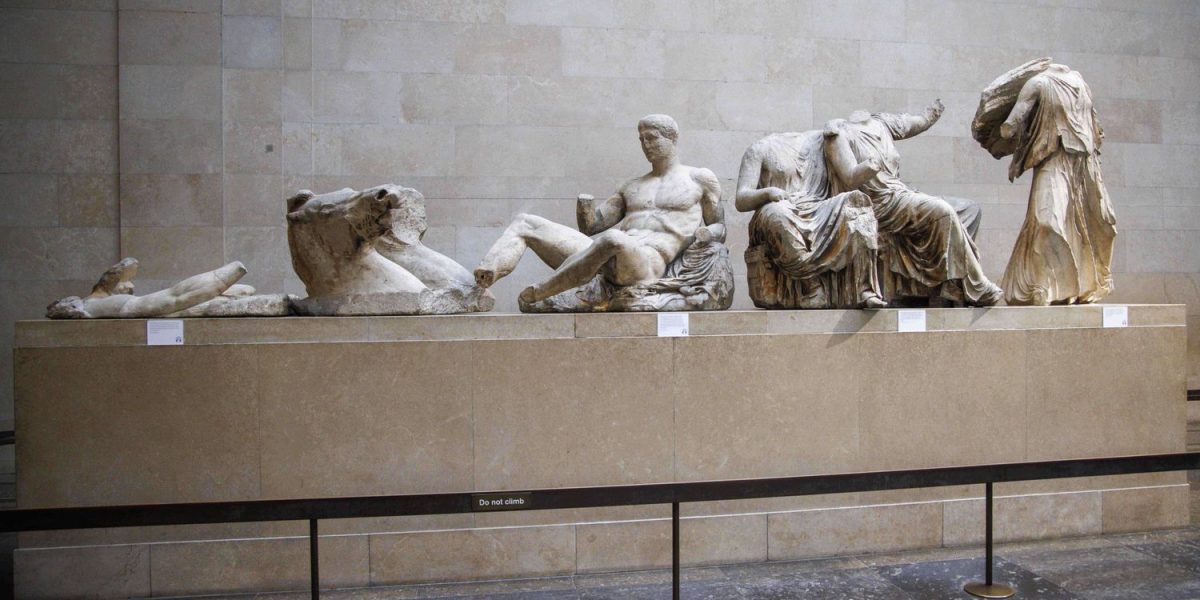
For more than two centuries, the British Museum has housed a significant portion of the sculpted friezes from the Parthenon, the most celebrated monument of classical antiquity. Greece maintains that these treasures were “looted” in 1802 by Thomas Bruce, the 7th Earl of Elgin, who served as British ambassador to the Ottoman Empire at the time.
Britain counters that the sculptures were “legally acquired” by Elgin before being sold to the British Museum, where they have remained ever since.
Mitsotakis: ‘A Question for Europe’
With Greece set to assume the rotating presidency of the European Union in the second half of 2027, Mitsotakis is determined to place the marbles at the center of discussions with Britain.
“It will be part of that debate,” Mitsotakis said. “This is not just a question for Greece — it is a question for Europe.”
The Greek premier vowed to “intensify” his country’s claim with the British government, noting that years of discussions with the British Museum have “not advanced.”
A Cultural Partnership Offer
Athens has long proposed a cultural partnership to the British Museum: temporary access to other archaeological treasures that have never left Greece in exchange for the return of the Parthenon sculptures.
“We could offer the British Museum a unique cultural partnership,” Mitsotakis reiterated, adding that he would advocate “with great vigor” for cultural diplomacy with the new British Prime Minister.
UK Government Maintains Position
Andy Burnham, who replaced Keir Starmer at Downing Street in July, adopted the British government’s longstanding position in August, telling the Financial Times that the matter falls under the British Museum’s jurisdiction. The museum’s powers are constrained by a 1963 law prohibiting it from selling or disposing of its treasures, meaning any permanent return of the marbles would require parliamentary action.
Bayeux Tapestry Comparison
In an op-ed published September 24 in The Guardian, Mitsotakis invoked the example of the Bayeux Tapestry — a French loan intended to reintegrate its country of origin — to highlight the starkly different status of the Parthenon sculptures.
For Mitsotakis, the sculptures must join the Acropolis Museum, inaugurated in 2009 with a dedicated space awaiting the marbles.
“Greece cannot accept any arrangement that would require it to recognize the British Museum’s ownership of the sculptures, nor a mechanism implying that we are ‘borrowing’ parts of our own monument,” he wrote.
Talks Stalled
The Daily Telegraph reported in September that the Greek side had withdrawn from years-long negotiations, frustrated by what it described as an “absence of progress.” A British Museum spokesperson did not confirm the report, telling AFP on Wednesday evening that its “openness to an agreement remains unchanged.”
The dispute continues to cast a shadow over cultural relations between London and Athens — and now, potentially, over broader EU-UK ties.