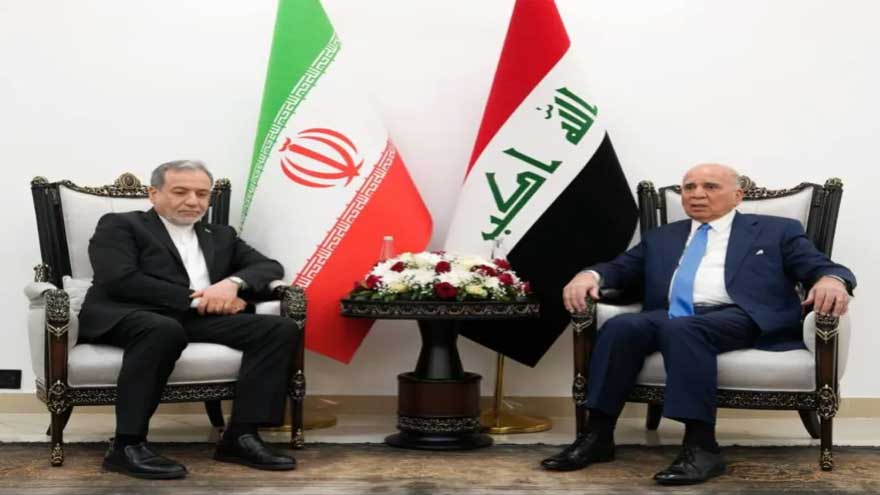
Iranian Foreign Minister Abbas Araghchi on Sunday pressed the United States to guarantee Israel’s compliance with a newly signed memorandum of understanding, accusing the Israeli military of pressing ahead with operations in Lebanon in defiance of the accord.
Speaking alongside Iraqi Foreign Minister Fuad Hussein in Baghdad, Araghchi said every clause of the Iran-U.S. arrangement must be carried out, singling out commitments tied to Lebanon as an immediate test of Washington’s willingness to restrain its ally.
First Clause Demands Withdrawal
“Regrettably, the Zionist entity continues its air strikes on Lebanon,” Araghchi told reporters. He stressed that Israel had accepted the memorandum and that the United States bore a clear responsibility to compel it to abide by the terms.
The minister said the opening provision of the agreement explicitly calls for Israel’s withdrawal from occupied areas inside Lebanon. He urged Washington to ensure the commitment is honored in order to help bring the conflict to an end.
Strait of Hormuz Under Iranian Control
Turning to maritime security, Araghchi said the Strait of Hormuz would remain under full Iranian oversight for the next 30 days under the agreement’s framework. “The strait remains under the total oversight and of Iran during the coming 30 days,” he said, adding that Tehran intends to restore the waterway to full operational capacity once remaining obstacles are cleared.
Araghchi warned that any unilateral intervention by outside powers would only heighten regional tensions and delay the reopening of the strategic shipping lane, which he said falls solely under Iran’s responsibility.
Iraqi Support and Regional Security
The Iranian foreign minister thanked Iraq for its political backing during what he described as the “war imposed on Iran,” saying the Iraqi government and people had consistently stood by Tehran in the face of Israeli-American aggression.
Iraqi Foreign Minister Fuad Hussein acknowledged that ending the conflict remains an urgent regional priority, noting that military tensions persist around the Strait of Hormuz despite the ceasefire. “The war is still ongoing in another form,” Hussein said.
He called on Gulf states, Iraq and Iran to assume collective responsibility for security and proposed a regional meeting to address the mounting challenges. Hussein also stressed the need to reopen the strait and lift restrictions on maritime traffic to protect both regional and global trade.
According to Iran’s Foreign Ministry, Araghchi’s visit also covered bilateral relations, regional coordination and preparations for upcoming ceremonies marking the funeral of Ali Khamenei at Iraqi holy sites.