Direct Military Confrontation Escalates
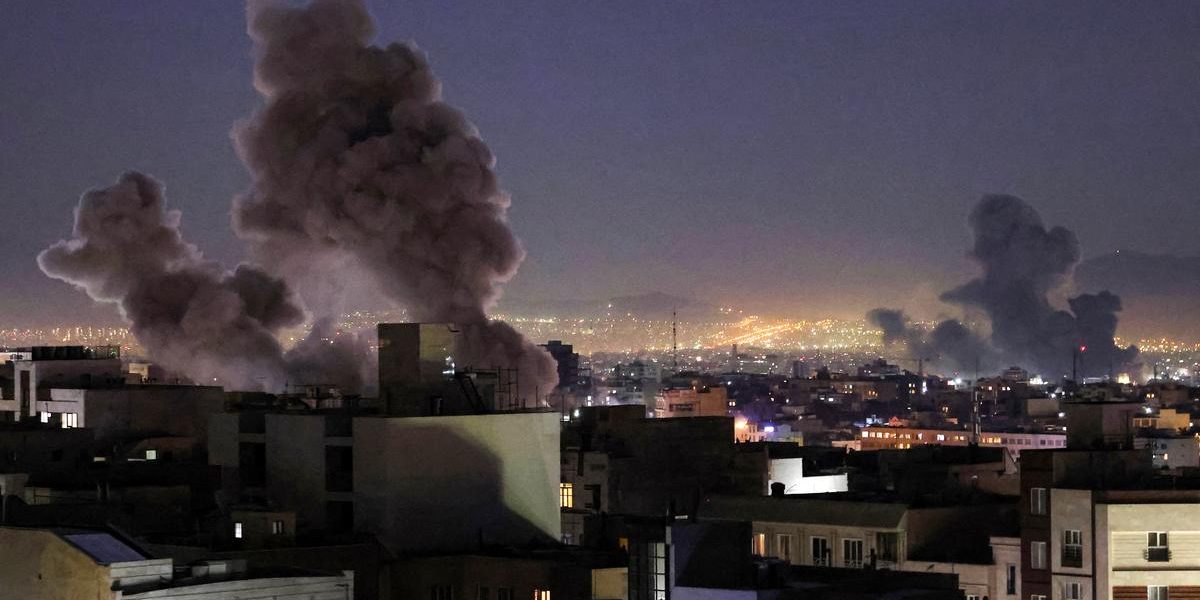
The Israeli military announced late Tuesday that it had launched a series of strikes targeting what it called “terrorist regime infrastructure” in Tehran. This marks a significant escalation in the ongoing Middle East conflict, now in its 26th day. The announcement came shortly after Israel reported detecting Iranian missiles heading toward its territory.
According to the Israeli Defense Forces’ official Telegram channel, the operation specifically targeted Iranian regime facilities in the capital. This represents one of the most direct confrontations between the two nations in the current conflict.
Iranian Retaliation and Regional Attacks
Earlier on Wednesday, Iran’s Revolutionary Guards claimed responsibility for missile attacks targeting multiple countries. State television (Irib) reported that precision-guided missiles and attack drones were fired toward Israel, Kuwait, Bahrain, and Jordan.
The reported targets included:
- Areas in northern and central Israel, including Tel Aviv
- Two U.S. military bases in Kuwait
- A military base in Bahrain
- A base in Jordan
In Kuwait, attacks continued into Wednesday with drones and missiles targeting the country. The Kuwaiti military reported that its air defenses were actively responding to these hostile attacks. A fuel tank at Kuwait International Airport caught fire after being hit in a drone attack, though authorities reported only material damage with no casualties.
Diplomatic Maneuvers Amid Conflict
As military actions intensified, diplomatic efforts gained momentum. U.S. President Donald Trump stated Tuesday that negotiations were currently underway with “the right people” in Iran to reach an agreement. He mentioned that Iran had offered the United States “a very big gift” related to hydrocarbons, though he provided no specific details.
The United States has reportedly presented Iran with a 15-point plan aimed at ending the conflict through Pakistani intermediaries. According to media reports, the plan includes demands for Iran to surrender all enriched nuclear fuel, dismantle key nuclear facilities, abandon support for proxy groups like Hezbollah and Hamas, accept limits on its missile program, and keep the Strait of Hormuz open to maritime traffic.
In return, Iran would receive relief from international sanctions and support for its civilian nuclear program.
Regional Fallout and Humanitarian Impact
The conflict has spread across multiple fronts with significant humanitarian consequences:
In Lebanon, Israeli airstrikes killed at least nine people overnight in southern regions considered strongholds of the Iran-backed Hezbollah movement. The Israeli military also warned residents to evacuate southern suburbs of Beirut ahead of imminent strikes.
Twelve people were injured in missile attacks near Tel Aviv, with damage reported to residential buildings in Bnei Brak and Givat Shmuel. In northern Israel, a woman was killed by rocket fire from Lebanon.
The International Atomic Energy Agency (IAEA) expressed concern after Iran reported that its Bushehr nuclear power plant had been struck, though no damage to the facility itself was reported. IAEA Director General Rafael Grossi called for “maximum restraint” to avoid nuclear safety risks during the conflict.
International Response and Economic Impact
World leaders have called for de-escalation. French President Emmanuel Macron urged Iran to engage in good-faith negotiations, while Pope Leo XIV renewed his call for a ceasefire and dialogue. Chinese Foreign Minister Wang Yi emphasized that “dialogue is always better than war” during a phone call with his Iranian counterpart.
The conflict has triggered significant economic concerns, particularly regarding energy supplies. French Economy Minister Roland Lescure warned of a “new oil shock” that could impact economic growth if energy disruptions persist. European gas storage strategies are being reconsidered as the blockade of the Strait of Hormuz and attacks on Qatari energy infrastructure threaten supplies.
Financial markets showed unusual activity, with a spike in oil trading minutes before President Trump’s announcement about negotiations with Iran, raising questions about potential insider trading.
Path Forward Uncertain
Despite diplomatic efforts, the Israeli military stated it would continue operations “according to an unchanged plan” regardless of negotiations. Meanwhile, the United States is reportedly preparing to deploy approximately 3,000 paratroopers from the 82nd Airborne Division to the Middle East to support operations against Iran.
As the conflict enters its fourth week, with multiple fronts active from the Mediterranean to the Persian Gulf, the international community faces the challenge of containing a regional war that threatens global energy security and has already displaced over one million people according to the Pope’s assessment.