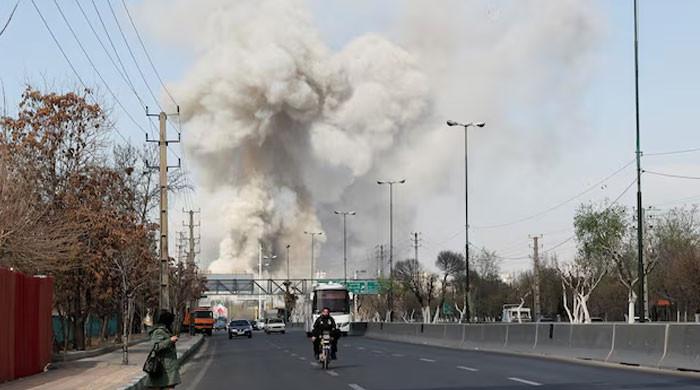
War Enters New Phase Focused on Underground Bunkers
Israel’s military campaign against Iran has entered a second, more intensive phase focused on destroying ballistic missile sites buried deep underground, according to sources familiar with the operation. The shift in strategy aims to cripple Iran’s ability to launch aerial attacks against Israel as the conflict, now in its second week, shows no signs of abating.
Objective: Neutralizing the Aerial Threat
One source, speaking on condition of anonymity due to the sensitivity of the subject, stated that Israel’s objective is to “neutralise Iran’s ability to launch aerial attacks at Israel by the end of the war.” This goal complements the initial phase of the joint U.S.-Israeli offensive, which targeted Iran’s leadership and above-ground missile launchers.
The Israeli military confirmed it struck “an underground infrastructure site used by the Iranian regime to store ballistic missiles” overnight, marking the first publicly announced attack on such fortified facilities since hostilities began.
Assessing Iran’s Diminishing Stockpile
The success of this new phase may hinge on the size of Iran’s remaining missile reserves—a figure hotly debated by analysts. Pre-war estimates ranged from Israel’s assessment of roughly 2,500 missiles to other analyses suggesting a stockpile as large as 6,000.
Douglas Barrie of the International Institute for Strategic Studies noted that Iran is assessed to still possess land-attack cruise missiles, which are precision-guided and harder to detect. However, Israeli and U.S. officials report a decline in ballistic missile and drone launches from Iran since the war’s outset, attributing it to successful strikes on launch infrastructure and a possible Iranian effort to conserve resources for a protracted war of attrition.
Regional Conflict Expands
The air war has intensified and expanded geographically. Israeli fighter jets have conducted near-constant sorties, with some missions striking targets in Iran and Lebanon’s Hezbollah strongholds in a single operation. This comes after Hezbollah fired rockets into Israel, triggering heavy Israeli airstrikes reaching as far north as Beirut.
Eran Lerman, a former Israeli deputy national security adviser, commented on the strategic outlook, stating that while initial strikes hoped to catalyze a rapid disintegration of Iran’s ruling system, further degradation of its military capabilities is now necessary.
The conflict, which began with opening salvos that killed Iranian leaders, has ignited a regional firestorm, with Iranian attacks reported in Israel, the Gulf, and Iraq. The focus now turns to the deeply buried arsenals that represent the core of Iran’s strategic threat.