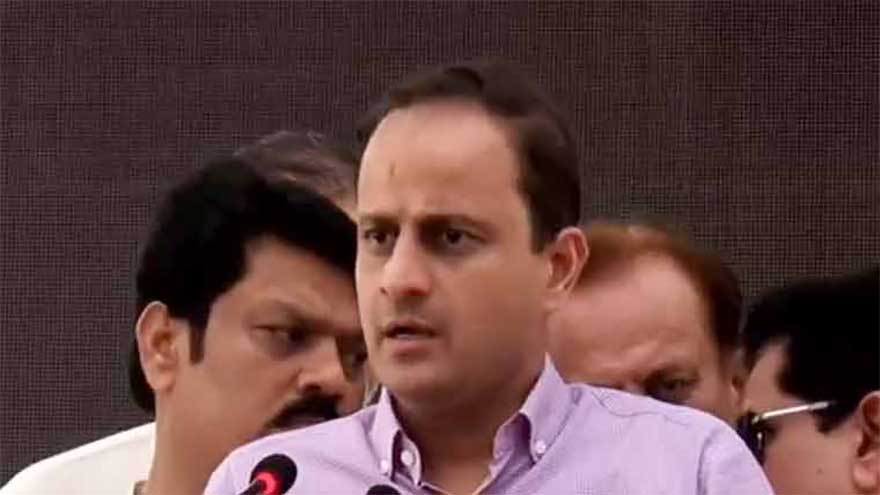
KARACHI – Mayor Murtaza Wahab declared on Sunday that the people of Karachi are tired of prejudice-driven politics and want tangible progress in infrastructure, merit-based governance, and access to basic services. Speaking to the media, Wahab contrasted the priorities of ordinary citizens with what he described as the divisive agenda of certain political elements.
“Some political forces continue to view Karachi’s problems through the lens of discrimination and division,” Wahab said. “But the common man is only concerned with development, roads, water, and essential services. That is where our focus must be.”
Criticism of MQM’s Legacy
The mayor launched a sharp critique of the Muttahida Qaumi Movement’s (MQM) historical role in the city, alleging that merit had been systematically undermined and that young people were pushed toward violence instead of education and constructive engagement.
Wahab claimed there was a time when a single phone call from the MQM could shut down Karachi, crippling normal life and economic activity. He further alleged that residents of the Garden area had long been deprived of basic facilities, including a reliable water supply.
New Pumping Station Operational
In a concrete step to address civic grievances, Wahab announced that a new pumping station became operational on Sunday. The facility is part of broader efforts by the city administration to improve water distribution and other essential services across Karachi.
- Operational start: Sunday, as part of service improvement drive
- Target area: Garden and surrounding neighbourhoods
- Goal: Reliable water supply and reduced shortages
“We are working to ensure that Karachi’s citizens receive the facilities they deserve,” the mayor said. “Development must take precedence over political disagreements.”
Merit and Infrastructure as Core Principles
Wahab stressed that Karachi needs policies centred on merit, infrastructure development, and improved civic services. He argued that the city can only move forward by abandoning confrontational politics and directing resources toward the everyday problems faced by millions of residents.
The mayor’s remarks reflect ongoing political tensions over responsibility for Karachi’s longstanding challenges, including water shortages, deteriorating roads, and gaps in municipal services. He maintained that residents should be judged and given opportunities on merit, not divided along political or ethnic lines.
“Karachi’s future depends on development-oriented politics and effective delivery of basic facilities,” Wahab concluded. “We cannot afford a return to the confrontational environment of previous decades.”