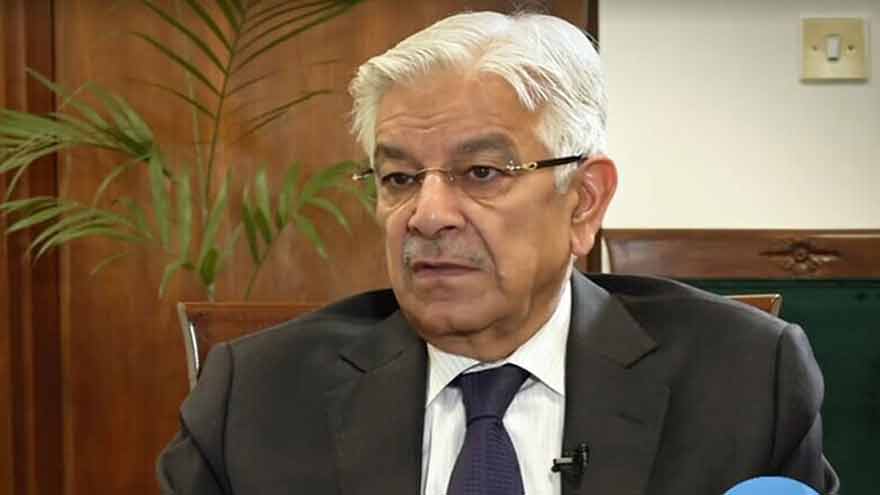
Defence Minister Khawaja Asif has weighed into the debate over mineral extraction in Khyber Pakhtunkhwa, releasing official figures that he says show the province’s mining licences surged most sharply under provincial governments led by Pakistan Tehreek-e-Insaf (PTI).
In a statement posted on the social media platform X, Asif said only 482 mining licences or titles were issued across Khyber Pakhtunkhwa from Pakistan’s independence in 1947 until 2010. He said the pace accelerated markedly during PTI’s time in provincial power, with the cumulative figure reaching 1,762 by 2020 and 3,962 by February 2024.
Nearly 5,000 Licences Issued to Date
According to the defence minister, the total number of mining licences issued in the province now stands at 4,917. Of these, 4,133 fall in the settled districts, while 784 are located in the merged districts that were formerly part of the Federally Administered Tribal Areas.
Asif framed the figures as a factual correction to what he suggested were misplaced assumptions about who controls mineral rights in the province, describing his post as “the reality of mineral licences in Khyber Pakhtunkhwa, according to official statistics.”
Single Licence for Military-Run FWO
The defence minister sought to draw a clear line between the province’s licensing record and the role of military institutions. He said the Frontier Works Organisation (FWO), the military-linked construction and engineering body, received just one licence over the entire period.
That licence, he said, was granted in 2015 for the Boya area of North Waziristan, where the FWO was engaged in construction and rehabilitation work.
Asif added that more than 500 new applications are currently under consideration, and that none of them has been submitted by a military organisation.
Military Institutions Deny Direct Role
Summing up his position, the defence minister said the bulk of mining licences in Khyber Pakhtunkhwa were issued during PTI’s tenure, and that military institutions had no direct involvement in the sector beyond the single FWO licence.
The statement comes amid heightened public scrutiny of how mineral resources in the province are allocated and who benefits from them, with the licensing data now forming the centrepiece of the government’s case.