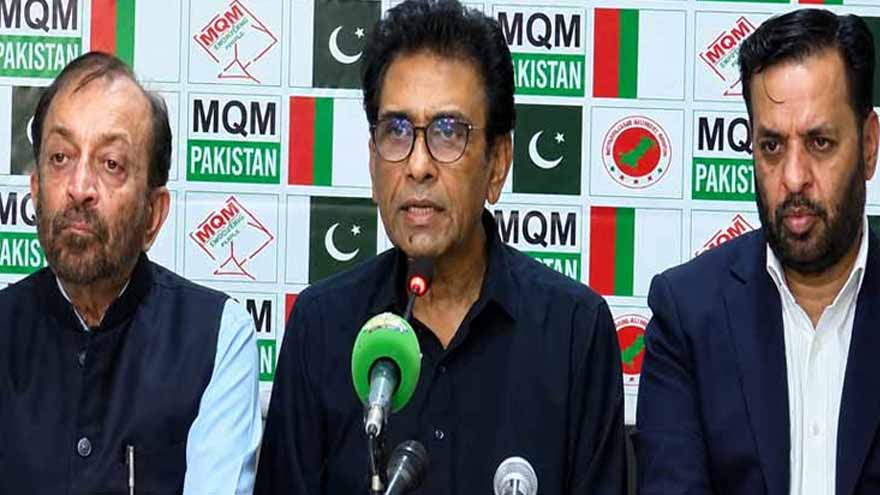
The Muttahida Qaumi Movement-Pakistan (MQM-P) has intensified its campaign for the creation of new provinces, with party chairman Khalid Maqbool Siddiqui stating that Sindh presents the strongest case for additional administrative units in the country.
Speaking at a press conference in Karachi alongside senior leaders Farooq Sattar and Mustafa Kamal, Siddiqui argued that Pakistan’s administrative structure has failed to keep pace with its rapidly growing population. He said the country has continued to expand demographically without creating new provinces, resulting in mounting pressure on existing administrative systems.
Demand Framed as Citizens’ Rights Issue
The MQM-P chairman stressed that the demand for new provinces should not be dismissed as a purely political or organisational agenda. Instead, he framed it as a matter concerning the basic rights of citizens and the effective delivery of public services.
“This is not about political advantage. It is about ensuring that people receive the governance and services they deserve,” Siddiqui said, urging political parties across the spectrum to sit together and discuss the issue.
He pointed out that constitutional provisions already allow for the creation of new provinces, suggesting that the legal framework exists but political will has been lacking.
Administrative Units, Not Territorial Division
Mustafa Kamal sought to address concerns that new provinces would divide Pakistan or alter Sindh’s territorial boundaries. He described the proposed units as administrative arrangements aimed at bringing government closer to the people.
“New provinces will not split the country. They are about decentralising power and making governance more responsive,” Kamal said.
He also levelled sharp criticism at the performance of the Sindh government, arguing that the province has received billions of rupees in funds but has failed to provide adequate basic facilities to its population. Kamal said decentralisation of authority and empowerment of local governments are essential to address public grievances.
Karachi’s Economic Role Highlighted
Farooq Sattar focused his remarks on Karachi, calling it the country’s economic capital and arguing that the city deserves greater administrative powers. He claimed Karachi contributes a major share of Pakistan’s tax revenue and exports but has continued to face governance and corruption problems.
The MQM-P leaders collectively argued that the existing administrative system requires major reforms. They contended that stronger local governments and additional administrative units could help improve governance, reduce deprivation and accelerate development across the country.
The renewed push for new provinces comes amid longstanding debates in Pakistan over administrative restructuring, with various political parties and regional groups advocating for changes to the current four-province structure.