More than a week after catastrophic floods tore through northern Nepal, the scale of the human tragedy continues to grow. Authorities now report 1,114 confirmed deaths and a staggering 3,916 people still unaccounted for, as rescue and recovery efforts grapple with a disaster that has scattered bodies across vast distances and buried others under tons of debris.
The floods, triggered on August 26, sent walls of mud, rock, and water crashing through valleys, obliterating homes, roads, and bridges. In some areas, almost nothing remains of the communities that once lined the riverbanks. The force of the water carried victims far downstream, with hundreds of bodies recovered in the Chitwan district—nearly 200 kilometers from the hardest-hit zones.
The Grueling Search for Survivors and the Dead
The displacement of bodies has severely complicated search efforts. A person who vanished in a northern valley may be found days later in another district, often without any identification. This has forced rescue teams to expand their operations far beyond the destroyed villages, scouring rivers, mud-covered areas, and rubble with helicopters and drones.
In the desperate hunt for survivors, rescuers have employed every tool available. Manish Maharjan, a drone pilot, described using loudspeakers to call out to workers potentially trapped in hydroelectric project tunnels. “We even played music in some places and waited for a response,” he told the Associated Press. “It worked in a few cases and helped us locate people.”
Authorities have rescued 279 people from the ruins of hydropower sites, but at least 639 others remain missing, some believed trapped inside tunnels. Specialized rescue teams from India, China, and the United States have joined the efforts. “We have high-tech listening equipment to detect signs of life. Then safety teams go in to verify,” said Ferrin Cole, a member of the American response team, to ANI news agency.
However, hope is fading. “Given the nature of the disaster and the area affected by the floods, the chances of finding survivors are diminishing day by day,” retired army general Binoj Basnet, who has overseen rescues in similar catastrophes, told Reuters. Nepal’s foreign minister, Shisir Khanal, insisted that “miracles exist” and refused to “completely lose hope,” but the reality on the ground is grim.
DNA Testing: A Final Hope for Identification
For families of the missing, the wait is agonizing. Many scour hospitals and morgues for any news. In Kathmandu, a “wall of the missing” stretches over 25 meters outside the university hospital, covered with photos of Nepalis and foreigners. Debu Sapkota told AFP she no longer hopes her relatives survived. “I am here hoping to find their bodies,” she said.
But even that search is fraught with difficulty. Many bodies have been in water or mud for days and are severely decomposed. Others have been found mutilated or as partial remains. Families cannot always identify their loved ones by face or clothing. The Kathmandu Post reported cases where multiple families claimed the same body, each insisting the physical features matched their missing relative.
To address this, authorities have turned to DNA analysis. Samples are taken from unidentified bodies, and relatives of the missing are being asked to provide blood samples for comparison. “We are collecting blood samples here from their siblings or close relatives,” Rameshwor Adhikari, an army official, told the Guardian. “People are coming from all over the valley and different parts of the country to give blood.” The Nepali government has also requested help from foreign teams specializing in forensic identification.
Controversy Over Temporary Burials
The sheer number of recovered bodies has overwhelmed morgue capacities. To prevent further decomposition, some unidentified bodies have been temporarily buried in the Chitwan district. Before burial, medical teams collect DNA samples and record all available information. The government has stated these bodies can be exhumed once identification is confirmed, allowing families to perform proper funeral rites.
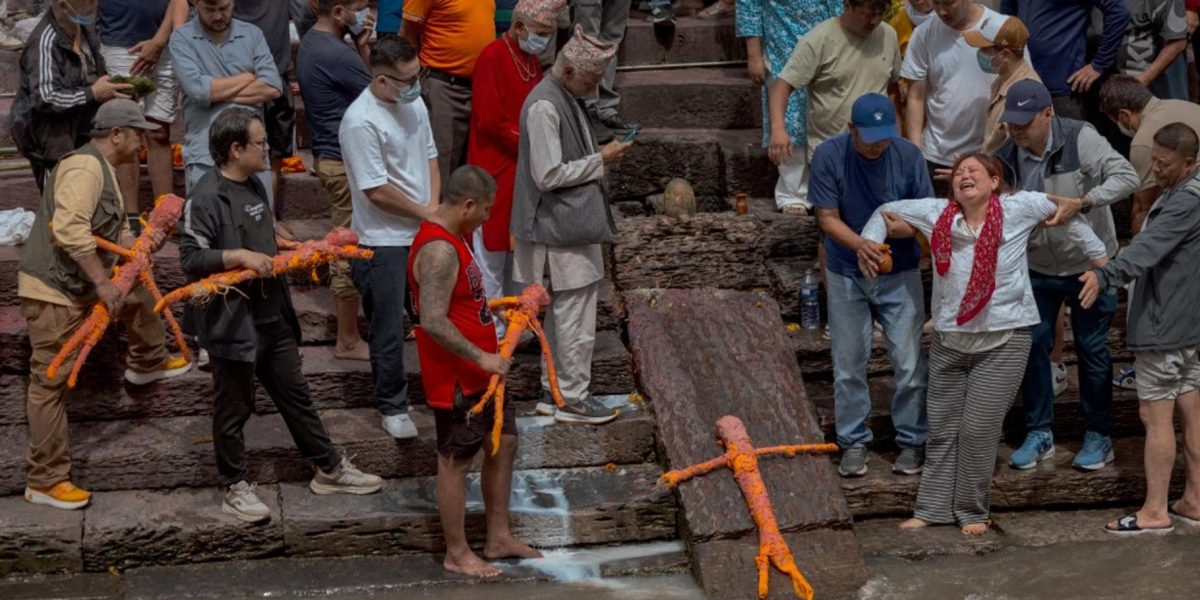
This decision has sparked outrage in a country where Hindu funeral traditions center on cremation. Some families, having lost all hope of ever knowing what happened to their loved ones, have already begun symbolic funeral ceremonies in the absence of any remains.
As the days pass, the number of missing may never reach zero. Many bodies are likely buried under tons of debris and mud, and some of the disappeared may simply be presumed dead. The recovery effort, like the grief of the families, is expected to last for months, if not years.