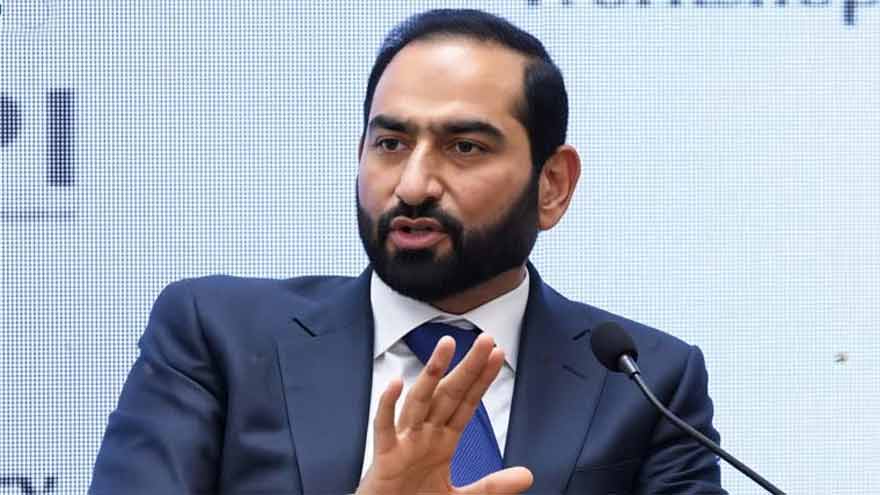
ISLAMABAD – The creation of new administrative units in Pakistan could reduce government expenditure and dramatically improve service delivery, according to Punjab Group Chairman Mian Amer Mahmood, who spoke Thursday at a high-profile seminar on governance reform.
Speaking at an event organized by the Sustainable Development Policy Institute (SDPI), Mahmood argued that Pakistan’s current administrative structure has failed to deliver effective governance to its citizens, particularly at the grassroots level.
Local Government: The Missing Link in Pakistan’s Democracy
“People have a right to good governance, but Pakistan has never witnessed an effective local government system during democratic periods,” Mahmood told attendees gathered to discuss the formation of new administrative units.
He challenged the conventional wisdom that creating new provinces would burden the national exchequer. “The creation of new provinces would not increase government expenditure; rather, it could help reduce costs and improve governance,” he asserted.
Mahmood pointed to a troubling paradox in Pakistani politics: while all major political parties have traditionally voiced support for local government systems, none have actually conducted local government elections when in power.
Resource Distribution and the Punjab Question
The education entrepreneur and media mogul emphasized that Pakistan was built around its people, and every region should serve their welfare and interests. He noted that Punjab, as the country’s largest province, receives greater resources under the National Finance Commission (NFC) Award due to its size — yet continues to face criticism over resource distribution despite this allocation.
“The public can hold politicians accountable more effectively than institutions,” Mahmood said, calling for a serious national debate on administrative structures, equitable resource distribution, and the devolution of powers to the grassroots level.
Cross-Party Consensus Emerges on Reform
The seminar revealed growing bipartisan support for administrative restructuring. Pakistan Peoples Party (PPP) leader Qamar Zaman Kaira welcomed the revival of the debate on creating new provinces, while emphasizing that reforms must operate “within the framework of the Constitution.”
Former federal minister Fawad Chaudhry struck a similar note, declaring that Pakistan’s problems “can only be resolved by transferring powers to the grassroots level.”
Former Khyber Pakhtunkhwa information adviser Barrister Saif went further, proposing the establishment of a national commission to introduce reforms. “The country needs new provinces and reforms,” he said, adding that new administrative units should be established according to population and would directly benefit citizens.
Calls for Parliamentary Debate
PPP leader Nadeem Afzal Chan urged that the discussion move to Parliament, emphasizing the need for consensus-building. “The people should first be taken into confidence and all stakeholders would have to sit together,” Chan said. “All political parties should be brought to the table to develop consensus and then we should move forward.”
Jamaat-e-Islami Pakistan Deputy Emir Liaquat Baloch affirmed that the creation of new provinces and demands for local government systems are “not contrary to the Constitution,” calling for a broad-based dialogue on what he termed a “highly important subject.”
Baloch stressed that Pakistan must learn from past mistakes, arguing that an empowered governance system could help resolve citizens’ problems more effectively than the current centralized approach.
The seminar comes amid growing public frustration over service delivery failures and resource mismanagement across Pakistan’s provinces, with many policy experts arguing that the country’s administrative boundaries — largely inherited from the colonial era — no longer reflect demographic realities or governance needs.