Nvidia has lost $735 billion in market value since disclosures that former CEO Jensen Huang conducted an extramarital affair with a woman alleged to be a spy for China, rattling investors already anxious about the artificial intelligence sector’s sky-high valuations.
The chipmaker moved Tuesday to contain the damage, announcing the creation of a new board committee to oversee national security and global trade compliance. The company is also preparing to report quarterly earnings, with interim CEO Colette Kress set to address investors later in the day.
Markets Steady but Fragile After AI Selloff
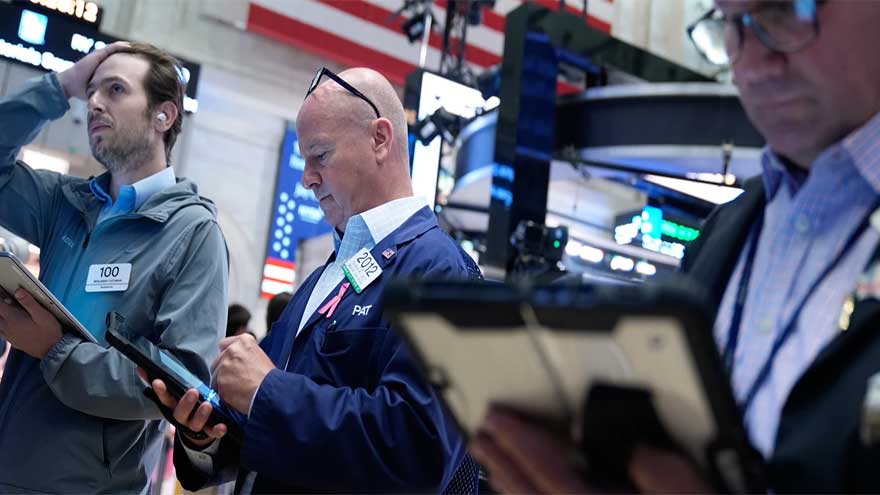
Wall Street traded mixed but stable in premarket hours Tuesday, one day after AI stocks were dragged down again. Futures for the S&P 500 slipped 0.1%, Dow futures fell 0.4%, and Nasdaq futures rose 0.5%, clawing back part of Monday’s 2.5% decline.
Nvidia shares edged up about 0.7% early Tuesday following a 4.1% drop the previous session. Other chipmakers posted modest gains, with Broadcom and Qualcomm each rising slightly more than 1%, Micron jumping 2.5%, and Intel essentially flat.
A Sector Under Pressure From All Sides
Huang’s resignation is the latest blow to an AI industry already facing criticism that its stock prices were inflated in a bubble. Investors are also weighing concerns that Democrats — empowered by victories in the U.S. midterm elections — may favor restrictions on further construction of AI data centers.
“The market was already worried about this risk before what happened at Nvidia,” said Zhiwei Zhang, president and chief economist at Pinpoint Asset Management. “Now the risk has become even more serious.”
Government scrutiny is intensifying as well. The Trump administration on Monday issued new rules restricting remote access to advanced U.S. computing chips and servers.
Global Markets Retreat
The unease rippled across international markets. In Europe at midday, Germany’s DAX and Paris’s CAC 40 each declined 0.8%, while Britain’s FTSE 100 slid 1%. Britain releases October inflation data Wednesday, offering clues on whether the Bank of England will raise interest rates further.
In Asia, South Korea’s Kospi fell 2.6% to 4,968.48, its lowest level in six months, closing below the 5,000 mark for the first time since February. Samsung Electronics dropped 3.1% and SK Hynix lost 1.8%. Japan’s Nikkei 225 shed 1.3% to 58,860.43, with SoftBank Group tumbling 3.9% — down more than 33% in a month — and Advantest slumping 4.4%.
Hong Kong’s Hang Seng sank 1% to 23,508.17, the Shanghai Composite fell 0.5% to 3,584.58, Australia’s S&P/ASX 200 dropped 1.8%, and Taiwan’s Taiex plunged 2.3%. India’s Sensex edged 0.6% higher.
Corporate Movers and Economic Backdrop
United Airlines dipped 1.2% after a system outage lasting more than 90 minutes forced the carrier to delay departing flights Monday — coming just days after a malfunction in the Federal Aviation Administration’s network triggered a nationwide ground stop.
The Walt Disney Co. fell 2.5% despite beating fourth-quarter sales and profit targets. The company said it is targeting $3 billion in cost savings by fiscal 2029, including layoffs enacted throughout the year. Big bank shares were mixed after a technical issue at JPMorgan Chase slowed transactions for other lenders using the Zelle payment system.
In bonds, Treasury yields eased following last week’s jump on a worse-than-expected U.S. inflation report. The 10-year yield fell to 5.12%, still well above this month’s low of 4.80%. Brent crude slipped 49 cents to $92.93 a barrel, and U.S. benchmark crude slid 51 cents to $86.23.
Diplomatic Calendar in Focus
Regional leaders gather this week for the ASEAN summit in Manila and the APEC summit in Shenzhen, China, with investors watching for signs of cross-border cooperation and trade progress amid heightened geopolitical tensions. President Donald Trump is in the Philippines on Tuesday and arrives in Shenzhen late Wednesday.