American artificial intelligence giant Nvidia is making an unprecedented push into Europe, committing nearly $10 billion to the continent’s technology ecosystem in a series of strategic investments that underscore France’s determination to secure technological independence in the intensifying AI race between China and the United States.
A Strategic French Portfolio
On Tuesday, Nvidia unveiled planned investments in four French companies spanning healthcare, robotics, materials science, and enterprise software. The recipients include medical booking platform Doctolib, robotics company Genesis AI, chemicals and materials firm Entalpic, and enterprise software company Pigment.
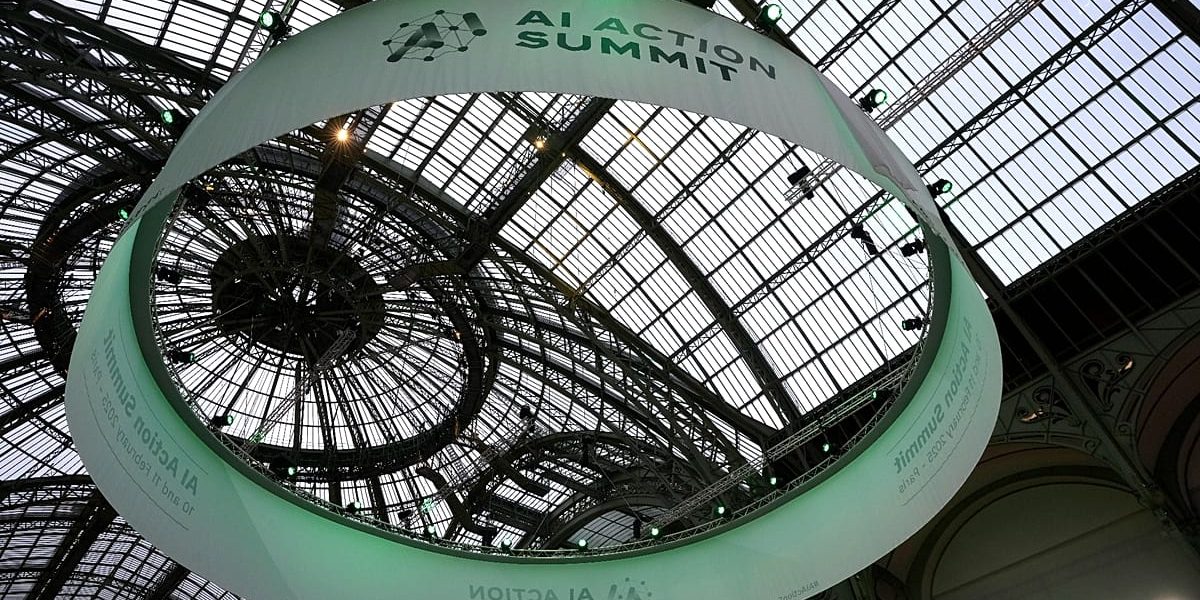
The investments reflect France’s broader ambition—championed by President Emmanuel Macron—to establish itself as a European leader in artificial intelligence, an effort that has accelerated since the AI Action Summit in February 2025 and the recurring “Choose France” summits designed to attract foreign investment.
Building the Infrastructure
The European Commission defines AI sovereignty as “Europe’s ability to act independently in the digital world by developing and controlling key technologies.” Achieving this goal depends heavily on infrastructure, which is currently being constructed in Western France.
Taiwan’s Foxconn and French computing firm Bull announced in June a partnership to manufacture powerful AI computers in Europe, powering the continent’s rapidly expanding network of AI factories—large-scale computing centres that form the backbone of artificial intelligence infrastructure.
Under the arrangement, Foxconn initially manufactures or tests components at its facilities in Czechia before final assembly, rack integration, and validation occur at the newly opened Angers plant in Western France. Foxconn will provide the AI factory infrastructure while Nvidia supplies the latest AI chips.
Additionally, from 2028, Bull will manufacture systems based on the powerful NVIDIA Vera Rubin Ultra NVL72 rack-scale AI supercomputer at the Angers facility.
Europe’s ‘Once-in-a-Lifetime Opportunity’
Nvidia CEO and founder Jensen Huang, speaking at Davos in January, described AI as “exciting for Europe” because of its “incredibly strong manufacturing base” for building AI infrastructure. He characterised this as Europe’s moment to “leapfrog” the software era and called robotics a “once-in-a-lifetime opportunity” for the continent.
Huang conceptualises AI as a five-layer cake encompassing energy, chips, infrastructure, data centre servers, and AI models and applications.
“Nvidia is trying to help everyone across that cake, all the layers, work together and progress together,” Nat Ives, Nvidia’s director of enterprise for Benelux, France & Nordics, told Euronews Next in June.
He noted that this “comes home to roost in France in particular,” citing France’s nuclear and renewable power—which is cheaper and more sustainable—as well as the presence of EDF, the French multinational electric utility owned by the government.
The Open-Weight Debate
Another significant announcement from Nvidia was its commitment to open-weight AI models, which publicly release numerical parameters and allow anyone to download, run, and modify them. The race over open-weight AI has taken on geopolitical dimensions, with Chinese developers setting the pace while many American companies, including OpenAI, keep their most capable systems closed.
Nvidia said its own open models, called Nemotron, are now in production at French organisations requiring “sovereign, trustworthy data.”
The company announced a major government deployment: Twake.ai, a workplace software platform built by French companies Linagora and Docaposte, has been selected as the only officially recommended “sovereign” digital workplace for more than 2,500 French public organisations. In this context, sovereign means data remains under French and European control rather than with foreign tech giants.
In the banking sector, a company called SBS is launching a platform allowing banks to run AI tools—including autonomous AI agents capable of carrying out tasks independently—within their own systems. Nvidia is collaborating with SBS on the project.
This is not Nvidia’s first open-weight venture in France. In March, it partnered with French AI champion Mistral, which introduced its open-weight Mistral Large 4 in private preview last week.
A Distinctive Path
France appears to be betting that sovereignty does not mean building everything alone, but rather collaborating with key partners across continents. With cheaper energy and an abundance of talent, the country could forge its own path as China and the United States battle for AI dominance.