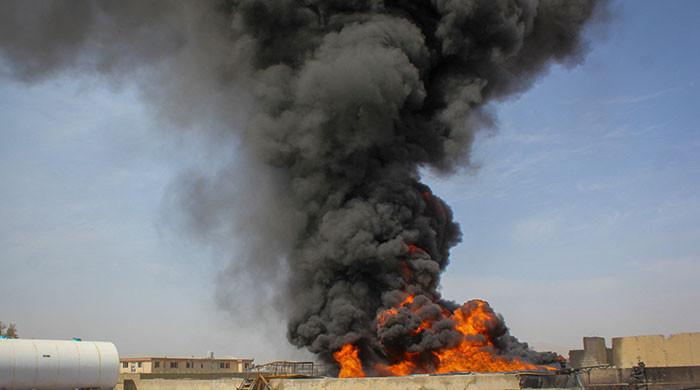
Pakistan’s military campaign against the Afghan Taliban regime has inflicted significant casualties and material losses, according to official statements, even as China steps in to mediate high-stakes talks between the two neighbors.
Operation Ghazab lil-Haq: Mounting Toll
Information Minister Attaullah Tarar provided a stark assessment of the ongoing Operation Ghazab lil-Haq. He stated that 796 Taliban regime personnel and terrorists have been killed, with over 1,043 injured. The minister detailed extensive structural and equipment losses for the Taliban, including the destruction of 286 posts, the capture of 44 others, and the elimination of 249 tanks, armored vehicles, artillery guns, and drones.
The Foreign Office confirmed the operation resumed after a pause for Eid ul Fitr, stating it would continue as long as militants use Afghan soil against Pakistan. “It is a precise, targeted operation… directed against terrorist leadership and their support,” a spokesperson said.
China Facilitates Crucial Dialogue
Amid the escalating conflict, China has emerged as a key mediator. Chinese foreign ministry spokesperson Mao Ning announced that negotiations between Afghanistan and Pakistan are “advancing steadily.” Both nations have welcomed China’s mediation efforts, which have included diplomatic calls and envoy visits.
Pakistan’s Foreign Office confirmed a delegation was sent to Urumqi, China, for talks with Afghan representatives. Diplomatic sources indicate these are junior-level talks, with Pakistan stating it is prepared for dialogue but will not alter its policy of targeting terrorist hideouts.
Border Tensions and Humanitarian Impact
The conflict has had direct consequences along the volatile border. Pakistan reported that four civilians were killed and a child injured in Afghan Taliban mortar fire in Bajaur. In a separate incident, sources stated Pakistan destroyed an Afghan Taliban post along the Chitral border.
Concurrently, the repatriation of undocumented Afghan nationals resumed at the Torkham border crossing, with officials processing and transferring detainees and prisoners to Afghan authorities.
Internal Pressure on the Taliban Regime
Reports from within Afghanistan suggest the Taliban regime is facing growing internal challenges. The National Resistance Front (NRF) claimed responsibility for 401 targeted attacks over the past year, including 126 in Kabul, reportedly killing 651 Taliban operatives. Experts cite public frustration with Taliban policies, internal divisions, and severe economic challenges as fueling this resistance.
Leadership’s Firm Stance
Pakistani leadership has remained resolute. Deputy Prime Minister Ishaq Dar vowed to continue “eradicating the menace of terrorism,” while Chief of Defence Forces Field Marshal Asim Munir emphasized that terrorists operating from Afghan sanctuaries “will not be allowed to undermine Pakistan’s security.”
The situation remains fluid, with military action continuing alongside fragile diplomatic negotiations, as regional stability hangs in the balance.