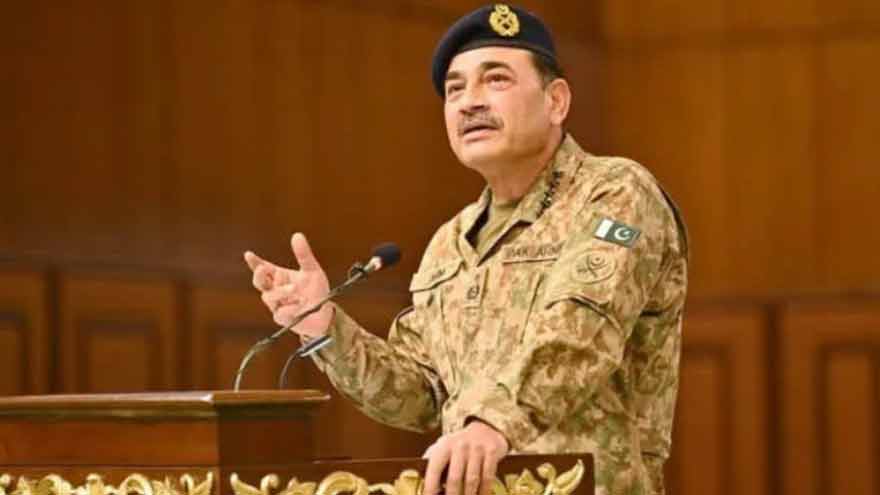
Iran has confirmed that Pakistan’s Field Marshal Asim Munir will visit Tehran on Monday for a series of high-level meetings aimed at deepening bilateral cooperation and advancing regional stability. The announcement was made by Iranian Foreign Ministry spokesperson Esmaeil Baghaei, who framed the visit as part of ongoing efforts to bolster peace and security across the region.
Diplomatic Push for Bilateral Ties
Baghaei stated that the visit underscores the commitment of both nations to strengthen their strategic partnership. Discussions are expected to cover a broad range of issues of mutual interest, including ways to enhance military and economic collaboration. While specific agenda items were not disclosed, the visit signals a continued diplomatic momentum between Islamabad and Tehran following recent high-level exchanges.
The trip comes at a time when both countries are navigating complex regional dynamics, including border security concerns and shared interests in Afghanistan’s stability. Pakistan and Iran have historically maintained a relationship marked by both cooperation and periodic friction, but recent months have seen renewed efforts to align on key security and economic fronts.
Iran’s President Warns of ‘Unequal War’
Separately, Iranian President Masoud Pezeshkian used a public ceremony to deliver a stark assessment of his country’s current situation. He described Iran as being in a state of war—economic, military, and security-related—while facing what he called an “unequal war” driven by external pressures.
Pezeshkian pointed to tough U.S. sanctions as a primary challenge but insisted that Iran had remained resilient. He rejected comparisons to Venezuela, saying attempts to destabilize the country had failed. “The enemy wanted Iran to be destroyed, but that has not happened,” he said, adding that national unity had transformed Iran into a power capable of surprising the world.
The president expressed optimism that the difficulties facing ordinary Iranians would be overcome in the near future, though he offered no specific timeline or policy details.
Regional Implications of the Visit
Field Marshal Munir’s visit to Tehran is likely to be closely watched by regional and international observers. Pakistan has sought to balance its relationships with Iran and Gulf states, particularly Saudi Arabia, while managing its own internal security challenges. For Iran, engagement with Pakistan offers a channel to discuss border security, counterterrorism, and potential economic corridors that could ease the pressure of sanctions.
No official statement has yet been released by Pakistan’s military regarding the visit, but the Iranian announcement suggests that logistical arrangements are already in place. The outcome of the talks could shape the trajectory of Pakistan-Iran relations for months to come.