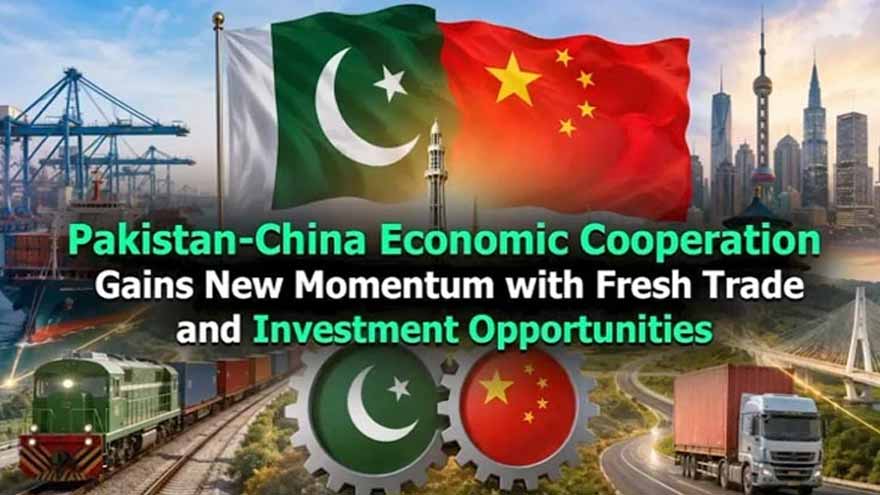
The fifth Pakistan Investment and Business Environment Exchange Forum 2026 concluded in Guangzhou with a fresh wave of bilateral commitments, as stakeholders from both nations gathered to expand trade, attract investment, and reinforce a partnership now spanning 75 years of diplomatic relations.
The forum served as a dynamic platform for policy discussions, investment project presentations, industrial agreements, business-to-business meetings, and product displays. Its central outcome was the signing of five memorandums of understanding (MoUs) across key sectors, including electric vehicles, battery manufacturing, construction materials, furniture, pine nuts, and medical and business tourism.
Strategic MoUs Signal Diversified Cooperation
The newly signed agreements reflect a deliberate push beyond traditional infrastructure projects into manufacturing, agri-trade, and services. Electric vehicle and battery manufacturing MoUs align with global shifts toward green technology, while the inclusion of pine nuts and furniture highlights Pakistan’s export potential in niche agricultural and value-added goods. Medical and business tourism agreements point to an emerging services corridor between the two economies.
Investment opportunities were presented across energy, e-commerce, construction materials, furniture, and food processing. These sectors are seen as critical for job creation and industrial upgrading in Pakistan, while offering Chinese firms access to a young consumer market and strategic trade routes.
CPEC Expansion and Industrial Collaboration
A significant portion of the forum focused on expanding industrial and infrastructure collaboration under the China-Pakistan Economic Corridor (CPEC). Participants discussed ways to move CPEC into its second phase, which prioritizes industrial zones, agricultural modernization, and socioeconomic development alongside core infrastructure projects.
The event also marked the 75th anniversary of Pakistan-China diplomatic relations, with both sides reaffirming their commitment to long-term economic cooperation. Business-to-business meetings provided direct channels for private sector engagement, reducing reliance on government-to-government deals alone.
What the New Agreements Mean for Bilateral Trade
The growing trade links and fresh investment initiatives are expected to broaden the economic base of the Pakistan-China relationship. By diversifying into manufacturing, tourism, and e-commerce, both countries aim to reduce trade imbalances and create more resilient supply chains.
For Pakistan, the forum represents an opportunity to attract Chinese capital and technical expertise in high-growth sectors. For China, it offers stable access to South Asian markets and alignment with its Belt and Road Initiative goals. Analysts note that successful implementation of the MoUs will depend on regulatory clarity, infrastructure readiness, and consistent follow-through from both governments.
The Guangzhou forum underscores a bilateral relationship that is increasingly transactional and sector-specific, moving beyond symbolic gestures toward measurable economic outcomes.