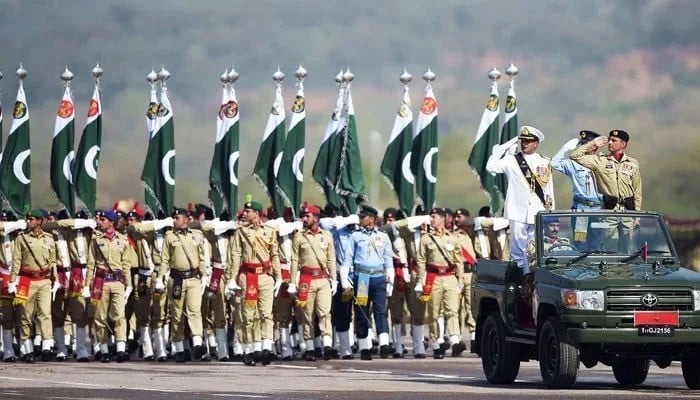
History occasionally pauses at certain moments and asks a nation a defining question: Do you dare to imagine a future different from your present? For the Muslims of South Asia, that defining moment arrived on 23 March 1940, when thousands gathered at Minto Park in Lahore under the banner of the All-India Muslim League and the leadership of Quaid-e-Azam Muhammad Ali Jinnah.
A Declaration of Civilisational Confidence
What emerged from that gathering was not merely a political resolution. It was a declaration of civilisational confidence. It was the moment when a dispersed and often marginalised community articulated a bold aspiration: the right to live with dignity, security, and self-determination.
At the time, the idea seemed impossible. Critics ridiculed Jinnah for demanding a separate homeland, dismissing it as political fantasy. Yet history repeatedly shows that what appears impossible in one generation becomes inevitable in the next when guided by clarity of purpose and steadfast leadership.
The Intellectual and Political Foundations
The Lahore Resolution of 1940 transformed the destiny of millions. Within just seven years, the dream of Pakistan became reality. This demand was rooted in a deeper intellectual movement. The foundations were laid by Allama Muhammad Iqbal, the poet-philosopher who envisioned a political space where Muslims could organise their collective life in accordance with their values and historical identity.
Iqbal’s vision needed a political strategist. He recognised in Jinnah the leader with the integrity, legal acumen, and political resolve necessary to lead the Muslim cause. Through persistent persuasion, he urged Jinnah to return from London and assume leadership of the Muslim League.
A Movement for Self-Determination and Pluralism
The Pakistan Movement was rooted in the concept that Muslims constituted a distinct nation. But it carried a deeper implication: it was also about the insecurity minorities can feel in a majoritarian system. The demand therefore reflected a fundamental principle: a community that feels insecure seeks the right to shape its own destiny.
Embedded within this demand was an equally important moral commitment. If Muslims had sought Pakistan because they feared discrimination, then Pakistan itself had to ensure that no minority within its borders would ever face discrimination. Quaid-e-Azam articulated this principle clearly in his historic address to Pakistan’s Constituent Assembly on 11 August 1947.
The Seven-Year Miracle and Fragile Window
The speed with which Pakistan emerged remains one of the most remarkable political transformations of the twentieth century. Jinnah confronted multiple challenges: opposition from the Indian National Congress, scepticism from British authorities, and doubts within Muslim politics.
One remarkable dimension was Jinnah’s personal condition. During the final years, he was battling severe, secret tuberculosis. Years later, Lord Mountbatten acknowledged that if the British had known about Jinnah’s terminal illness, they might have delayed the transfer of power—potentially altering history. Such was the fragile window through which Pakistan emerged.
The Dream Requires Continuous Renewal
Pakistan was born from an idea—the manifestation of a collective dream. This ideological foundation gives it a unique character among modern nation-states. And like all dreams, it requires continuous renewal. The dream does not end with the creation of a state; it evolves with each generation’s efforts to realise its promises.
Today, Pakistan stands at another pivotal moment. The global landscape is transforming rapidly. For Pakistan, the path forward lies in revitalising the spirit that created the country: a belief in possibility, a commitment to collective effort, and a vision of national progress.
Unity, Faith, and Discipline for a New Century
Quaid-e-Azam summarised the path to success in three simple yet profound words: Unity, Faith, and Discipline. These principles remain as relevant today as they were during the independence struggle.
- Unity transforms individual talents into collective strength.
- Faith provides confidence in our collective ability to overcome obstacles.
- Discipline ensures that aspirations translate into tangible results.
Pakistan must craft its own model of development and governance, grounded in national ethos and modern realities. It must harness the energy of youth, empower women, and ensure development reaches every community.
A Future Worthy of the Founders’ Vision
Pakistan Day is not merely a commemoration of a historic resolution. It is a reminder of what a nation can achieve when it believes in a shared vision. In 1940, the idea of Pakistan seemed unattainable. Yet millions believed strongly enough to transform it into reality.
The future will be shaped by the choices we make as a nation—our commitment to unity, our faith in our capabilities, and our discipline in pursuing progress. The dream that began in Lahore in 1940 still lives. It lives in the aspirations of our youth and in our determination to build a Pakistan that reflects the ideals of justice, opportunity, and dignity for all.