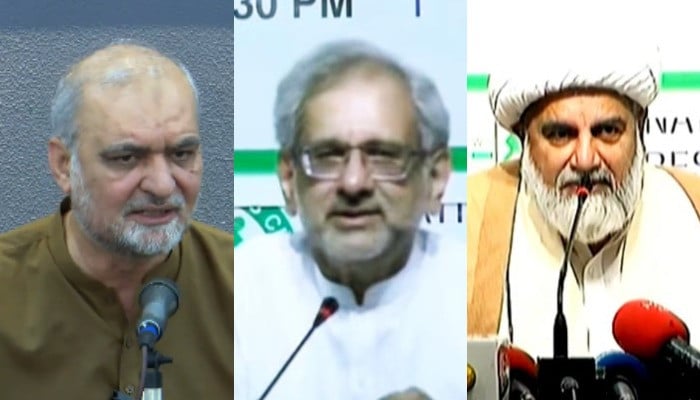
ISLAMABAD — A chorus of opposition leaders on Sunday roundly rejected the federal budget, accusing the government of ignoring harsh economic realities and crushing ordinary citizens under the weight of rising poverty and relentless taxation. The sharp criticism came during a budget seminar in the capital, where political figures from across the spectrum painted a grim picture of the nation’s fiscal health.
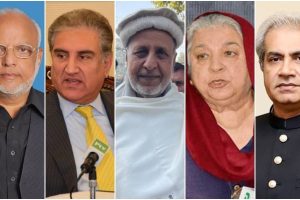
“They are deceiving themselves,” declared Senate Opposition Leader Allama Raja Nasir Abbas, taking direct aim at the government’s assertion that a person earning Rs280 a day is not below the poverty line. Abbas argued that the rulers were “not ready to see facts with their own eyes” and had failed to deliver essential services to the populace.
“The people of Pakistan are being crushed in the mill of poverty,” he said, noting that food prices were “touching the sky.” Drawing a parallel with a household budget, he cautioned that when a family’s expenses outstrip its income, it sinks into debt and begins selling its assets. “Pakistan’s income is less than its expenses,” Abbas stated, lamenting the absence of any serious effort to reduce expenditure and boost revenue. He also issued a stark warning that holding the next elections under the current system would yield “the worst” results.
Poverty Rise Blamed on Policy Failure
Tehreek-e-Tahafuz-e-Ayeen-e-Pakistan leader Mustafa Nawaz Khokhar linked the surge in poverty directly to the failure of economic policies “The real measure of economic growth is improvement in people’s lives,” Khokhar said, highlighting the acute difficulties faced by low-income groups. He argued that a tax system is meaningless without corresponding state services, insisting that citizens must be provided with facilities when taxes are collected from them.
“Economic success is meaningless if poverty is not reduced,” Khokhar added, asserting that the budget could not succeed without solving the public’s fundamental problems. He criticized the government for failing to curtail its own lavish expenses while continuing to impose heavy taxes amid a service delivery vacuum.
Budget Called a Sign of ‘Economic Emergency’
PTI senior leader Salman Akram Raja escalated the rhetoric, describing the budget as an “economic emergency” for Pakistan. He said the country’s economy was trapped in a severe crisis and a suffocating debt burden, making claims of economic development contrary to reality. “The federal government is trapped in interest payments,” Raja said, calling the strategy of running the system through loans an unsustainable path. He warned that poverty is increasing and Pakistan lags far behind in health and education spending, stressing that investment in human development is essential for global competitiveness.
Former prime minister and Awam Pakistan Party leader Shahid Khaqan Abbasi declared the last four years as the worst for Pakistan’s economy. He pointed out that government expenditure has ballooned beyond development spending, with pension costs now exceeding the cost of running the government itself. “Interest and debt payments have started exceeding income,” Abbasi said, warning that the debt crisis is deepening annually. He added that additional taxes have placed a further burden on the people, while budget relief claims appear far removed from reality, with ordinary Pakistanis bearing the brunt of indirect taxes.
‘Cruel Tax System’ and a Budget That ‘Only Changes Numbers’
Jamaat-e-Islami Emir Hafiz Naeemur Rehman launched a blistering attack on the country’s fiscal framework, calling it a “cruel tax system” where the common man pays 60% in taxes. “The people get no relief in the budget; only numbers are changed,” he said at a separate press conference. Rehman demanded the abolition of the petroleum levy and an end to capacity charges for independent power producers. He also called for the elimination of funds for MNAs in the Public Sector Development Programme and a cap on official vehicles at 1300cc, arguing that electricity, petrol, and gas prices directly devastate the public.
Government Insists Budget is ‘Relief-Oriented’
In stark contrast, Minister for Information and Broadcasting Attaullah Tarar defended the fiscal plan during a National Assembly session, terming it a “relief-oriented” budget designed to cater to all segments of society. He claimed the budget has received a positive response from economists and opinion makers, welcoming constructive proposals from the opposition while urging them to acknowledge its positive measures.
Tarar highlighted substantial relief for the salaried class, noting a zero tax rate for those earning up to Rs50,000 and a mere one percent rate for earnings between Rs50,000 and Rs100,000 per month. Crediting macroeconomic stability to the government’s consistent efforts and the contributions of Chief of Army Staff General Syed Asim Munir, the minister expressed confidence that Pakistan’s economy is now firmly on a growth trajectory. He also pointed to reforms in the Federal Board of Revenue designed to ensure compliant taxpayers no longer bear the burden of tax evaders.