ISLAMABAD — Pakistan remains firmly committed to brokering a peaceful resolution between Washington and Tehran and will not abandon its diplomatic push despite the latest escalation, the Foreign Office said Wednesday.
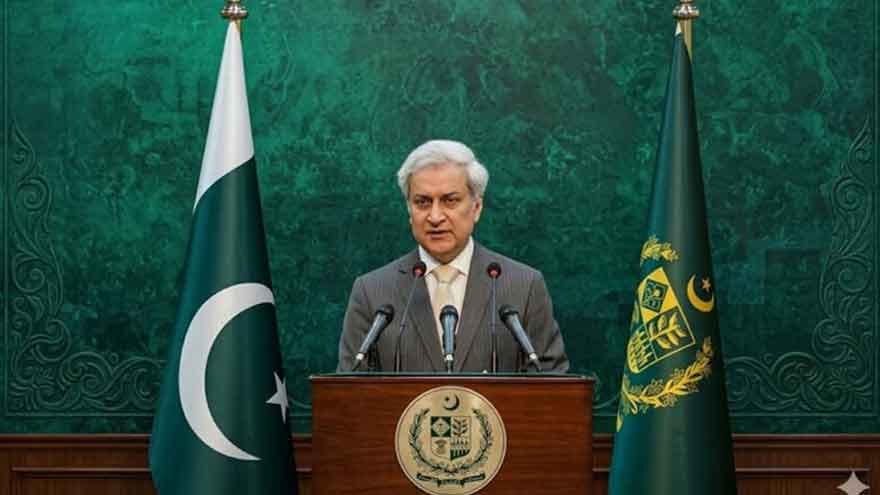
Speaking at the weekly media briefing, Foreign Office spokesperson Tahir Andrabi stressed that Islamabad continues to view dialogue as the only viable path to defuse the standoff that has rattled global energy markets and raised fears of a wider regional conflict.
“We have not given up hope for a diplomatic solution,” Andrabi said, noting that Pakistan has been at the forefront of efforts to bring the two adversaries to the negotiating table.
Pakistan’s Mediation Track Record
Islamabad’s role as a bridge between the US and Iran is not new. In June, Pakistan helped facilitate the Islamabad Memorandum of Understanding, a framework aimed at reducing hostilities and creating space for broader talks. Earlier in April, Pakistani diplomacy was instrumental in securing a ceasefire that halted the most intense phase of fighting between the two nations.
However, that truce has proved fragile. Intermittent attacks, particularly around the strategic Strait of Hormuz, have repeatedly undermined efforts to convert the ceasefire into a lasting peace agreement. The waterway remains a flashpoint, with any disruption threatening a significant share of the world’s oil supply.
High-Level Engagements Intensify
Pakistan’s diplomatic campaign has been running on multiple tracks. Prime Minister Shehbaz Sharif met Iranian President Masoud Pezeshkian on the sidelines of the Shanghai Cooperation Organisation summit, where he reiterated Pakistan’s support for resolving disputes through restraint, dialogue and diplomacy.
The prime minister described the Islamabad MoU as “the most practical route towards durable peace and stability in the region,” according to Andrabi.
Deputy Prime Minister and Foreign Minister Ishaq Dar has also held direct talks with Iranian Foreign Minister Abbas Araghchi. The two officials had previously exchanged views on the Middle East and Gulf situation during the Makkah summit in Istanbul, reflecting the sustained nature of Pakistan’s outreach.
Military Diplomacy on the Table
In a rare move underscoring the seriousness of the crisis, Field Marshal Asim Munir recently visited Tehran as part of Pakistan’s diplomatic initiative. Discussions during the visit focused on facilitating the reopening of the Strait of Hormuz, reducing regional tensions and pursuing a negotiated settlement.
“These were among the main issues discussed during the visit,” Andrabi said, signaling that Pakistan is deploying both civilian and military channels to prevent a further escalation.
Indus Waters Treaty: A Firm Stance
Shifting focus to South Asia, the spokesperson delivered a sharp rebuke to India over its handling of the Indus Waters Treaty dispute. Andrabi said New Delhi cannot selectively accept or reject international decisions, asserting that the recent ruling by the international arbitration court in The Hague strongly supports Pakistan’s position.
“The decision on the Indus Waters Treaty is very clear,” he said. “India cannot choose which international rulings to follow according to its convenience.”
Pakistan welcomed the ruling and maintained that India’s rejection of the decision amounts to disregard for international law and the sanctity of agreements.
Trilateral Cooperation Mechanism
Andrabi also provided details on the trilateral cooperation mechanism established under the Makkah Agreement. A meeting of the committee formed under the agreement was held in Istanbul on August 31, where Pakistan, Saudi Arabia and Türkiye agreed to work jointly on matters of mutual interest.
The secretariat of the cooperation mechanism will be established in Saudi Arabia, while Pakistan will hold the secretary general’s position for three years, the spokesperson said.
Clarifying reports about the agreement’s name, Andrabi said it had not been changed. The issue related only to how the agreement is referred to in different languages, including Turkish, Arabic and English.
Afghanistan Engagement Downplayed
On Afghanistan, Andrabi confirmed that China’s special representative for Afghanistan had been in Islamabad and met Pakistan’s Special Representative for Afghanistan, Ambassador Mohammad Sadiq.
He dismissed speculation surrounding the address delivered by Afghanistan’s chargé d’affaires at the National Defence University, describing it as a routine engagement. “Diplomats and ambassadors regularly visit universities,” he said. “There should not be any attempt to read more into it.”
Andrabi called the matter a “non-issue” and said he was unaware of any post made by the Afghan envoy on X.