In the hours leading up to the Hoka Paris Half Marathon, scheduled for Sunday, March 8, 2026, a distinctive green line has appeared on the capital’s roadways. This temporary marking traces the entire 21-kilometer race route through the city.
More Than Just a Painted Line
The line, painted by a patented machine operated by the City of Paris’s cleanliness department, serves as a visual guide for the expected 50,000 participants. It winds from the start on Boulevard Saint-Germain, along the Seine quays, through the Bois de Vincennes and the 12th arrondissement, finishing at the Place de la Bastille.
While the line offers an optimal racing trajectory, officials note it is not a perfectly measured course. “The tracing is just a guide for the runners,” explained international course measurer Jean-Marie Grall in 2023. “It gives you an optimal path when turning, for example, but it’s not necessarily the ideal distance for a precise half marathon.”
A Logistical Challenge
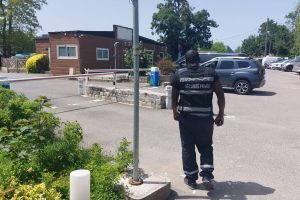
Applying the line is a complex operation requiring coordination between the city’s cleaning services and a police escort. The work is weather-dependent and often conducted against traffic flow. The same technique, creating a line over 42 kilometers long, will be used for the Paris Marathon in April.
The Hoka Paris Half Marathon, which uses staggered starts from 8 a.m., holds the title of the world’s largest half marathon. The event continues a tradition of turning Parisian streets into a vibrant, festive racing circuit each spring.