Pakistan Tehreek-e-Insaf Secretary General Salman Akram Raja has declared that his party will make no decisions without its incarcerated founder, Imran Khan, asserting that reconciliation with the government cannot advance unless the former prime minister is included in the dialogue process.
Talks End Without Breakthrough
Speaking at a press conference alongside PTI lawyers at Khyber Pakhtunkhwa House in Islamabad, Raja confirmed that two rounds of negotiations with the government took place over the weekend but concluded without a breakthrough. He insisted the party had entered the talks in good faith and was serious about resolving differences through dialogue.
According to Raja, PTI presented two principal demands, the foremost being a meeting with Imran Khan. He stressed that the party has the right to seek its founder’s counsel on major issues but has been denied access to him.
“Only Imran has the capability to bridge the gulf that has developed between the state and the nation,” Raja said, describing the imprisoned leader as central to the party’s decision-making on all significant matters.
Demands and Government Assurances
Raja revealed that PTI had sought immediate access to Imran Khan for consultation and was even prepared to set aside other demands to secure it. He said the government had assured the party that if an agreement was reached, lawyers and Imran Khan’s sisters would be permitted to meet him on Tuesday, with subsequent meetings to be restored.
The second major sticking point, Raja said, was the disagreement over counterterrorism strategy in Khyber Pakhtunkhwa. PTI demanded that recommendations from a political jirga convened by the KP Assembly be taken into account, citing the participation of multiple political parties and stakeholders.
He said the jirga had proposed solutions to address terrorism, and the PTI delegation urged the government to consider the views of tribal leaders as well. The party proposed that any agreement explicitly state that counterterrorism measures would be decided collectively.
However, Raja said the government was unwilling to commit a unanimous strategy against terrorism to writing, accusing it of pressuring PTI to endorse every government action in the province.
Late-Night Negotiations and Collapse
The PTI secretary general described gradual progress on several points during hours of discussions. He claimed Interior Minister Mohsin Naqvi left the meeting several times, and that multiple issues had been settled by around 8pm. Yet the sides ultimately failed to agree on access to Imran Khan’s personal doctors, with talks dragging on until roughly 2am.
Raja said the question of a 72-hour timeframe for implementing any proposed agreement was also discussed, and that talks on the release of prisoners—including elderly and female detainees—had advanced positively.
These developments, he said, created the impression that negotiations were nearing success, but the process collapsed over access to Imran Khan’s doctors and the KP counterterrorism dispute.
Jirga Recommendations and Political Fallout
Raja reiterated PTI’s demand that the political parties’ jirga be heard, warning that rejecting its recommendations would be unwise. He said the party would present documents from the peace jirga bearing the signatures of the Pakistan Muslim League-Nawaz, Awami National Party and other political groups.
He maintained that PTI was still calling for differences not to be turned into confrontation, noting that the two sides had been close to resolving matters before the situation shifted. According to Raja, the government committee ultimately refused to provide access to Imran Khan’s personal doctors and declined to work on a mutually agreed course of action.
The PTI leader said the party remains committed to its political struggle and would support KP Chief Minister Sohail Afridi, who is leading the long march. He added that any decision concerning Khyber Pakhtunkhwa should be taken through consultation with all stakeholders.
Government Blames KP Chief Minister
The two rounds of government-opposition talks, held on Friday and Saturday, ended without a positive outcome, with access to Imran Khan and counterterrorism policy in KP emerging as the major points of disagreement.
Interior Minister Mohsin Naqvi later blamed KP Chief Minister Sohail Afridi for the failure of the negotiations, alleging he had altered the agreement. Information Minister Attaullah Tarar said PTI representatives had participated in the talks but were unwilling to abandon what he described as their “double standards and hypocrisy.”
Separately, Minister for Kashmir Affairs and Gilgit-Baltistan Amir Muqam said the government delegation had proposed that both sides adopt a common position on terrorism.
Protest March Proceeds Despite Warnings
Following the failure of the talks, PTI proceeded with its protest march on Sunday despite warnings from the federal government. The government had cautioned of possible action against the PTI-led KP government, including governor’s rule or an emergency, if the party went ahead with the march.
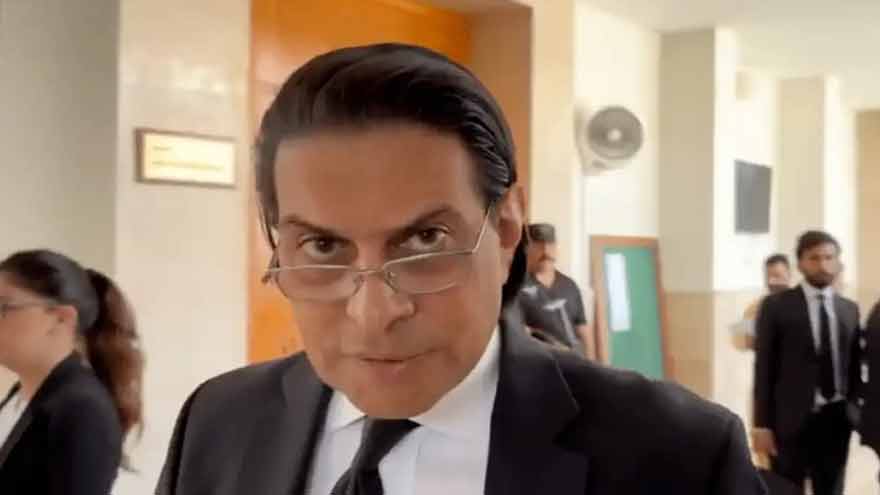
Meanwhile, speaking to the media at the Islamabad High Court, Imran Khan’s lawyer Barrister Salman Safdar said Supreme Court judgments had not been implemented and claimed that several Islamabad High Court decisions had also been ignored.
Safdar said reaching the Islamabad High Court had become extremely difficult and urged the court’s fixation branch to schedule the case, particularly amid the prevailing political tensions.