For ten days, the northeastern French town of Charleville-Mézières transformed into the undisputed world capital of an art form often mistakenly relegated to children’s entertainment: puppetry. The biennial World Festival of Puppet Theatres drew enthusiasts and the curious from across the globe, turning the city into a vast open-air stage where town squares buzzed with miniature theatres and giant articulated figures mingled with passersby.
Beyond the festive atmosphere, the festival served as a powerful reminder that puppetry is neither a neutral nor a marginal art. From Guignol, who mocked the powerful in the 19th century, to contemporary creations exploring societal fractures, the puppet asserts itself as a potent political and poetic language. This year’s edition proved this with force, featuring three mainstage performances tackling teenage isolation, post-partum depression, and the crisis in public psychiatric hospitals head-on.
In *Dans mon foutu zoo* (In My Damn Zoo), the collective Le Printemps du Machiniste placed Didi, a life-sized wooden teenager, at the centre of a hybrid universe. With soil covering the stage floor, animated projections, and intricate lighting, the show created a realistic yet dreamlike atmosphere. Didi retreats into herself, smoldering with internal anger, and gradually plunges into a protective aquatic world. The precision of the puppet’s movements, intimately linked to those of the actress manipulating her, blurred the line between wood and flesh, making the fragile interiority of a withdrawn adolescent tangibly real for the captivated audience.
Parallelly, Alice Chéné’s *Post Party* explored the raw, unfiltered reality of the post-partum period. Set in the intimate confines of a bedroom, the piece shows a mother overwhelmed by hormones, exhaustion, and the pressure to be perfect. The performer, at times a overwhelmed mum, a Celine Dion fan, or a Madonna figure, dialogues with a small Elmo puppet from Sesame Street, revealing the contrast between unconditional love for her baby and the weight of imposed roles. The show elicited strong reactions, from recognition to emotional shock, bridging generational and gender divides on a universally resonant theme.
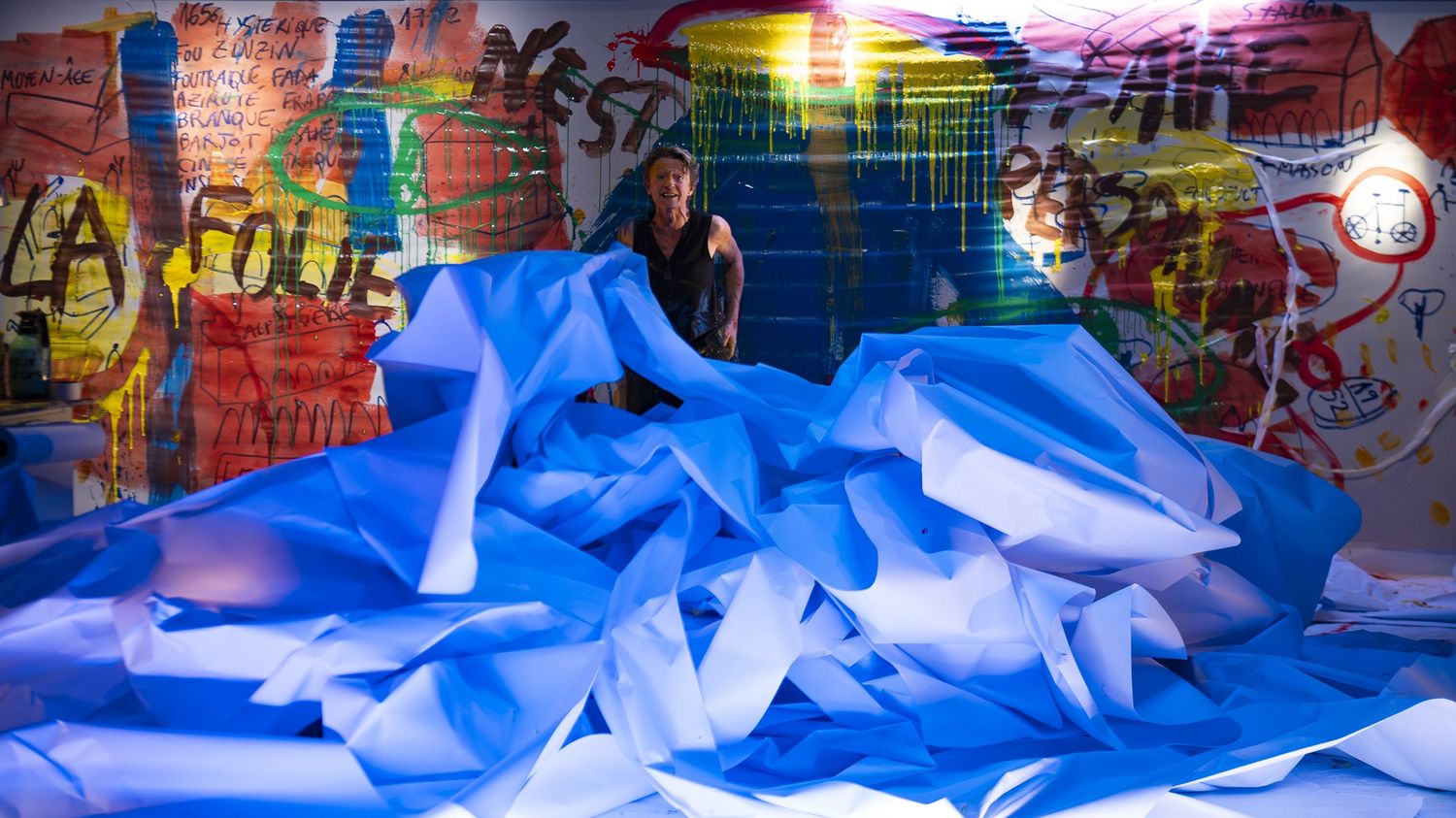
Meanwhile, the French company Blick Theatre presented *Pro Bono Publico*, the second part of a triptych exploring public services. The stage became a hybrid territory—part puppet theatre, part live art installation—evoking the chaotic reality of French psychiatric hospitals. Actors and puppets embodied order and chaos, while an exuberant plastic artist transformed crumpled paper and cardboard rolls into characters, bodies, and sound instruments before the audience’s eyes. The performance translated the fragility, resistance, and absurdity of hospital daily life into a powerful sensory experience, with one nurse in attendance noting, “Seeing this on stage hurts, but it’s also a relief.”
These performances underscored that puppetry, an art of material and sensitivity, possesses a rare precision for making human fragility and collective tensions tangible. Charleville-Mézières became a true artistic laboratory where wood, paper, and foam became mediums for reflection and emotion. More than a cultural event, the festival established itself as a space for shared memory, social consciousness, and dialogue, proving that puppets can hold up a startlingly clear mirror to the complexities of our world. The festival continues until September 28th.