A few filaments are enough to color a risotto, a paella, or a bouillabaisse. But saffron’s distinction extends far beyond its aromatic power. Derived from Crocus sativus, this spice has been used for millennia in several traditional medicines and is now drawing scientific interest for its potential effects on mood, sleep, and oxidative stress. These benefits warrant measured consideration: culinary quantities remain minimal, and saffron never substitutes for medical treatment.
A Rare Spice Exceptionally Rich in Active Compounds
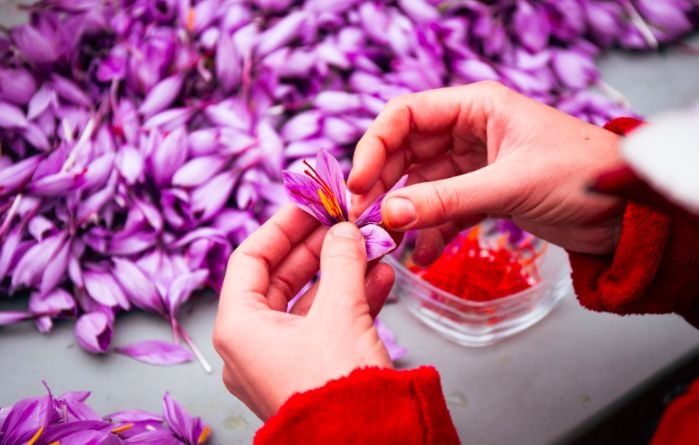
Saffron comes from the red stigmas of Crocus sativus, a plant that must be harvested by hand. Each flower produces only three stigmas, meaning more than 100,000 flowers are required to obtain a single kilogram of dried saffron. This particularly demanding production explains its nickname “red gold” and its price, which can reach several tens of euros per gram.
Its value stems primarily from several molecules naturally present in its filaments. Crocin gives saffron its intense color, while safranal contributes to its characteristic aroma and picrocrocin to its bitterness. Crocin and crocetin belong to the carotenoid family, compounds studied for their ability to protect cells against oxidative stress.
Saffron’s Potential Effects on Mood and Stress
This is probably one of saffron’s effects attracting the most attention today. Traditionally used to promote a more stable mood, it is now the subject of studies focusing notably on mild to moderate depressive episodes. Several works suggest that certain standardized extracts could help reduce specific symptoms and improve emotional well-being.
Saffron is also being studied for its action on stress and anxiety. Some of its compounds may intervene in mechanisms related to serotonin and dopamine. These results must nonetheless be distinguished from culinary use: a few filaments added to a dish do not correspond to the extract doses used in studies. For persistent depression or anxiety, medical care remains essential.
A Promising Avenue for Better Sleep
Sleep constitutes another area where saffron may offer benefits. Research conducted with people suffering from mild to moderate sleep disorders observed improved sleep quality after several weeks of supplementation. Falling asleep may be facilitated, and awakenings associated with a better feeling of recovery.
These properties appear notably linked to safranal, one of the spice’s main aromatic molecules. The effect on sleep could also be indirect: by helping reduce stress or anxiety in some individuals, saffron may promote conditions more conducive to quality rest.
Antioxidant and Digestive Properties
The carotenoids present in saffron also possess antioxidant properties. They participate in the fight against free radicals, molecules involved in cellular aging. Research is also examining a possible anti-inflammatory action of certain saffron compounds, although these effects continue to be studied.
In traditional medicine, this spice is also used to facilitate digestion. Its bitter taste can promote digestive and biliary secretions. However, its price and the quantities required make its use impractical when seeking only this effect: other bitter plants are far more commonly employed for this purpose.
Saffron Under Study for Libido
Since antiquity, saffron has also carried a reputation as an aphrodisiac. On this point too, some scientific works provide interesting elements. Studies have notably observed improvement in certain parameters of sexual function in men and women taking saffron extracts for several weeks.
In women, research is also examining its potential for certain symptoms of premenstrual syndrome or perimenopause. These results, however, concern precisely dosed supplements and do not allow attributing the same effects to occasional consumption in food.
A Spice to Consume Without Excess
Used in small quantities for cooking, saffron integrates easily into a varied diet. Dietary supplements require more precautions, as they provide significantly more concentrated doses. Nausea, headaches, dry mouth, or drowsiness may notably occur in some individuals.
At high doses, saffron can become toxic. Supplementation is also discouraged during pregnancy and requires caution during breastfeeding as well as with certain medications, notably antidepressants, anticoagulants, or antihypertensives. Before starting a course, it is therefore better to seek advice from a doctor or pharmacist rather than considering this spice a treatment in its own right.