A ‘Perfect Victim’
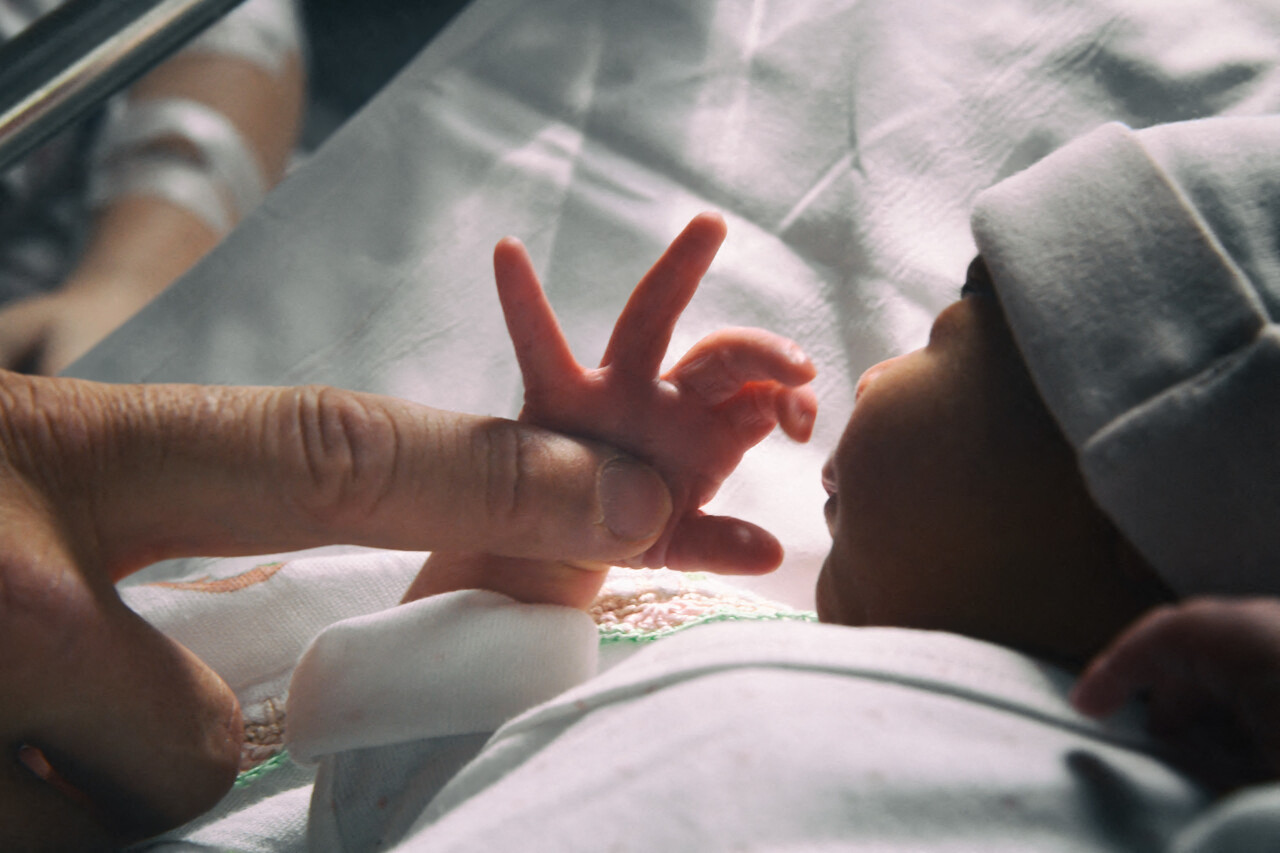
Described as “unthinkable” and “unbearable,” sexual violence against infants remains a deeply taboo phenomenon in France, largely existing under the radar despite warnings from frontline professionals. For offenders attracted to babies, a child aged 0 to 2 represents “the perfect victim”: they will not report the acts and will not remember them, leading perpetrators to tell themselves “it’s not so serious,” explains Marion Pierre, a pediatrician in a forensic medicine unit in Rennes.
The Tip of the Iceberg
For the first time in November, the Interministerial Mission for the Protection of Women (Miprof) published figures concerning the very young: 614 babies were received for sexual violence in a medico-legal unit in 2024. They represent 2% of the 73,992 victims of sexual and sexist violence received in these units.
“This figure is only the visible part of an unbearable reality,” Sarah el Haïry, the High Commissioner for Children, told AFP. “We are talking about children who can neither speak, nor walk, nor ask for help. Children incapable of denouncing, incapable of defending themselves.”
This number is “widely underestimated,” agrees Aurélie Besançon, head of the Office for Minors (Ofmin), for whom “the dark figure is much more significant.” “Infants are very closely observed,” adds Christophe Molmy, head of the Paris judicial police’s Brigade for the Protection of Minors, “and yet ‘it exists.'”
An Invisible Crime
The phenomenon was highlighted last summer by the indictment of a nurse and her ex-partner for sexual assaults on newborns at a maternity ward in Montreuil, Seine-Saint-Denis. “Sexual violence against infants is completely invisible because it is unthinkable,” considers Marion Pierre.
“It’s something taboo from the public’s point of view, sexual violence on a baby… it’s unimaginable,” says Joëlle Sicamois, Director of the Foundation for Childhood.
The aggressors, predominantly men, are found in the restricted circle surrounding a baby in its first months of life—family, close circle, early childhood professionals. All social classes are concerned and no region is particularly spared, specifies the head of Ofmin.
Judicial Hurdles and Hidden Signs
Judicial procedures—for which no statistics are available—often run up against the absence of marks on the bodies of the very young. “Oral sex with a baby won’t leave traces, the introduction of a finger or a thin object doesn’t necessarily cause injuries,” explains Hélène Romano, a psychologist and co-author of one of the rare studies on The Rape of Babies, Detection and Care, published in 2024.
Another difficulty, pointed out by Marion Pierre, is that suspicions of sexual violence are often “reported by mothers trying to protect their child,” but who “are quickly labeled as crazy or alienating.”
Beyond physical traces, other elements can raise the alarm and become the subject of investigations. An infant will express distress through behavior: sleep disorders, refusal to be changed or laid down, disruption in growth charts.
“You have children who remain completely still in their bouncer, who make no sound. Or children who are hyper-reactive to noises and hyper-vigilant,” details Marion Pierre. Others adopt a “very passive position during diaper changes, spreading their buttocks,” she continues. “They dissociate… they do what is expected of them: let it happen.”
Delayed Trauma and the Fight for Recognition
Sometimes, even “when there are injuries, we have situations where professionals do not think it could be an assault,” underlines Hélène Romano. She cites the case of parents worried about discovering blood in their seven-month-old daughter’s diaper. A pediatrician suggested a hormonal hypothesis without considering assault. But “the nanny’s son was caught assaulting another child, they traced everything back, and in the end, their daughter had been raped by this teenager.”
When a suspect contests the accusations and the offense cannot be characterized due to a lack of evidence, particularly physical, investigators sometimes manage to secure a case through child pornography images discovered during searches.
Furthermore, some warning signs may only appear years later, according to Hélène Romano and Marion Pierre, who warn of the body’s “traumatic memory.” Children assaulted as babies can manifest disorders “later on,” at ages “3, 4, 5, 6” with “very aggressive sexual behaviors towards themselves” or “towards others.”
For these professionals and other actors, recognition by society, the medical world, and public authorities is essential to combat this phenomenon and “shelter” the young victims.