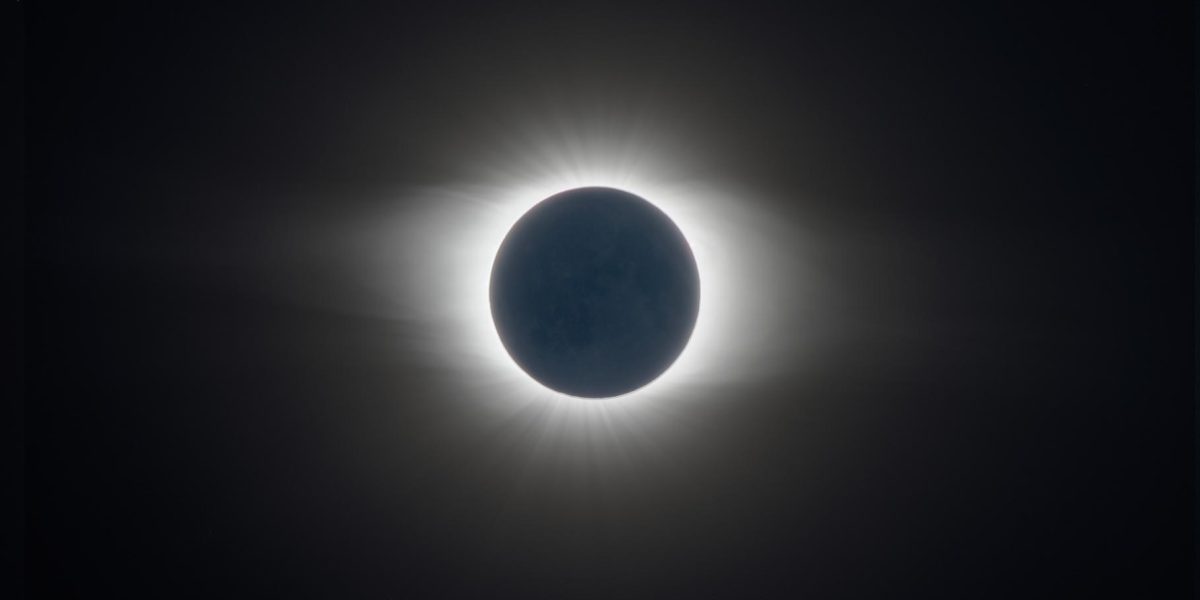
A Celestial Spectacle: Total Solar Eclipse Set to Sweep Across Europe on August 12
A rare astronomical event will grace the skies over Europe on August 12, as a solar eclipse plunges parts of the continent into temporary darkness. For the luckiest observers positioned in Spain, the experience will be particularly extraordinary: a total solar eclipse, a phenomenon not witnessed from the country since 1999.
Beyond its breathtaking beauty, the eclipse holds immense scientific significance. It offers a precious, unfiltered view of the sun’s corona, the ethereal outer atmosphere of our star. Normally drowned out by the intense glare of the solar disk, the corona’s delicate structures and dynamic activity become starkly visible only during the fleeting moments of totality, as showcased in recent space-based footage that reveals an almost black-hole-like appearance.
Unlocking the Secrets of the Solar Corona
>Scientists are intensely focused on the solar corona because it is the origin point of colossal eruptions of gas and plasma known as coronal mass ejections. These powerful bursts hurtle through space and can directly impact Earth. While our planet is largely shielded by its magnetic field, the effects are tangible, manifesting as stunning auroral displays near the poles and, more disruptively, as geomagnetic storms that can interfere with satellite operations, communications, and power grids.
A French Invention to Mimic the Eclipse
The challenge of studying the corona without waiting for a perfect Sun-Moon alignment led to a groundbreaking invention. In the early 1930s, French astronomer Bernard Lyot developed the coronagraph, an instrument that uses an internal occulting disk to artificially block the sun’s light, creating a permanent, miniature eclipse for observation.
However, the coronagraph has its limitations and cannot fully replicate the pristine conditions of a total solar eclipse. The historical record underscores the value of these events. Detailed sketches from the eclipse of July 18, 1860, which traced a path from North America through Spain and North Africa to present-day Eritrea, show that astronomers of the time clearly noted the corona’s glow and a peculiar mass on its lower right. It took over a century, with the advent of satellite technology, for scientists to confirm that this observed mass was, in fact, a coronal mass ejection.
Even for those outside the narrow path of totality, the spectacle will be profound. In France, a deep partial eclipse will unfold, with an exceptional magnitude. In Strasbourg, over 89% of the sun will be obscured, in Bayonne, the coverage will surpass 99%, promising a dramatic celestial show for all who can safely observe it with proper protective eyewear.