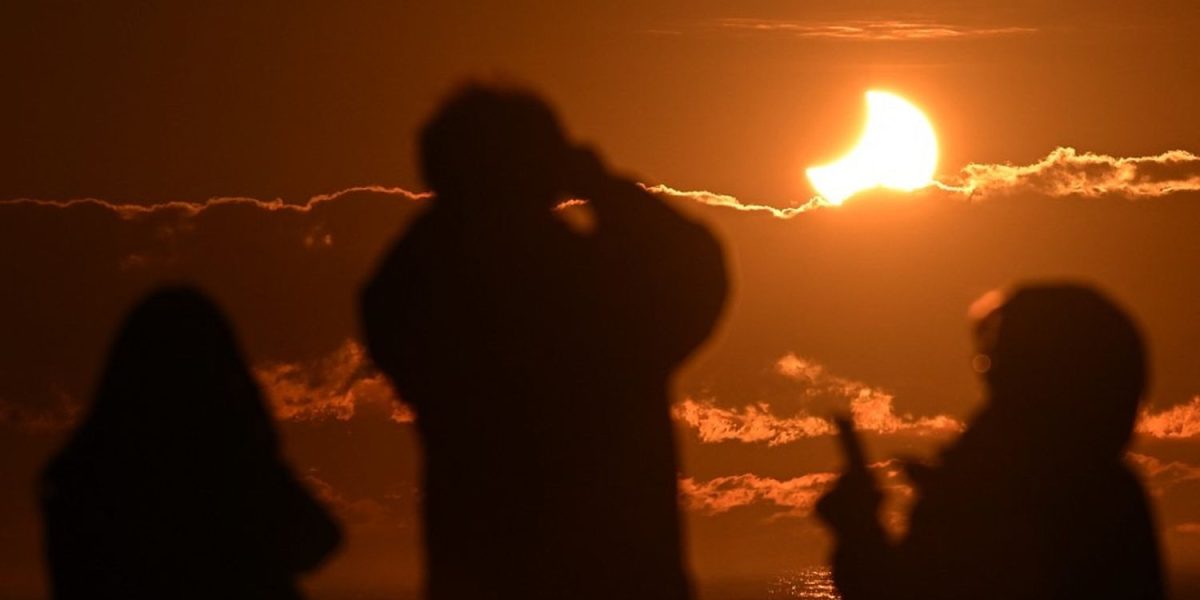
A spectacular celestial event is set to unfold across Western Europe on the evening of Wednesday, August 12, 2026. For the first time in twenty-seven years, a total solar eclipse will be visible from the continent, and while the path of totality sweeps across Spain, observers in France will be treated to a breathtaking near-total eclipse. In the southern part of the country, the Moon will obscure more than 90% of the Sun, promising an unforgettable twilight spectacle just before sunset.
A North-to-South Gradient of Darkness
The astronomical phenomenon will be perceptible throughout the entire French territory, but the experience will vary significantly depending on your location. The further south you are, the greater the portion of the solar disk that will be covered by the Moon.
A detailed analysis of the obscuration percentages reveals a clear gradient:
- Northern France: From Lille to Nancy, the Sun will be approximately 91% hidden.
- A line from Le Havre to Paris and Dijon: Residents in this central band can expect around 93% obscuration.
- Western and Southern hubs: The spectacle intensifies in cities like Nantes, Limoges, and Nice, where the obscuration climbs to nearly 97%.
- Southwest strongholds: Bordeaux, Toulouse, and Narbonne will see the Moon cover almost 98% of the Sun.
The Maximum Eclipse Zone: The Pyrenees Corridor
The most dramatic views in France are reserved for a narrow corridor stretching from the Basque coast to the Pyrénées-Orientales department. Here, the eclipse will reach its maximum potential.
In Perpignan and Tarbes, the Sun will be 99% obscured. Even more impressive, cities like Biarritz, Pau, and Lourdes will witness a virtual totality, with the Moon covering nearly 100% of the solar disk. The difference between this deep partial eclipse and the true totality visible just across the border in Spain will be imperceptible to the naked eye, though experts stress that certified eclipse glasses remain mandatory for safe viewing at all times.
Timing Your Twilight Skywatching
The entire event will last just under two hours, commencing in the late afternoon. The precise timing varies slightly by location, but a general schedule for France is as follows:
- Start of the eclipse: The Moon will begin its transit across the Sun from 7:18 PM local time.
- Maximum eclipse: The peak of the spectacle will occur between 8:13 PM and 8:27 PM, when the Sun will appear as a thin, fiery crescent low on the western horizon.
To safely admire this rare show, finding a location with a clear, unobstructed view towards the west is critical, as the sun will be setting shortly after the eclipse reaches its maximum. Astronomers remind the public to procure special certified solar eclipse glasses well in advance to protect their retinas from permanent damage.