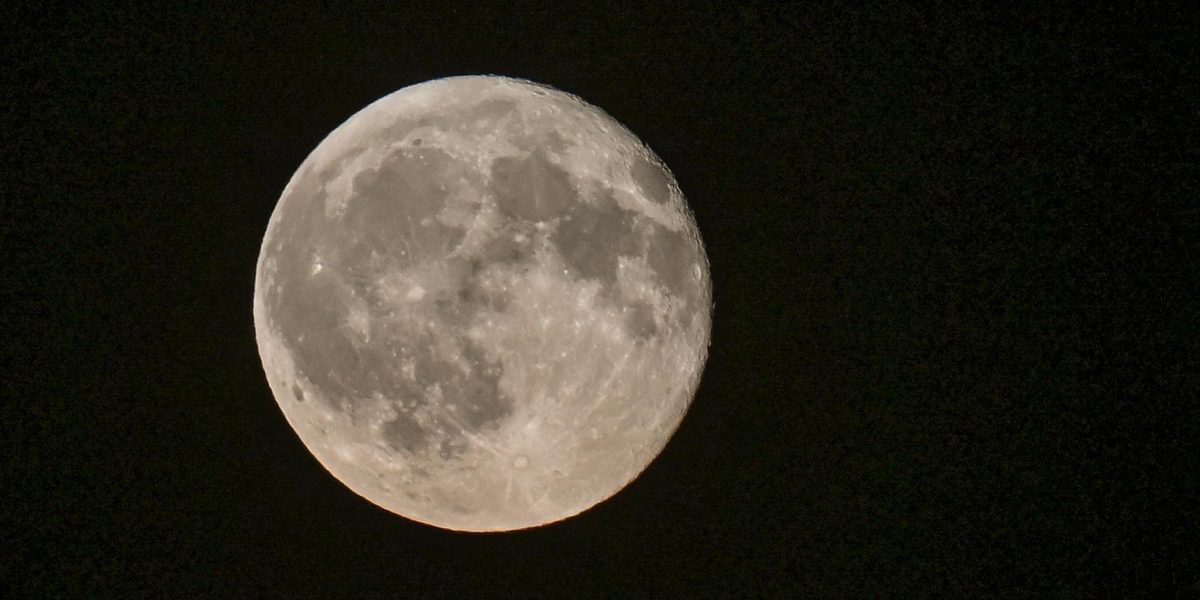
A derelict piece of a SpaceX Falcon 9 rocket, weighing approximately four tons, is on a collision course with the Moon. The impact is calculated to occur this Wednesday, August 5, 2026, at around 8:35 a.m. French time, marking a dramatic, unscheduled end for the spacecraft component.
The object is the upper stage of a Falcon 9 that launched from Earth on January 15, 2025. It was part of a joint American-Japanese mission that successfully transported two lunar landers and scientific equipment to the Moon last year. While the landers reached their destinations, the rocket’s upper stage was left adrift after running out of the fuel needed for a return journey to Earth.
A 19-Month Journey Ends in a Violent Impact
After spending 19 months abandoned in space, this cylindrical piece of debris, as tall as a five-story building, will crash into the lunar regolith. The impact zone is located near the Einstein crater on the Moon’s near side. Astronomer Bill Gray, who first identified the object’s trajectory, predicts the collision will gouge a crater roughly 27 meters in diameter and 5 meters deep.
The spacecraft will hit the lunar surface at a staggering speed of approximately 8,700 km/h. The sheer force of the impact is expected to generate a spectacular event, far exceeding a comparable explosion on Earth.
“It’s going to have an impact and raise a huge cloud of dust, perhaps to 50 km altitude or more, which will spread laterally over time,” Dr. Matt Bothwell, a public astronomer at the University of Cambridge, told the BBC. He noted that due to the Moon’s lack of atmosphere and much weaker gravity, the moment of impact will be “more impressive than any [similar] explosion on Earth.”
Scientific Opportunity from Space Debris
Despite the uncontrolled nature of the event, space agencies see a silver lining. “There is no danger to Earth,” stated NASA spokesperson Jimi Russell, according to the BBC. “NASA will continue to track the launcher for training purposes, and will later observe the impact site for scientific purposes.”
Dr. Bothwell emphasized the significant educational potential of the crash. It offers a fresh, albeit unintended, opportunity to study the mechanics of a high-velocity impact on the lunar surface. The resulting cloud of debris could potentially be visible from Earth using sophisticated telescopes.
This is not the first time a Falcon 9 stage has met such a fate. In 2022, another upper stage slammed into the Moon near the Hertzsprung crater, carving out a distinctive double crater about 30 meters wide. The upcoming impact will provide scientists with another valuable data point for understanding these cosmic collisions.