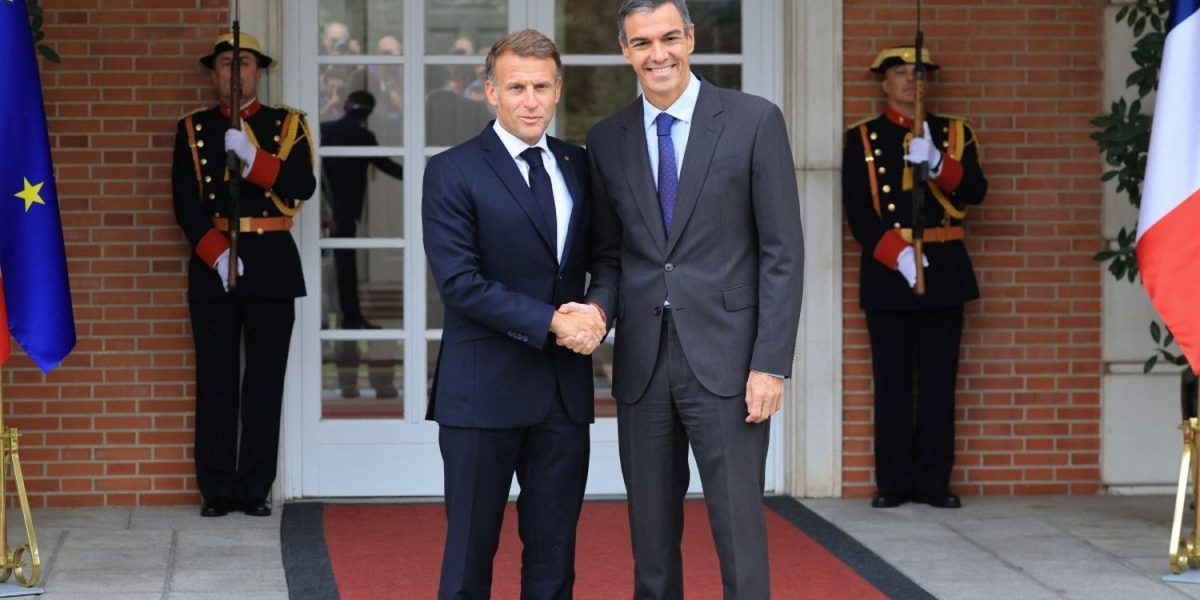
Spaniards were not alone in closely watching Prime Minister Pedro Sánchez’s announcement of early elections on November 29. The rest of Europe has its eyes fixed on the Iberian Peninsula, waiting to see what political future lies ahead for a key piece on the European chessboard.
Sánchez’s government is currently part of a small minority of progressive executives in the European Union, alongside Denmark and possibly Sweden, where neither bloc appears to be prevailing for now. If the People’s Party of Alberto Núñez Feijóo, the opposition leader, comes to power, as polls predict, Spain will join the group of countries led by the traditional right: Portugal under Luís Montenegro, Germany under Friedrich Merz, Poland under Donald Tusk and Greece under Kyriakos Mitsotakis. All belong to the European People’s Party (EPP), the largest force in the European Parliament.
A Chain of National Votes Across Europe
With these early elections, Spain opens a series of national ballots that will determine the direction Europe takes in the years ahead. After November 29 will come, in 2027, France, Greece, Poland and Italy. In France, far-right candidate Marine Le Pen could accede to the presidency of one of the EU’s founding countries, and one of its most politically influential.
A victory for Núñez Feijóo would likely be accompanied by the entry of Vox into the Spanish government. Spain would then become the fourth European state governed by a coalition between the conservative right and the far right, after Giorgia Meloni’s Italy, Petteri Orpo’s Finland and Andrej Plenković’s Croatia.
Spain, the Dissenting Voice
While Sánchez’s two terms have been shaken by a series of corruption scandals, his role on the European and international stage has been of a different nature. In Brussels, the Socialist leader has placed himself on the front line on issues such as recognition of the Palestinian state and the fight against “tech oligarchs.”
His refusal to raise defense spending to 5% of GDP as demanded by the United States, his good relations with China and his criticism of Benjamin Netanyahu’s Israeli government, which he openly accuses of genocide, have earned him the wrath of Donald Trump. “Spain is a problem,” the US president declared after the NATO summit in Ankara. By standing up to the American billionaire, Sánchez established himself as a leading figure in Europe.
Under his leadership, Spain has also voiced a dissenting opinion on European migration policy. Last week, EU interior ministers adopted the returns regulation, which will allow the creation of migrant centers in third countries and accelerate deportations. Spanish Interior Minister Fernando Grande-Marlaska was the only one of the twenty-seven to vote against it.
The Decline of European Social Democracy
Currently, of the 27 heads of state or government who make up the European Council, ten belong to the EPP. Only Sánchez, Danish Prime Minister Mette Frederiksen and Malta’s Robert Abela belong to the Social Democratic family (S&D). The other members belong either to the European Conservatives and Reformists group, such as Italy’s far-right leader Giorgia Meloni, or to the centrist and liberal Renew Europe group, such as France’s Emmanuel Macron.
In the event of an electoral defeat for Sánchez, Frederiksen and Abela would become the only Social Democratic leaders of the twenty-seven, confirming the dominance of the Christian Democratic right at Council meetings and the retreat of the center left. On migration, however, Frederiksen is closer to Meloni than to Sánchez: she rejects “uncontrolled immigration” and calls for return centers in third countries.
Last month, the Swedish Social Democratic Party (SAP) did come first in elections, but that result is only an illusion and merely confirms the decline of European social democracy: the SAP recorded its worst score in a century and has still not managed to form a coalition with other parties.
New Elections on the Horizon
In April 2027, the French will be called to the polls to elect their new president. With Macron unable to run again, polls make the leader of the National Rally, Marine Le Pen, the favorite — and she will ultimately be able to run despite her conviction for embezzling European Parliament funds. Her likely second-round opponent would be the candidate of La France Insoumise, Jean-Luc Mélenchon. This duel between the far right and the radical left illustrates the progressive loss of credibility of traditional parties in European democracies.
At the end of the year, it will be Italy’s turn, where Giorgia Meloni will put her position — which she has held since October 2022 — on the line. For now, polls place her in the lead, around 27% of the vote. But a new force, even more radical than Brothers of Italy, the prime minister’s party, has appeared: Futuro Nazionale, led by former general Roberto Vannacci, which is already approaching 8% of voting intentions. It could disrupt the campaign and push the government to harden its rhetoric on immigration to avoid a flight of voters.
In Greece, where elections will take place next summer, the center-right New Democracy party of Prime Minister Kyriakos Mitsotakis remains ahead in voting intentions. It would, however, be far from an absolute majority and would need the support of other parties to govern. Yet in 2023, it categorically ruled out any agreement with a formation to its right, which rules out the ultra-nationalist orthodox Greek Solution.
Slovakia, Slovenia and Poland complete the list, with legislative elections scheduled for next autumn, where the left has little chance of winning. In Poland, the government of liberal-conservative Donald Tusk will face the eurosceptic opposition of Law and Justice (PiS), which is hostile to Brussels’ decisions.
While no federal elections are scheduled in Germany, several decisive regional votes will take place in Länder where the far-right AfD continues to gain ground. The rise of this party, which won by a wide margin in Saxony-Anhalt last September, further weakens the government of Friedrich Merz (CDU). In Germany, the Länder carry considerable weight and their governments are represented at the federal level.