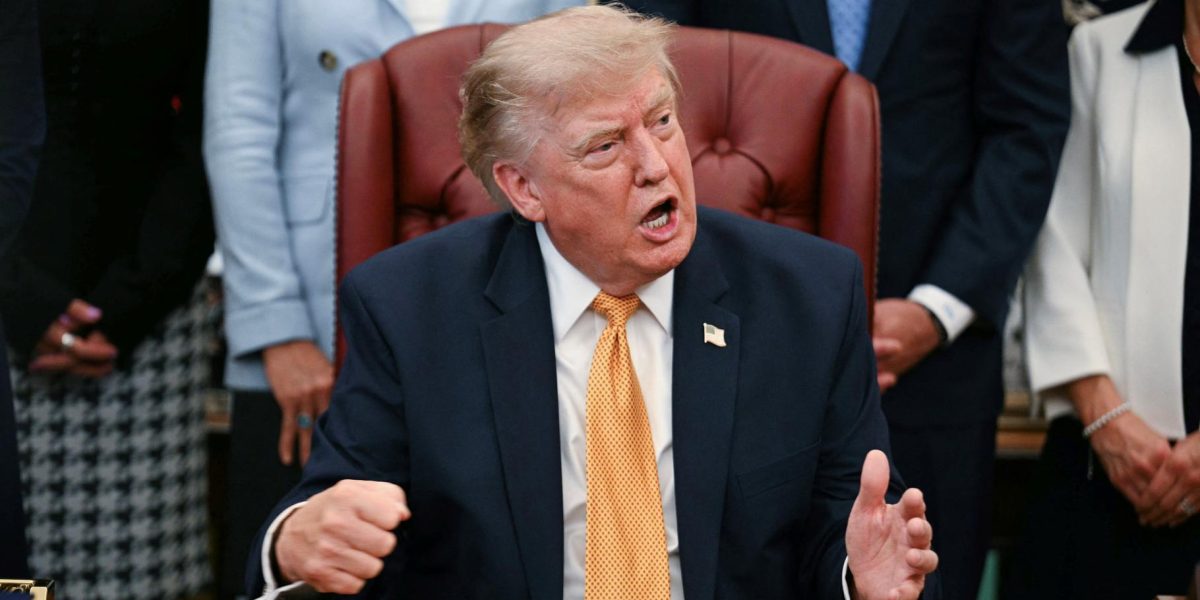
A narrow victory for President Donald Trump in his ongoing campaign to restrict mail-in voting. The conservative-majority U.S. Supreme Court on Monday authorized, until further notice, the implementation of a presidential executive order aimed at tightening rules around absentee ballots. The decision has sent shockwaves through Democratic ranks, with the 2026 midterm elections now just over two months away.
Trump’s Longstanding Crusade Against Mail-In Ballots
Donald Trump has repeatedly denounced the widespread availability of mail-in voting across numerous American states. The president has consistently claimed that large numbers of foreigners participate in U.S. elections through this method, despite official statistics showing such occurrences are extremely rare. He has also pointed to mail-in voting as a primary reason for his 2020 defeat to Democrat Joe Biden—a loss he still refuses to acknowledge.
On March 31, Trump signed an executive order designed to impose stricter federal oversight on mail-in voting. While election administration traditionally falls under state jurisdiction, the order directs immigration and Social Security services to create a federal list of eligible voters and instructs the Postal Service to only deliver mail-in ballots to individuals appearing on that list.
A Procedural Suspension Lifted, Not a Final Ruling
The executive order immediately drew fierce opposition from Democrats, who rushed to challenge it in court, accusing Trump of attempting to seize control of election administration. Democratic-led states had even succeeded in obtaining a suspension of the order from a federal trial court.
However, without ruling on the merits of the case, the Supreme Court—against the objections of its three progressive justices—decided to lift that suspension. The majority reasoned that the suspension causes harm to the federal government, unlike the states. The Court nonetheless cautioned that its decision “does not mean that any measure the government takes to implement this order will necessarily be lawful. In that respect, the future will tell.”
Progressive Justices and Democrats Sound the Alarm
The three progressive justices voiced strong disagreement, arguing that states are directly harmed by these significant changes to electoral rules. “This decision violates well-established precedents and needlessly injects chaos and uncertainty into the upcoming midterm elections,” lamented Justice Ketanji Brown Jackson.
Democratic leaders escalated their criticism, accusing the Trump administration of attempting to “rig” the highly contentious midterm elections. “Donald Trump wants to make it harder for Americans to vote so they cannot hold him accountable for soaring costs, the illegal war, and endemic corruption,” said Senate Minority Leader Chuck Schumer.
California Governor Gavin Newsom took to social media to announce his state would file a new legal challenge. “New day, new Trump attempt to rig elections and destroy our democracy,” Newsom wrote. Senator Alex Padilla of California added, “Trump is desperately trying to rig the rules of the 2026 election. It is the states—not Trump—who run our elections, and the rule of law MUST be respected. This fight is not over.”
White House Celebrates, but Legal Battle Far From Over
The Trump administration celebrated the ruling. “This is a major victory for the security of American elections. These are common-sense measures that protect the security of mail-in ballots and ensure that only Americans elect American leaders,” said White House spokesperson Lauren Bis.
Yet the measure is still far from being definitively implemented, as the Supreme Court only addressed procedural matters. And that may be just as well for Trump himself: he recently voted by mail in the Florida Republican primary. A reminder that what may bother the president most is not the method of voting, but the possibility that people are not voting for him.