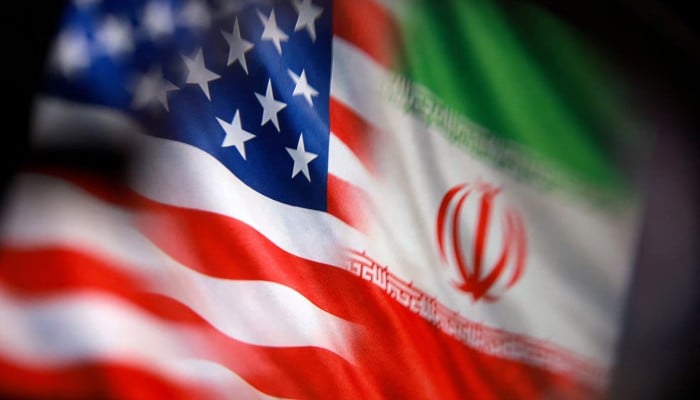
>Pakistani and US leaders have forecast the imminent signing of a agreement to end the months-long conflict between the United States and Iran, but confusion over the timing and vocal domestic opposition in Tehran are casting a shadow over the diplomatic breakthrough.
Prime Minister Shehbaz Sharif announced that a framework for a peace deal had been agreed upon, with Islamabad preparing for an electronic signing ceremony on Sunday. This would be followed by technical-level negotiations in the coming week. The announcement was amplified by US President Donald Trump, who posted on social media that the deal was scheduled to be signed on Sunday, which coincides with his 80th birthday.
However, Iran swiftly dampened expectations of an immediate signing. Foreign Ministry spokesperson Esmaeil Baghaei, speaking before Trump’s post, was quoted by state media cautioning against speculation on the timing. “It will not be tomorrow,” Baghaei stated, though he conceded an agreement could be finalized “in the coming days.”
Strait of Hormuz at the Heart of the Agreement
The proposed memorandum of understanding centers on the immediate reopening of the Strait of Hormuz, a critical chokepoint for global oil supplies that Iran has blocked. President Trump wrote on Truth Social that following the signing, the strait would be “open to all.” In a reciprocal move, the US would lift its naval blockade, according to officials from all sides of the talks.
A US official outlined the phased approach to reporters. “Iran is going to open up the Strait of Hormuz, that’s a requirement. It could be open with no tolls. As they do that, we will lift our blockade,” the official said, adding that subsequent steps would involve demining the straits, potentially with a role for G7 nations.
Draft terms described to Reuters by multiple sources indicate the economic contours of the deal. The US would begin releasing billions of dollars in frozen Iranian assets and waive sanctions on its oil exports in return for Iran’s cooperation on the strait. Baghaei confirmed the release of frozen assets was integral to the agreement and noted that Iran would still charge for services in the Strait of Hormuz. He also stated, without elaboration, that foreign military bases in the region must endp>
Nuclear Talks Deferred, Hardline Opposition Surfaces
Negotiations over Iran’s nuclear program—a primary justification President Trump has given for the war—are not part of the initial framework. Instead, they would be addressed during a subsequent 60 period of talks. A US official asserted that the ultimate goal is the complete dismantling of Iran’s nuclear program, with its stockpile of highly enriched uranium to be destroyed and removed.
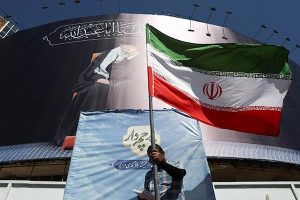
As the diplomatic track advanced, fissures within Iran became increasingly visible. Videos on social media and Iranian news websites showed hardline opponents gathering in squares and outside the Foreign Ministry in Tehran, chanting slogans against Foreign Minister Abbas Araqchi. “Araqchi have some shame, let go of America!” they shouted. Reuters could not immediately verify the footage.
At pro-government rallies held across Iran on Saturday night, the dissatisfaction was equally loud. A resident in the northeastern city of Mashhad reported chants of “Death to the compromiser,” an apparent reference to Araqchi, with calls for him to resign. The protests underscore the entrenched power of the Revolutionary Guard, which experts say has only been strengthened by the conflict despite heavy US bombardments.
Military Operations Continue Alongside Diplomacy
Even as the framework took shape, military hostilities persisted. Early on Saturday, US forces shot down multiple Iranian one-way attack drones heading toward the Strait of Hormuz. Meanwhile, Israel, which insists it is not a party to the US-Iran deal, reported striking more than 70 sites in Lebanon against the Iranian ally Hezbollah over a 24-hour period. The ongoing Israeli campaign has been a point of friction between Prime Minister Benjamin Netanyahu and President Trump, who has demanded a curb on military action to facilitate the deal with Tehran.
Diplomatic efforts continue at the highest levels. Trump discussed the push to end the Iran conflict in a call with British Prime Minister Keir Starmer, Downing Street confirmed on Saturday. As the world watches, the path to a signed agreement remains fraught with logistical uncertainty and deep-seated political resistance, even as the framework itself appears within reach.