Military Escalation and Casualties
The Middle East plunged deeper into a widening war as the United States and Israel launched military strikes against Iran. The U.S. Central Command confirmed that six American service members were killed in the ensuing conflict. In a significant escalation, the Israeli military announced “simultaneous strikes” targeting both Tehran and Beirut, directly hitting what it called “military objectives of the Iranian terror regime and the Hezbollah terrorist organisation.”
Diplomatic Fallout and Nuclear Tensions
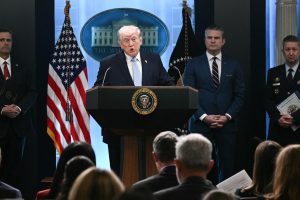
The military action has sparked immediate diplomatic ruptures and revealed stark tensions. U.S. President Donald Trump lamented the state of the transatlantic alliance, stating the relationship with Britain was “obviously not what it was” after Prime Minister Keir Starmer initially withheld support for the strikes. Meanwhile, U.S. special envoy Steve Witkoff made a startling claim, alleging that Iranian negotiators earlier this year boasted of possessing enough highly enriched uranium to build 11 nuclear bombs, a capability the U.S. asserts it has since destroyed.
Regional Retaliation and Infrastructure Attacks
Retaliation was swift. The Iran-backed Lebanese militant group Hezbollah claimed it targeted three Israeli military bases with drones and rockets in response to strikes on Lebanon. The conflict also spilled into the digital realm, with tech giant Amazon reporting that two of its data centers in the United Arab Emirates were “directly struck” by drones, disrupting cloud services. A facility in Bahrain was also damaged by a nearby drone strike.
Security Drawdown and Civilian Unrest
As the crisis intensified, the U.S. State Department ordered non-emergency personnel and their families to depart from Bahrain, Jordan, and Iraq. The U.S. Embassy in Kuwait was closed for an indefinite period. Inside Iran, state media reported that women took to the streets to mourn the country’s “martyred” leadership, while Iranian diplomat Abbas Araghchi countered that there was never any genuine “Iranian threat,” framing the conflict as an act of foreign aggression.
Leadership Rhetoric and Regional Posture
Israeli Prime Minister Benjamin Netanyahu framed the joint military action as a “‘gateway to peace,” a stance starkly at odds with the unfolding violence. Elsewhere in the Gulf, the President of the United Arab Emirates was photographed strolling through a shopping mall, presenting an image of calm amid the regional tensions. President Trump also issued a threat of a “quick response” following an attack on the U.S. embassy in Riyadh, Saudi Arabia.