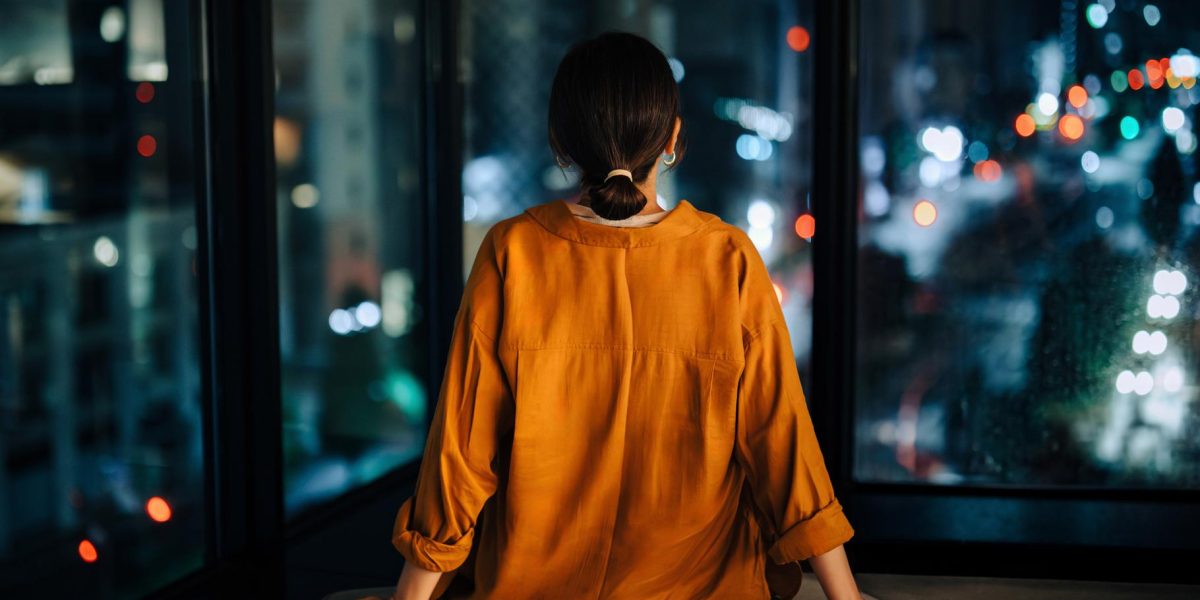
For decades, feminist movements have sought to reclaim the night. This is no accident. Long confined to the domestic sphere, women often do not feel at ease in outdoor public spaces, especially after dark. This tension is amplified in an era of anti-feminist backlash, where some voices openly question what a woman is doing outside after 10 PM. Yet, the public space belongs to them, too. Their desire to use it on equal footing with men frequently collides with complex emotions, where a longing for liberty mixes with a deep-seated sense of insecurity.
The Myth of the Dark Alley vs. Reality
“Being a woman impacts my fear,” shares Céline, who lives in a rural Belgian village. “We tend to distrust the street at night, while violence can erupt anywhere. I think it’s because of the myth of the attack in a dark alley by a stranger. Yet most of the time, it happens in a familiar environment with people we know.” Statistics support this: data shows nine out of ten rape victims know their attacker. A 2018 UN study warned that the home is “the most dangerous place” for women. Recent French research even indicates that a lack of street lighting does not increase the risk of sexual violence or theft.
Knowing this, however, does not fully soothe nighttime anxieties. “Tonight, I cycled home on a deserted bike path, and as soon as the streetlights ended, I started to panic,” Céline admits. This fear of darkness is long-standing, fueled by childhood warnings and true crime stories. “I grew up during the era of the pedophile Marc Dutroux; it affected my entire generation.”
A Self-Fulfilling Prophecy of Restricted Movement
The fears are not unfounded, as sexist and sexual violence is a real threat both day and night. Myriam, who describes herself as a homebody, reflects on how this reality shapes behavior. “I’ve heard friends’ stories, read testimonies… I don’t know if I’m a homebody by nature or if it’s a self-fulfilling prophecy. Maybe I’ve internalized the idea that it’s dangerous outside late, so I don’t want to go out.”
Yet, the idea of being outside at night is not unappealing. “When I see tweets asking, ‘What would you do if there were no men on Earth for 24 hours?’ I answer that I’d go sit on a bench in a crop top, just to enjoy the night air.” She notes how these fears become ingrained: “We end up believing certain spaces are accessible or inaccessible to us.” This conditioning can be so powerful it surfaces even during fiction. “Watching a show where two women were enjoying a club, I immediately thought, ‘Aren’t they afraid, being just two women? Is it dangerous to take substances?’ It’s crazy to think that while watching a fictional story.”
The Nightclub Dilemma: Vigilance vs. Liberation
For some, the conflict plays out in nightlife itself. Émilie, 29, is a frequent visitor to techno clubs. “There’s an effervescent side; I feel good there. But I’m also likely to experience sexist and sexual violence there,” she states, having endured sexualized remarks and unsolicited touching. When friends can’t join her, she wrestles with going alone. “I don’t want fear to stop me from doing things,” says the gender studies graduate. “But I don’t know to what extent I can ignore it and do what I want. It’s complicated to gauge.”
Even when trying to detach, a guilty internal voice persists, suggesting that by choosing to go out, dress a certain way, or socialize, she would share responsibility if something went wrong. This tug-of-war continues on the walk home. “I have a real desire to walk alone at night; I love those moments. And at the same time, I’m terrified. When I do it, I’m in a state of hypervigilance.”
Roots in Upbringing and Gendered Socialization
These restrictions often begin in childhood. Studies on youth mobility show parents exercise stronger control over girls, who are more accompanied, monitored, and limited at night than boys. “We are only sisters, and my mother—because it’s often mothers who instill these cautionary codes tied to patriarchy—never let us out at night,” explains Myriam, 34. “For her, woman + outside + night = danger. I’m 34, and she still worries if I’m out past midnight. I know it would be less worrying for her if I were a boy.”
Conversely, Marie from Lyon attributes her lack of fear to a different upbringing. “It helped a lot that my parents weren’t worried. I took public transport alone from age 7. I was taught not to talk to just anyone, but not that people necessarily mean me harm.” Working in hospitality for a decade, she often walks home after midnight. “Everyone asks if I’m scared, while mostly, nothing happens. I am alert, but not worried.” In the contested landscape of the night, that distinction is everything.